Sandwiched between the inhospitable Chihuahuan Desert and the majestic Davis Mountains, the Marfa Ranch is situated on a low rise with dramatic views of pristine desert grassland in all directions.
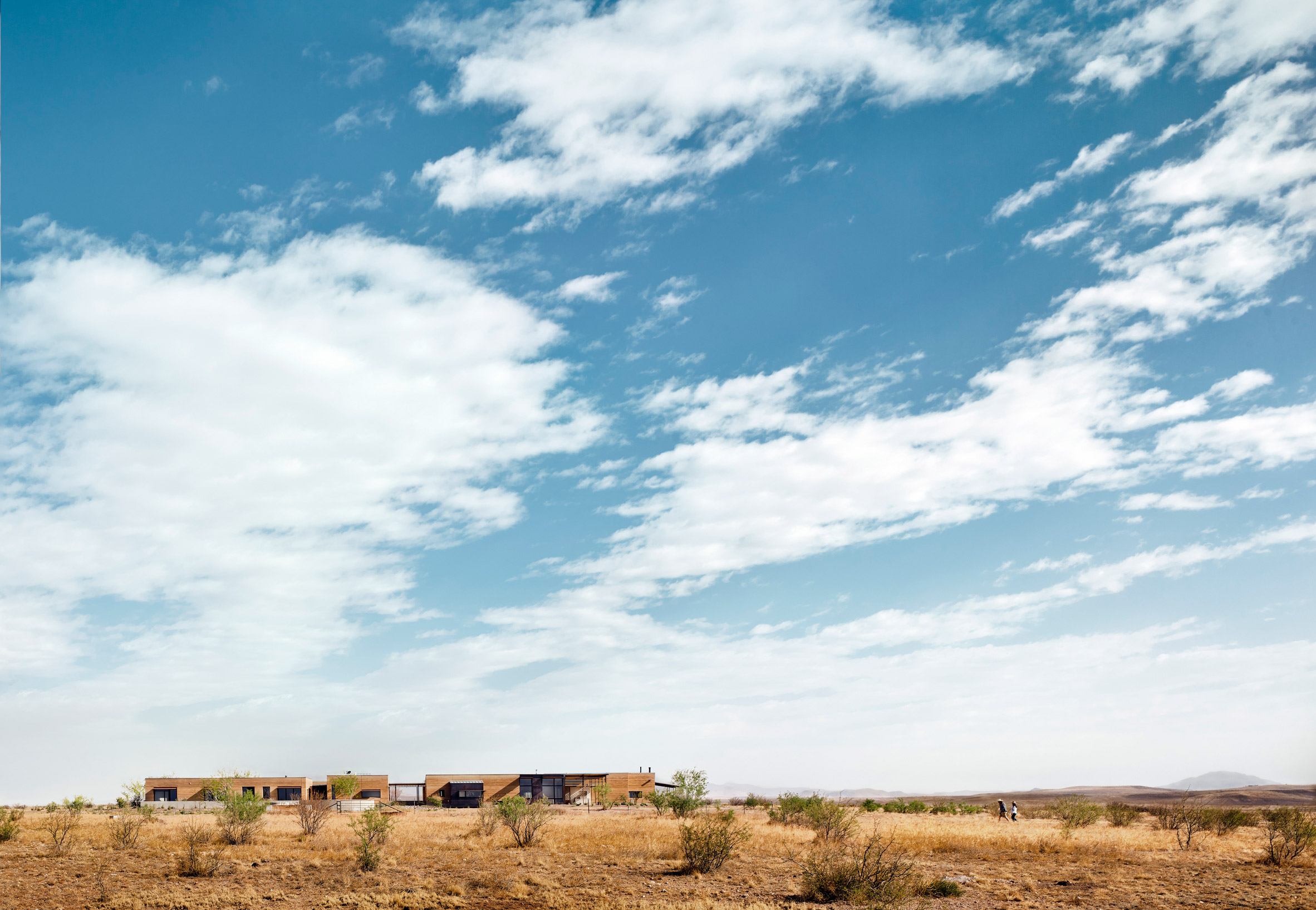
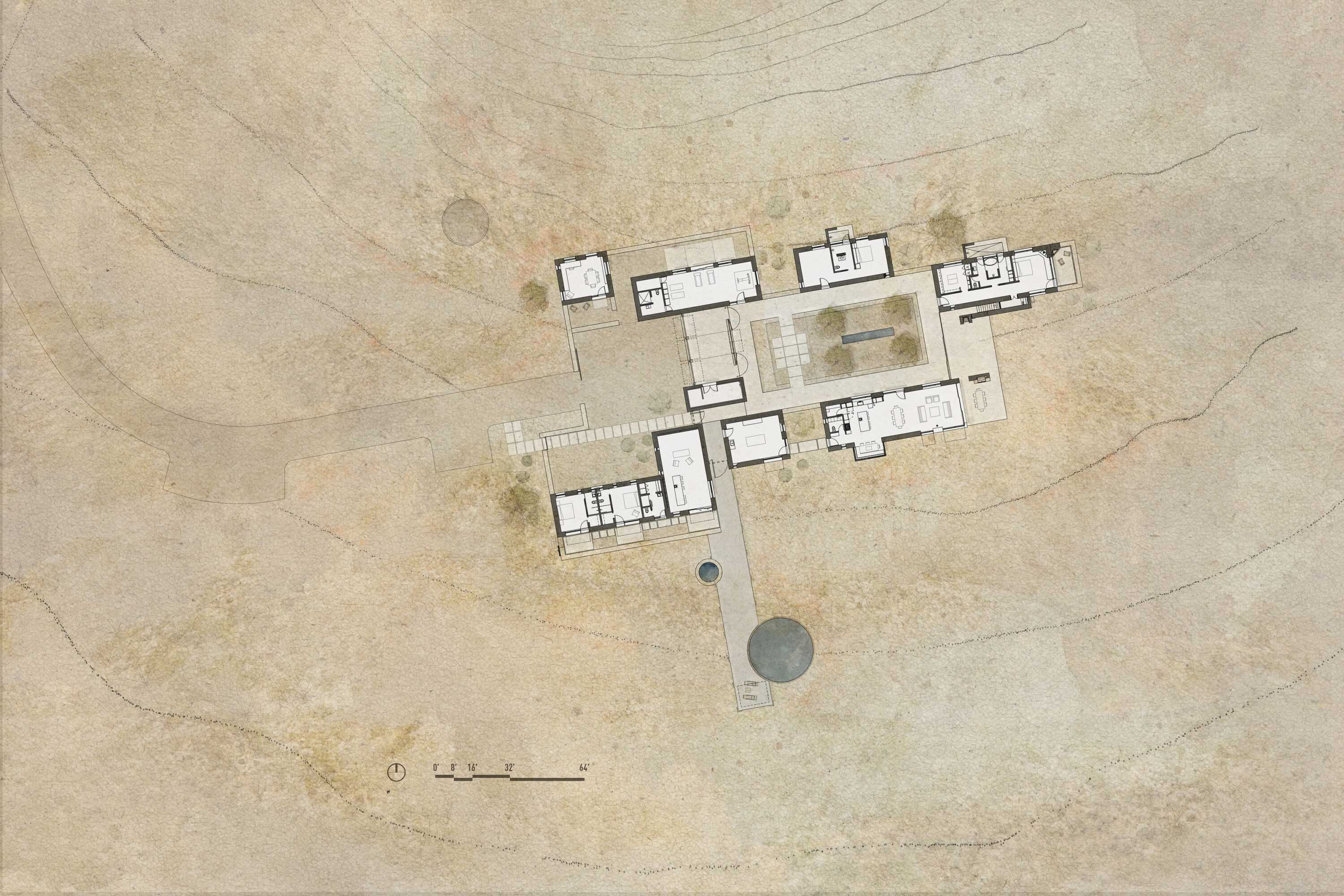
The house, which cuts a low profile, comprises eight structures organized around a central courtyard shaded by native mesquites.
“The design leans into an early regional paradigm found commonly on the ranches of far West Texas, where casual, low-slung homes partially enclose an inner court”
“These homes are often stone, brick, or adobe, one room wide and U-shaped — opening to an inward veranda and surrounding the court that opens to the east, shielding against the seasonally persistent north-western winds.”
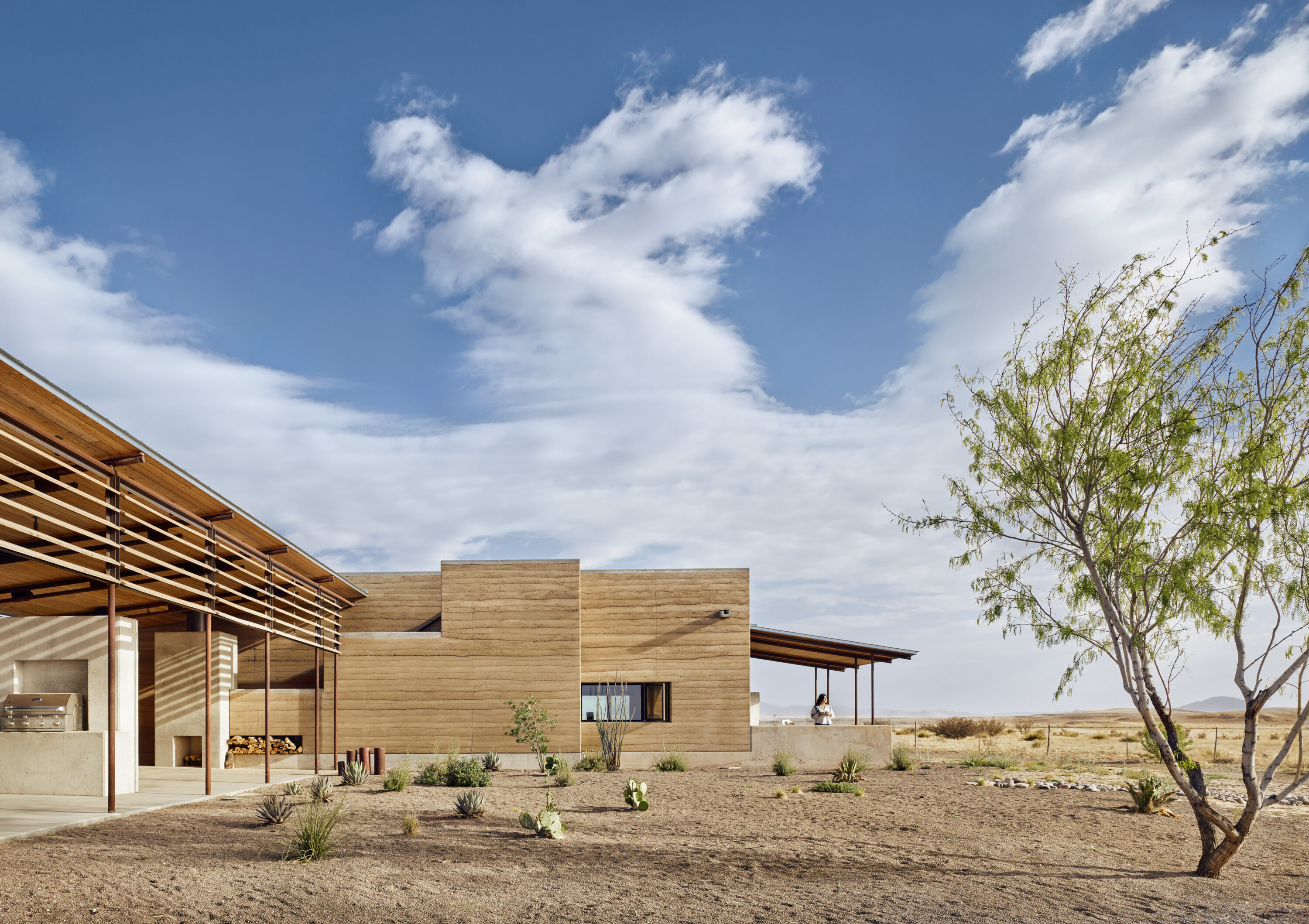
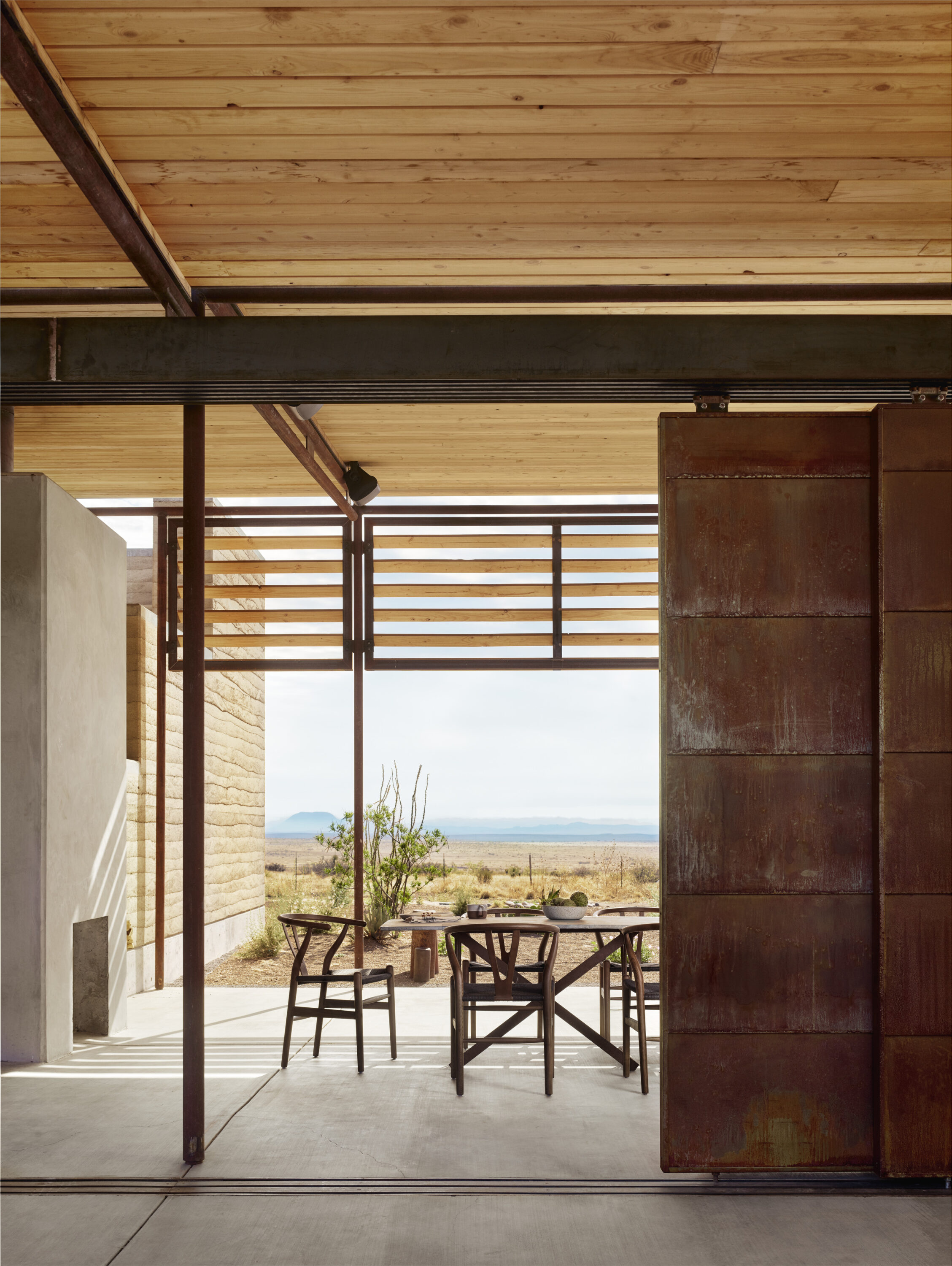
Borrowing from the area’s earliest structures, the rooms of the house are organized around a courtyard, a cool respite from the sun-drenched desert grasslands beyond the walls. The house embraces the expansive landscape with lightweight breezeways and porches made of recycled oil field pipe.
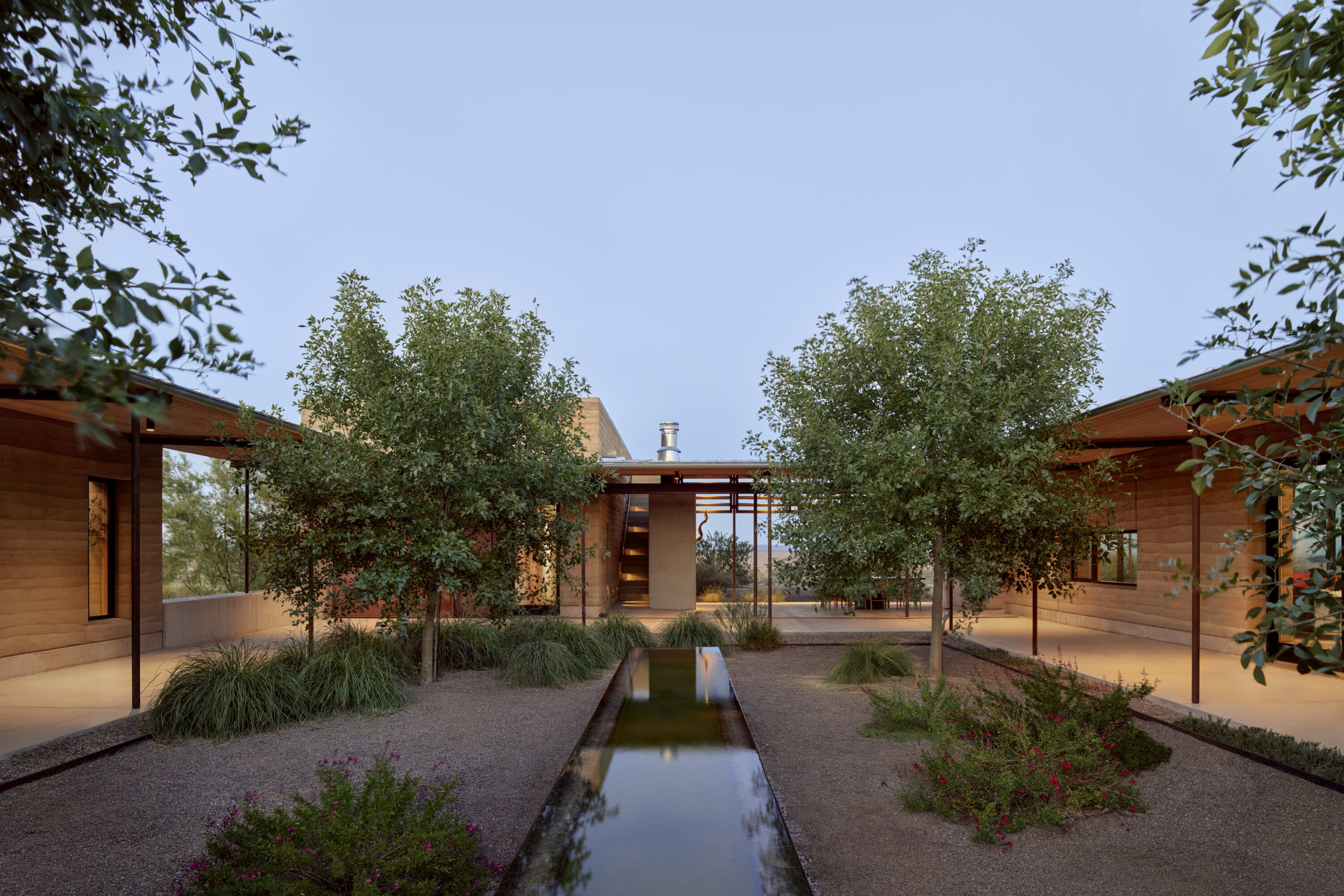
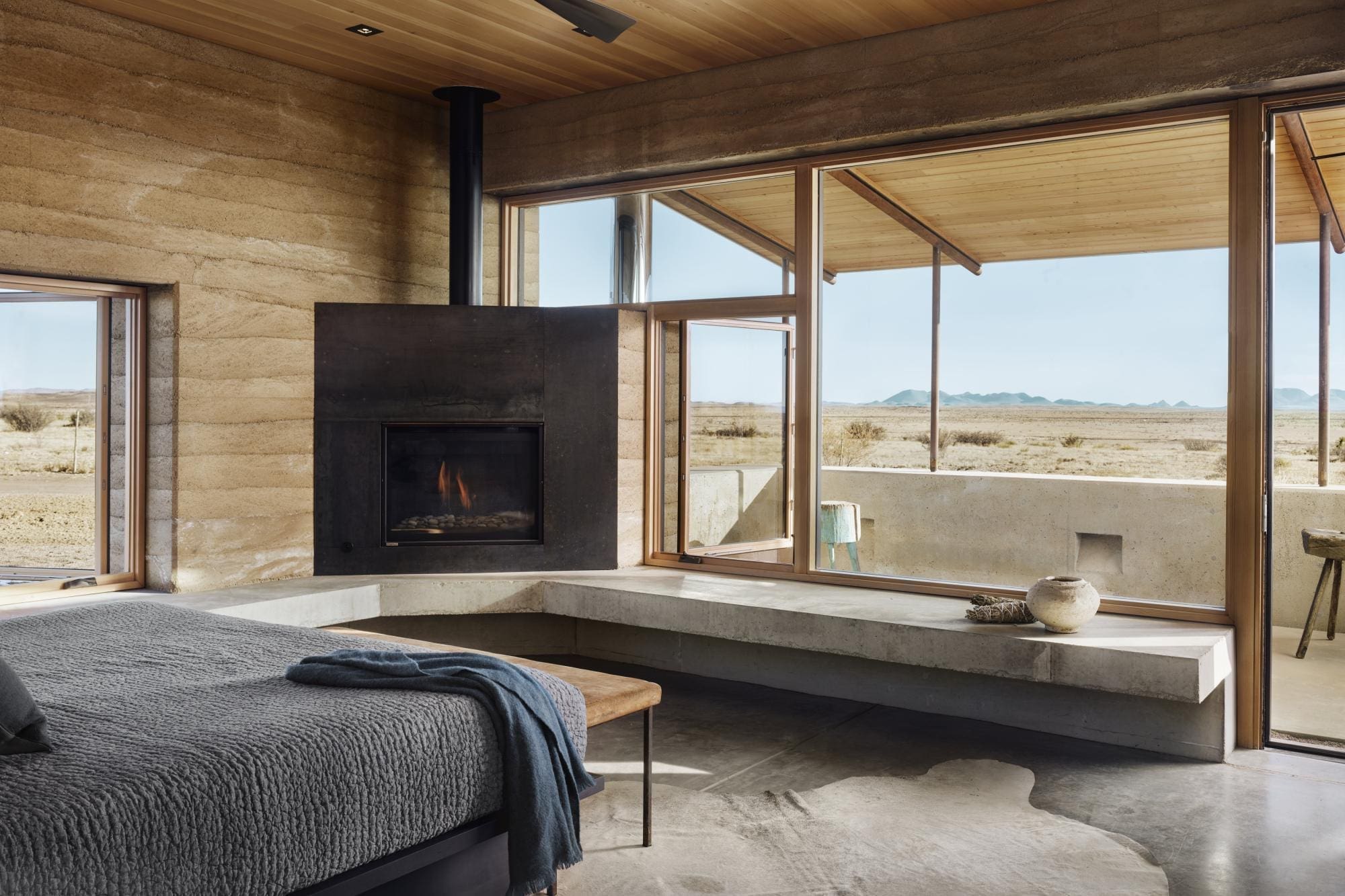
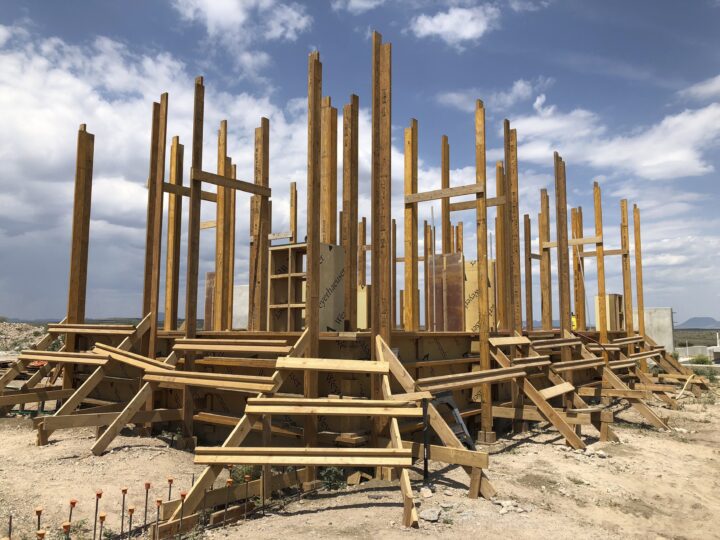
Built of two-foot-thick rammed earth walls, the home protects its inhabitants from the extremes of the region — heat, cold, and wind — while allowing them to connect with the landscape through lightweight breezeways and porches, a mirador perched above the main bedroom, and an outdoor walkway connecting to a pool and hot tub.
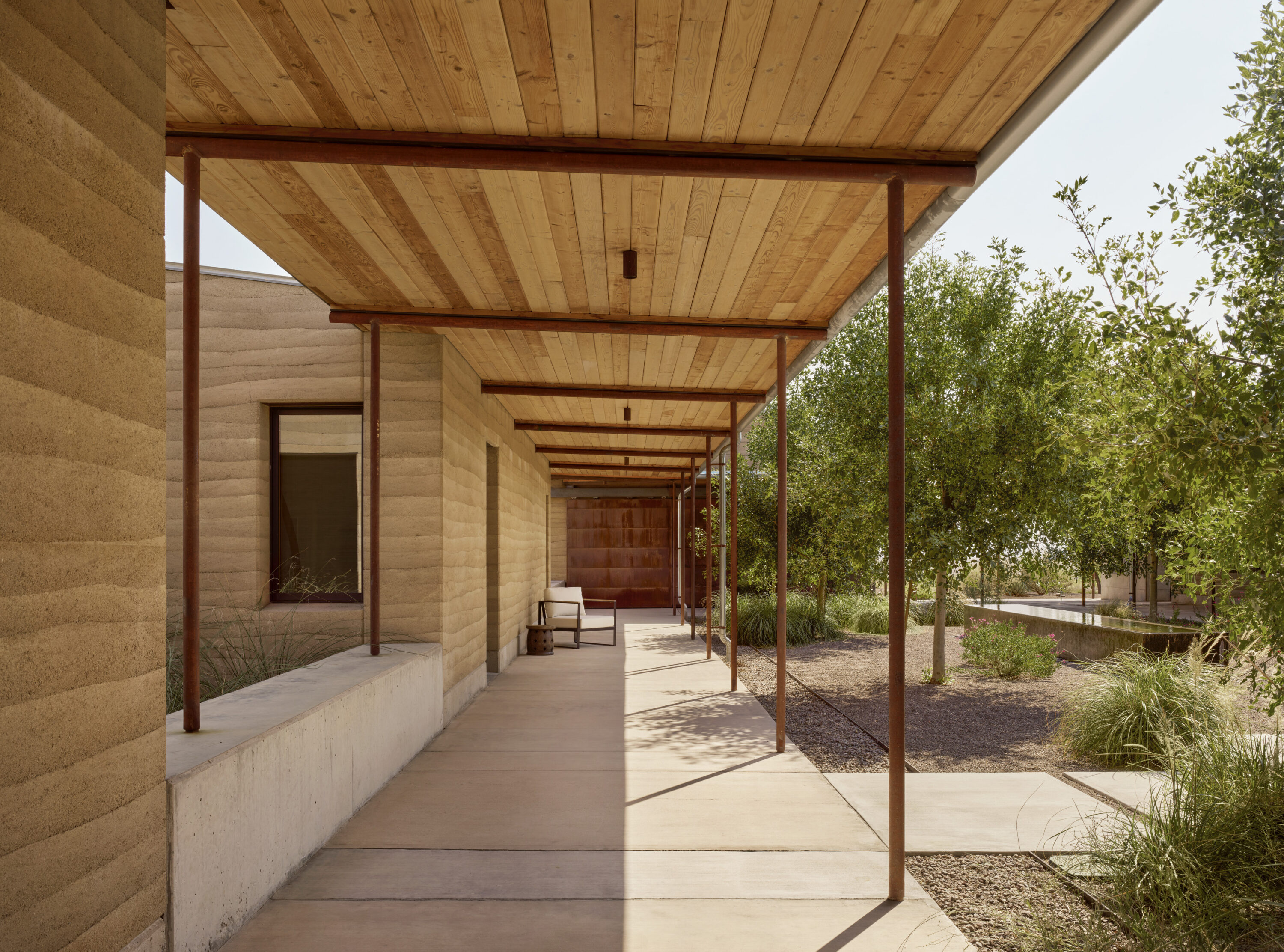
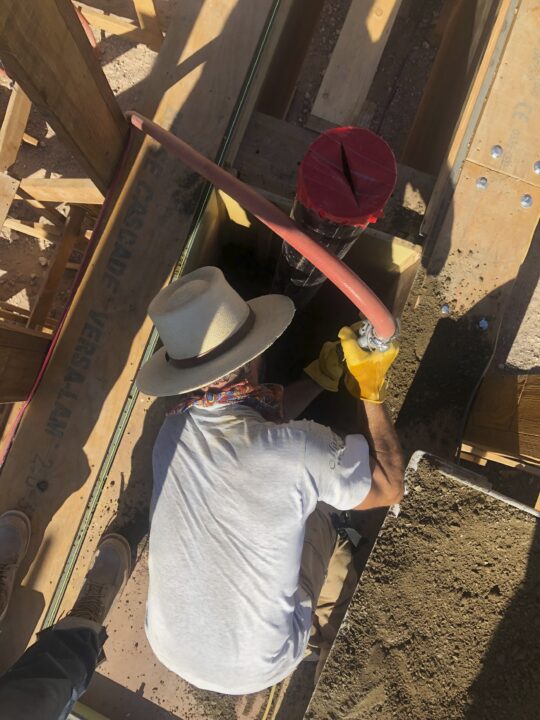
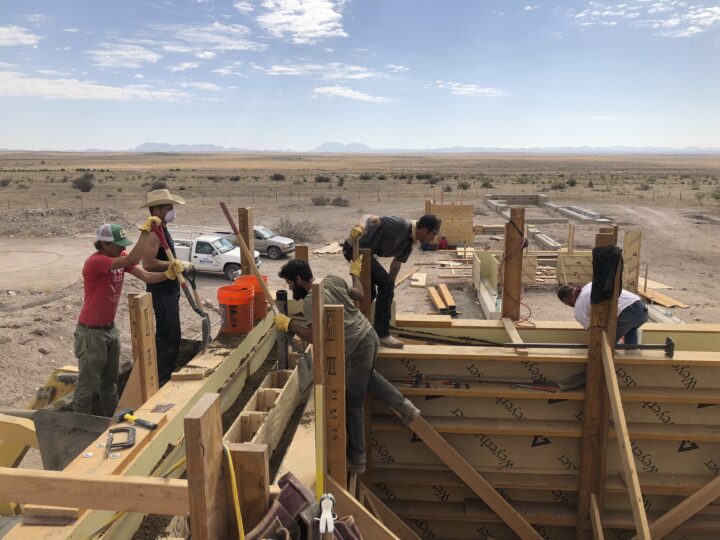
The studio used three million pounds of earth to create the rammed earth walls, which were chosen to reflect a connection to the landscape. This material was used for the structure as well as for the finishes.
“Rammed earth is a simple material that reinforces the connections to the land and the landscape,” said Harris. “It is a labor of love to commit to the use of earth when building, and the craft of the construction is evident throughout.”
“As a counterpoint, most all the surrounding rooms open to both the interior and exterior landscape and are positioned to accept the cooling breeze reaching out to the exterior foreground and distant horizon.”