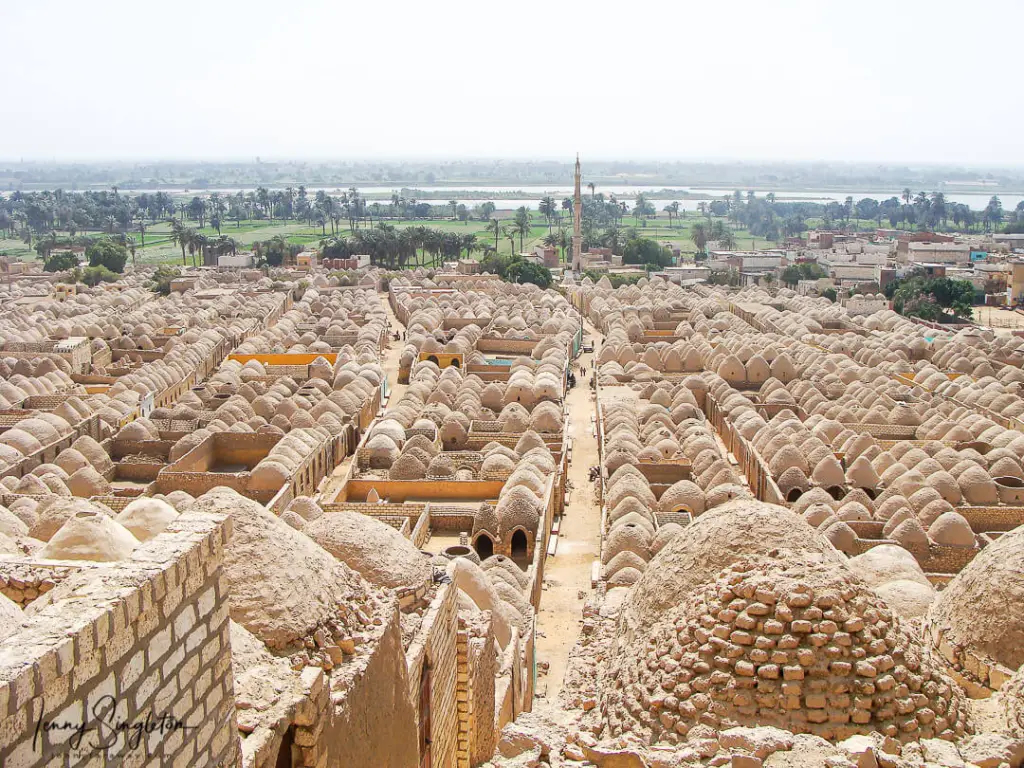
Zawiyyet Al Mayyiteen (also known as Zawyet el-Sultan or Zawyet el-Amwat) is located on the southern edge of the city of Minya and is situated between the Nile river and desert cliffs to the East. Often called the “City of the Dead,” it is considered one of the largest cemeteries in the world, measuring nearly 4 kilometers long and 300 meters wide, covering roughly 1.2 square kilometers. Zawiyyet Al Mayyiteen is not just a modern cemetery; it is built atop layers of ancient history spanning nearly 5,000 years.

The site is easily identifiable by the repetition of small scaled domes made of mudbricks and plaster. Each domed mausoleum belongs to a different family and ancestral lineage. The highly concentrated sea of domes is easily read as a single web structure or pattern resembling the geological landscape, its growth seems fairly gradual and responsive to the site.
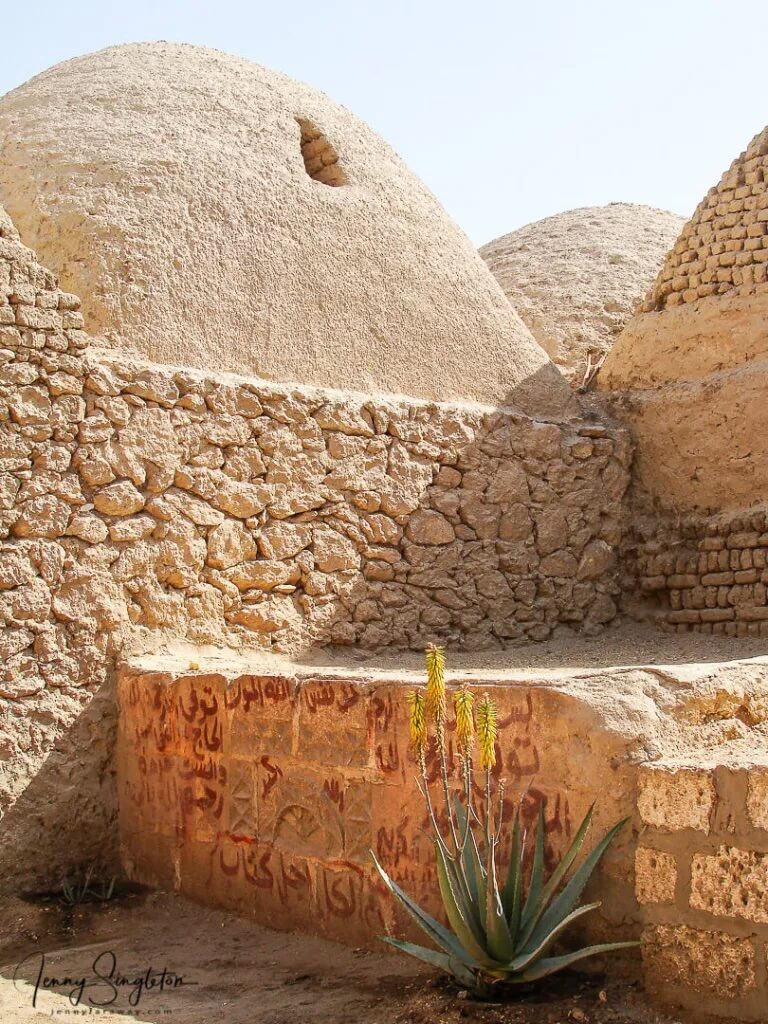
This style of burial is traditional for the region, used by both the local Muslim and Coptic Christian communities, making it a rare site of shared funerary heritage.
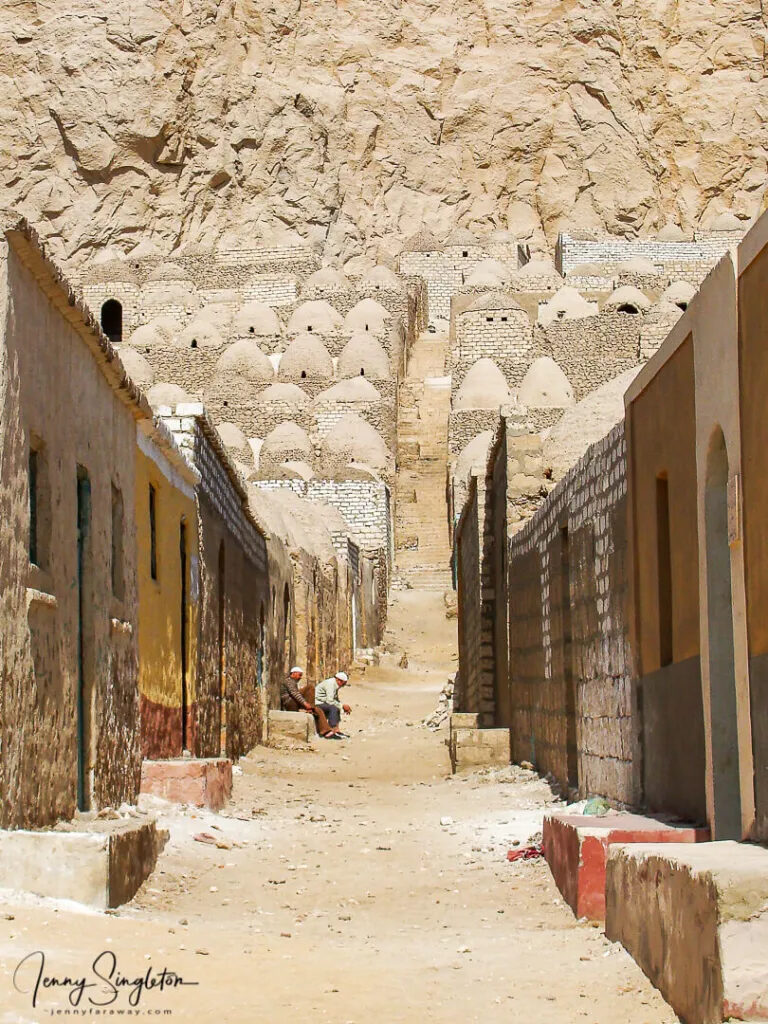
During religious holidays and annual festivals, thousands of people from Minya travel to the site to visit their ancestors, often staying in the mausoleums to share meals and offer prayers.


The unique aesthetic of the domes has long inspired artists and photographers. The nearby village is also home to the museum of the famous Egyptian folk artist Hassan el-Shark, whose colorful paintings often depict the daily life and spiritual traditions of the Minya region.
Resources
https://www.jennyfaraway.com/el-minya-cemetery/
https://egyptfwd.org/Article/6/2265/City-Of-The-Dead-An-Endless-Sea-Of-White-Conical
https://www.atlasobscura.com/places/city-of-the-dead