Group Member: Chuhan Zhao, Yiluo Li
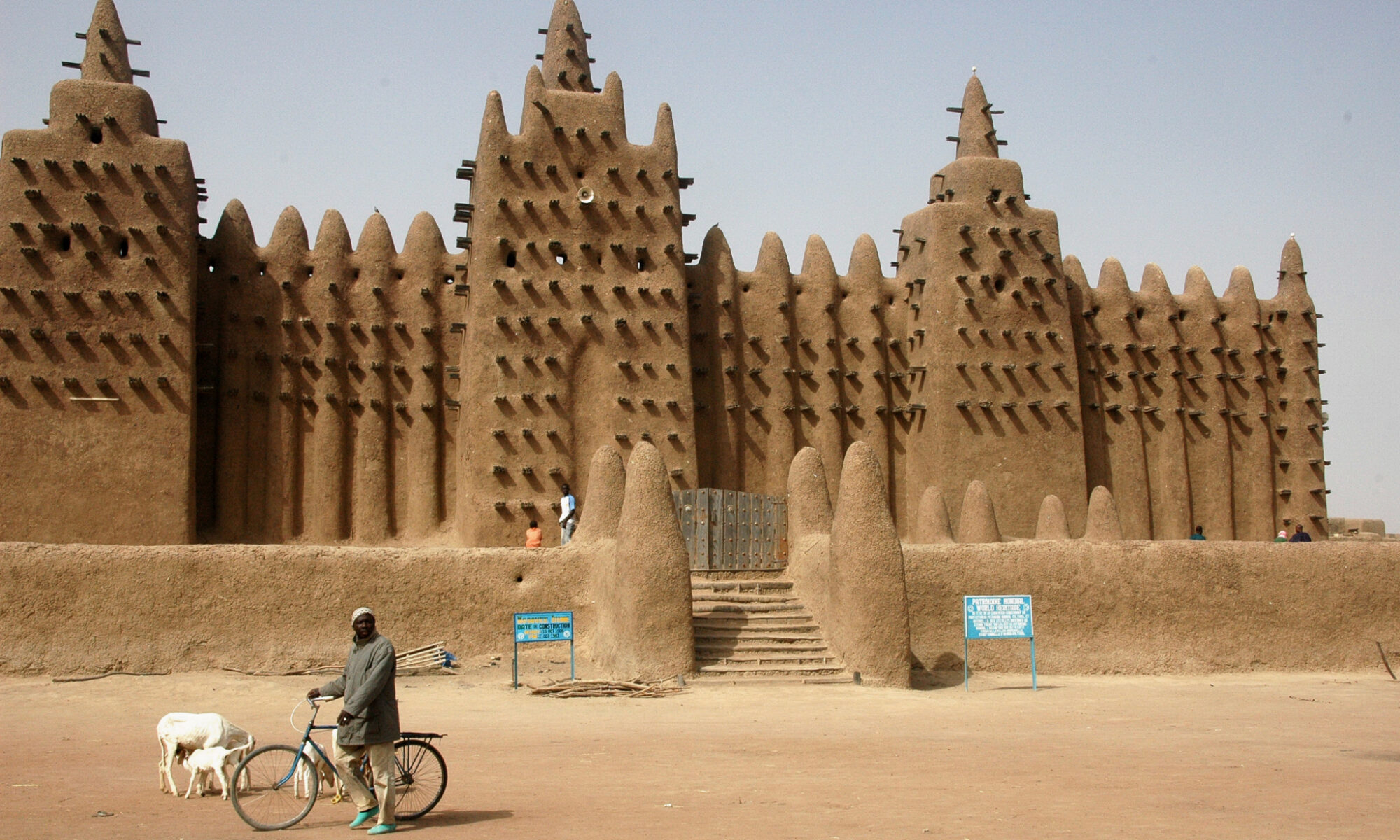
We started from the Augsburg Environmental Education Center, where rammed earth is used as an interior wall. In that project, we observed that different materials—such as wood or concrete—are typically placed next to or on top of the rammed earth. In other words, the materials remain separate, and their interaction mostly happens at the surface.
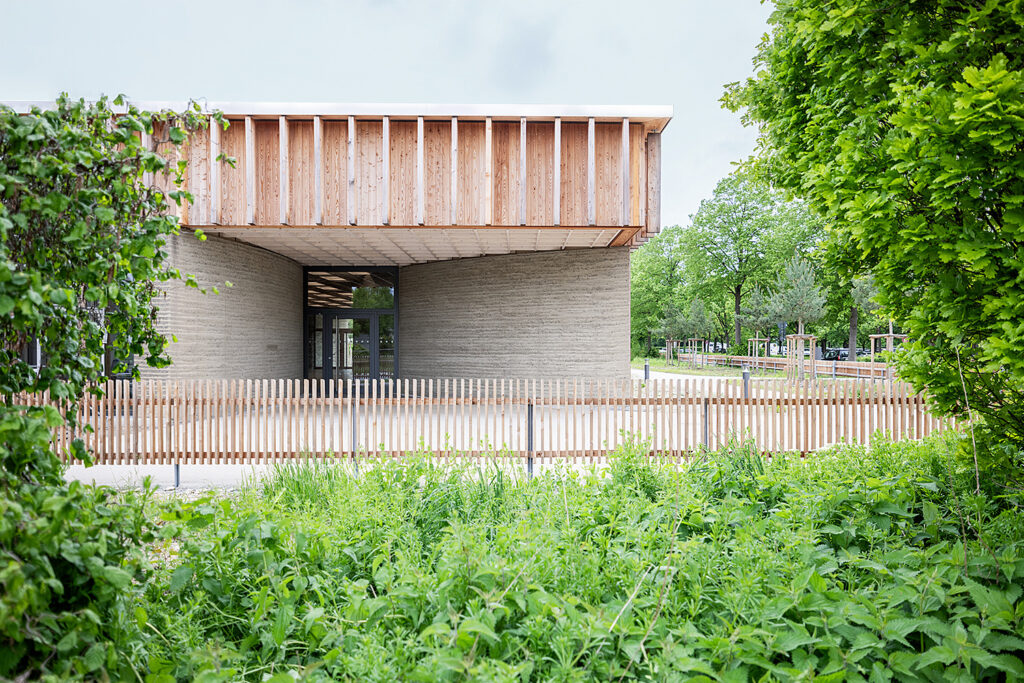
Augsburg – Transition from Botanical Garden
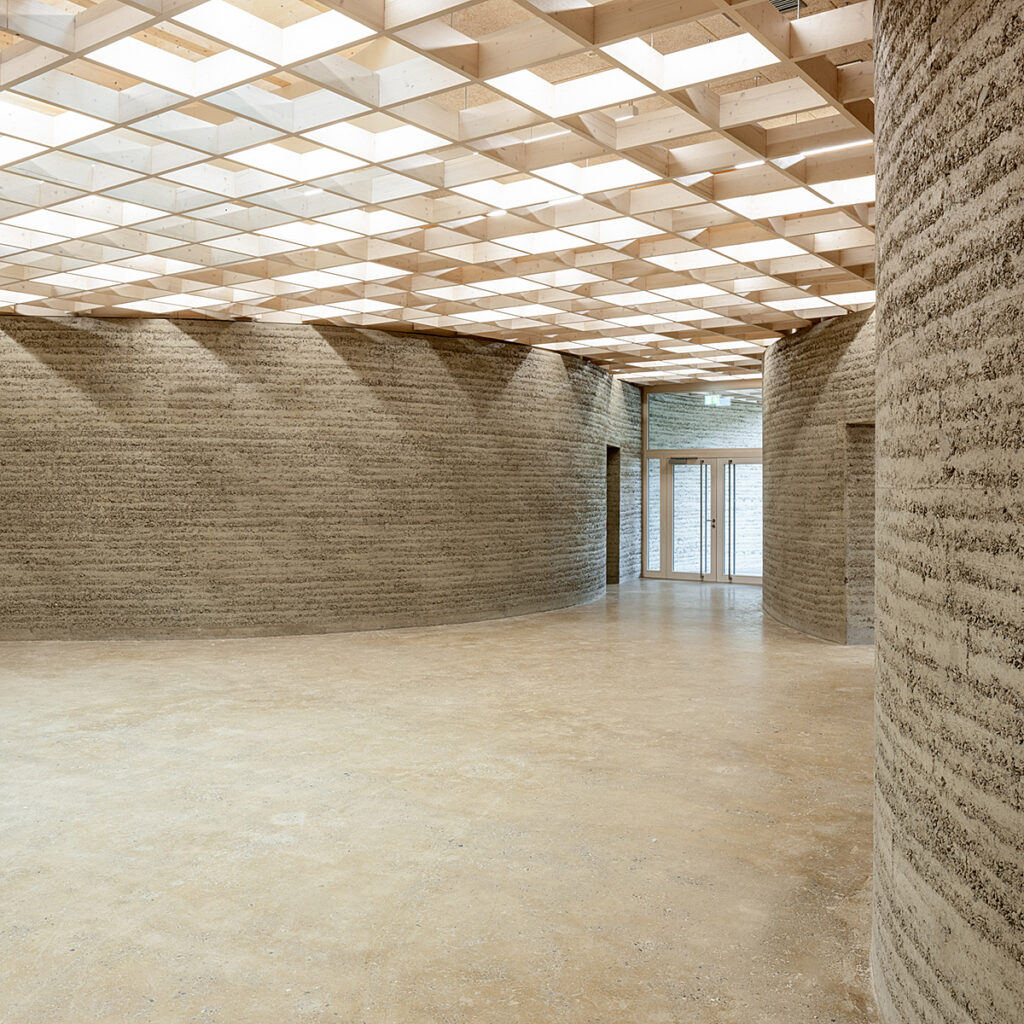
Augsburg Interior
What interested us was what happens if this relationship changes.
So our main question became:
What happens when materials are not adjacent to rammed earth, but embedded within it?
Instead of treating rammed earth as a pure, monolithic material, we began to think of it as a mass that can integrate other systems and become a composite condition.
To test this idea, we first made an initial model of a curved rammed-earth wall with a grid inserted into it. This allowed us to explore the relationship between a heavy, continuous mass and a lighter, secondary system. Rather than assigning a fixed program, we understood this as a spatial condition defined by material interaction.
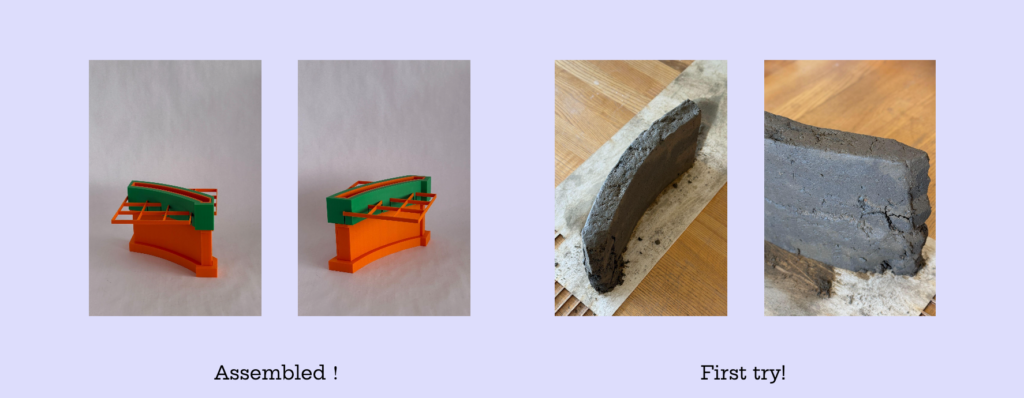
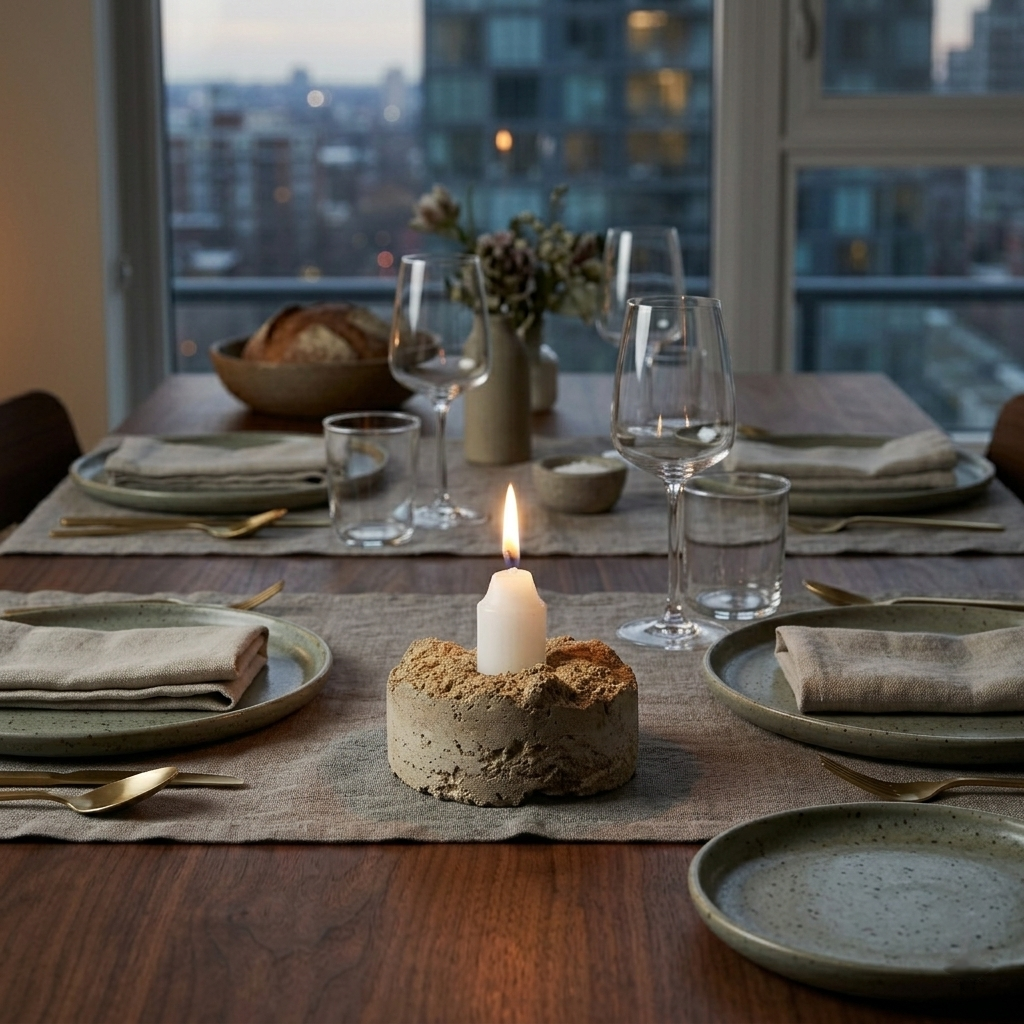
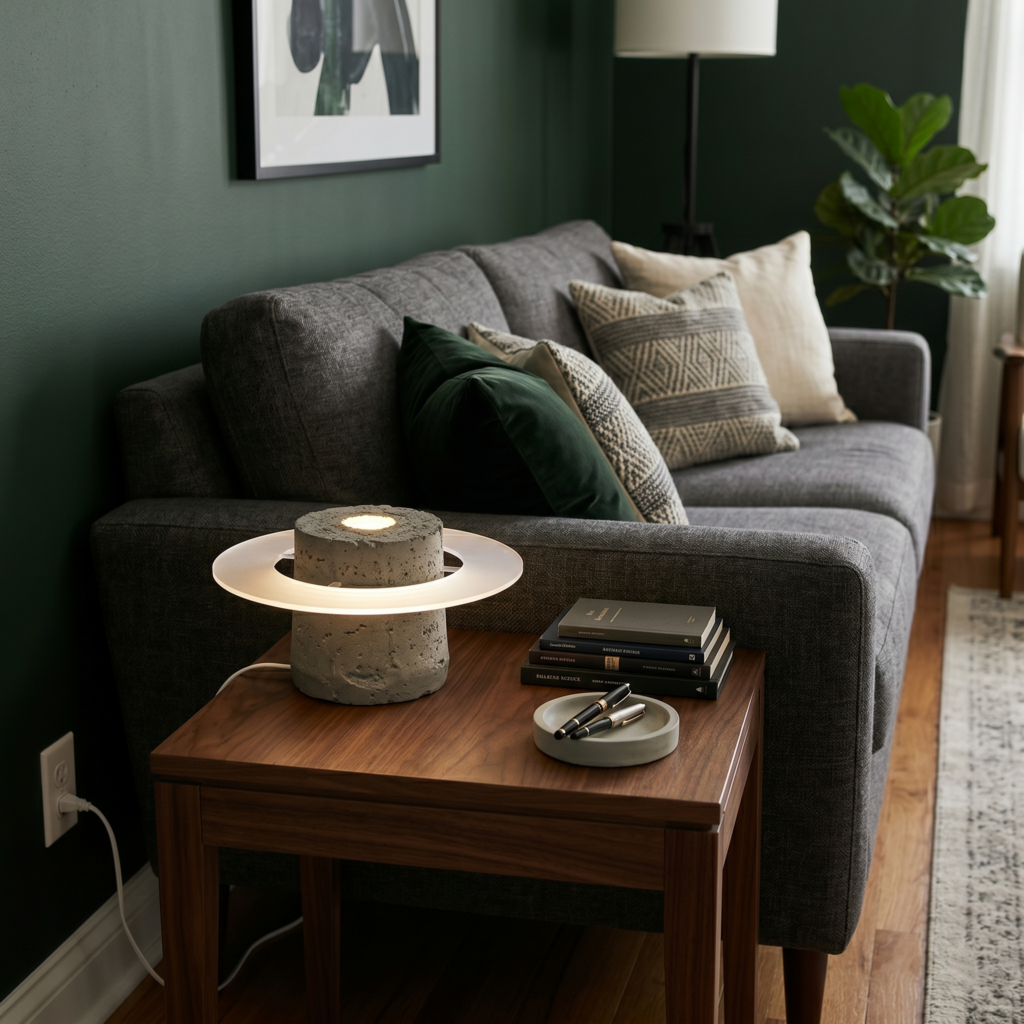
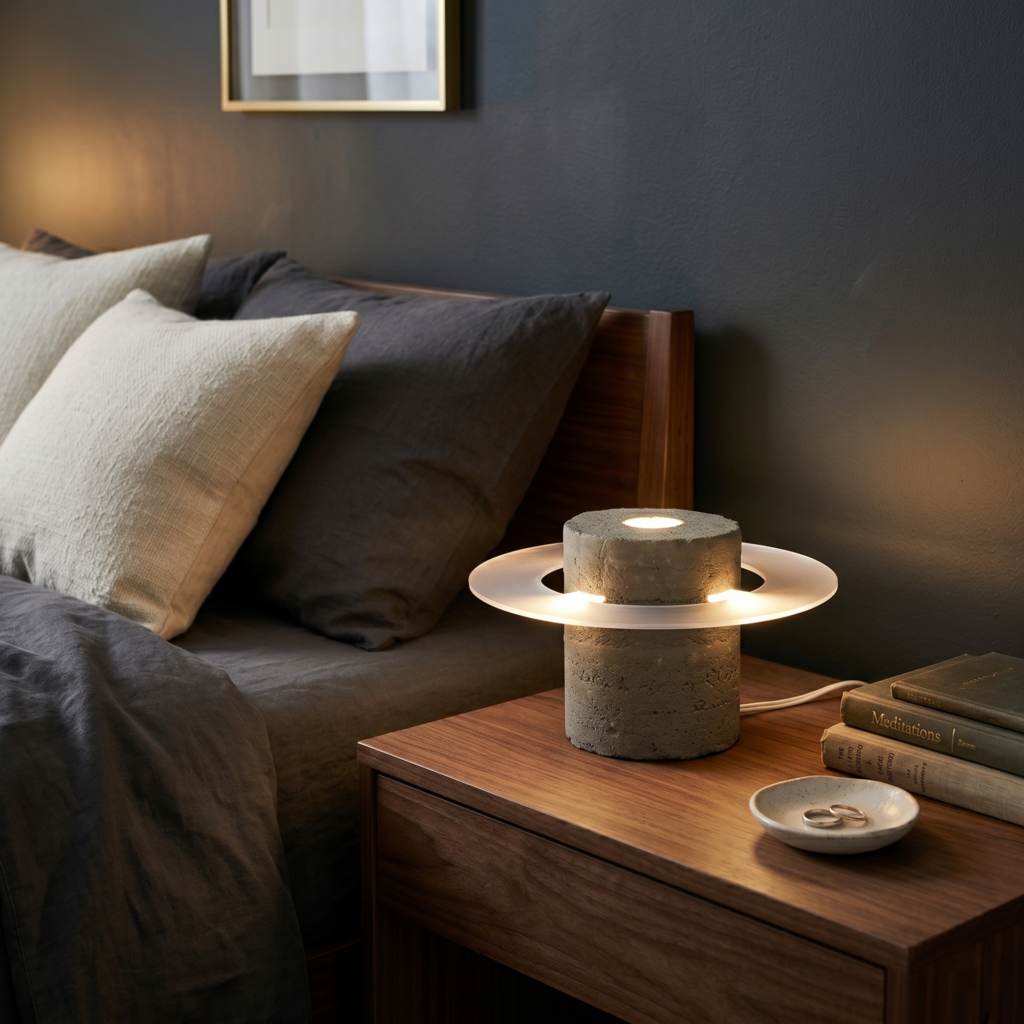
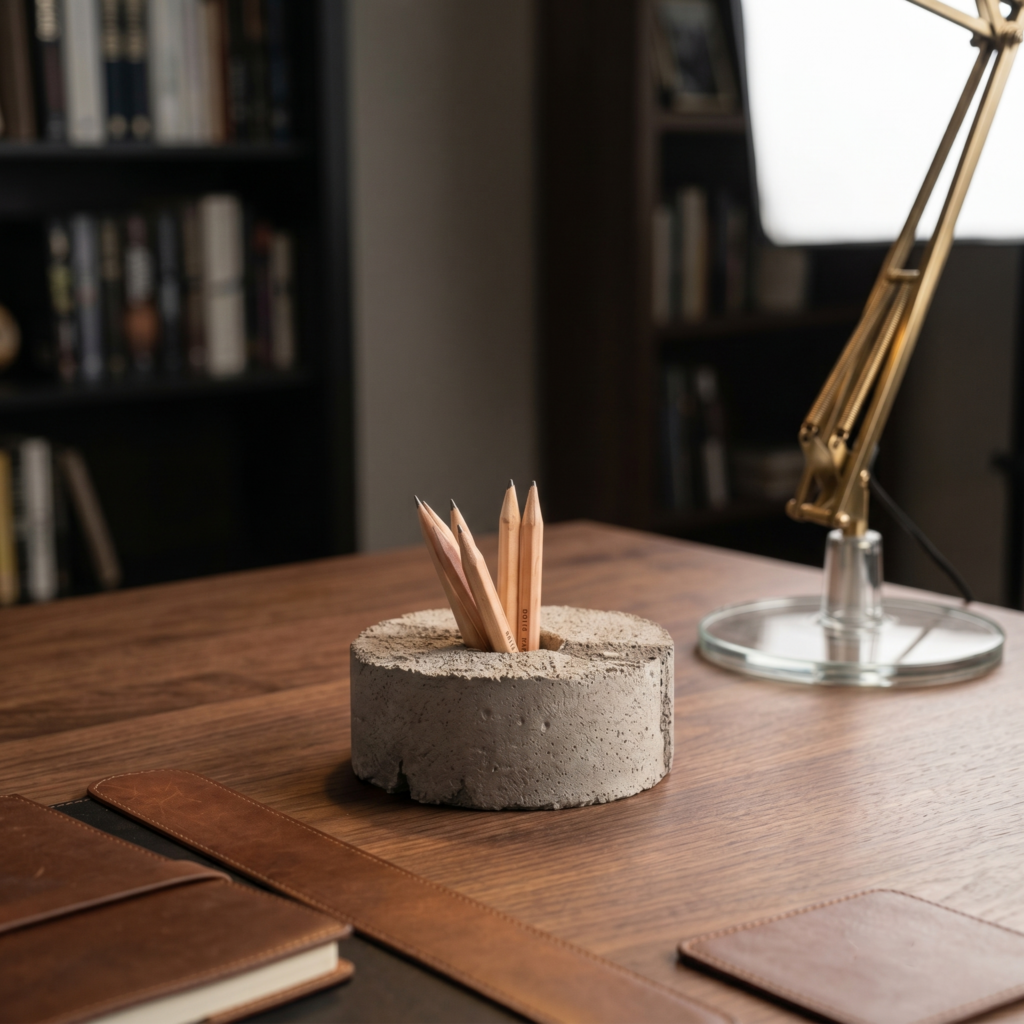
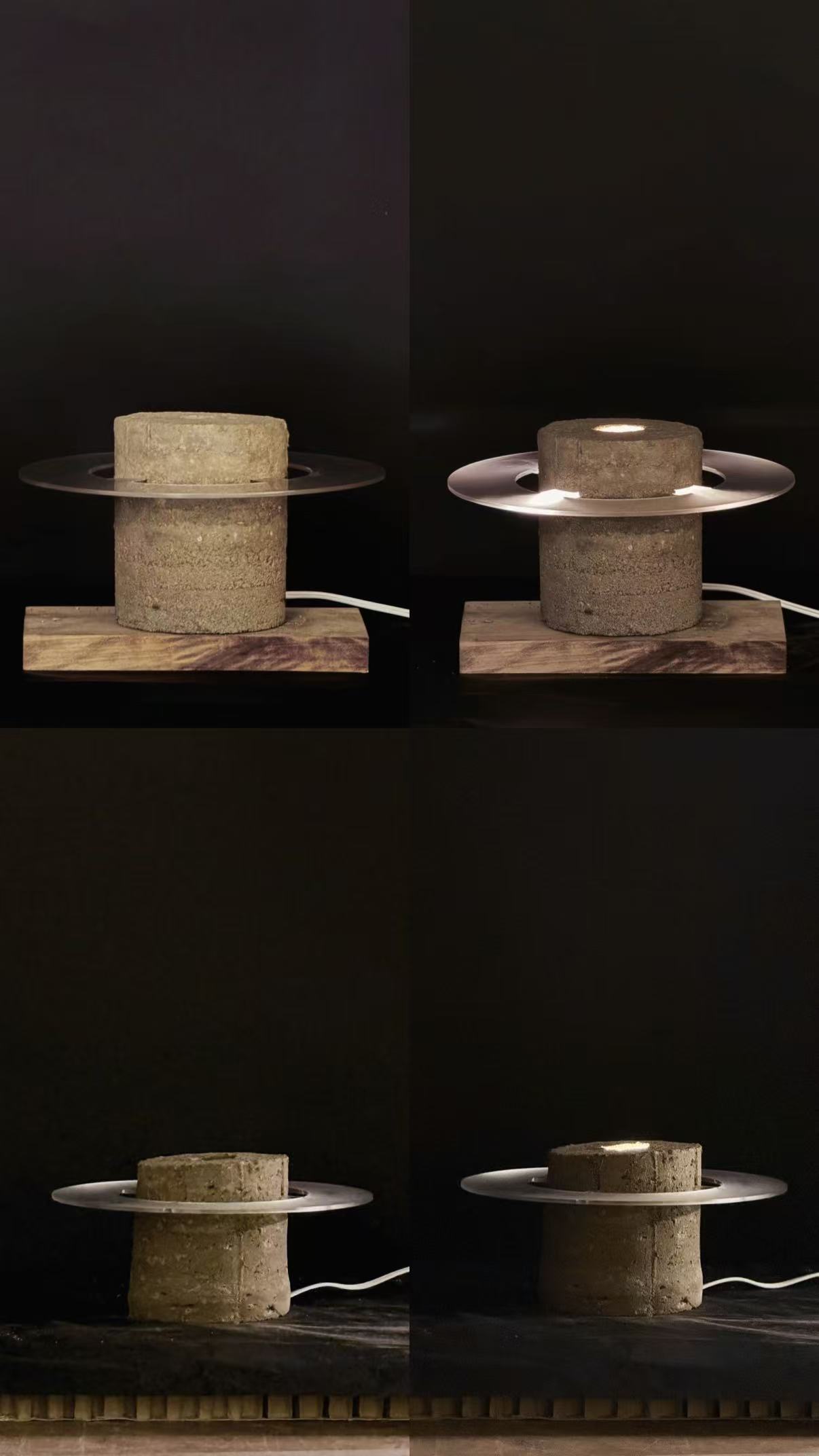
From there, we moved toward a smaller and more controlled scale and developed the final objects you see below.
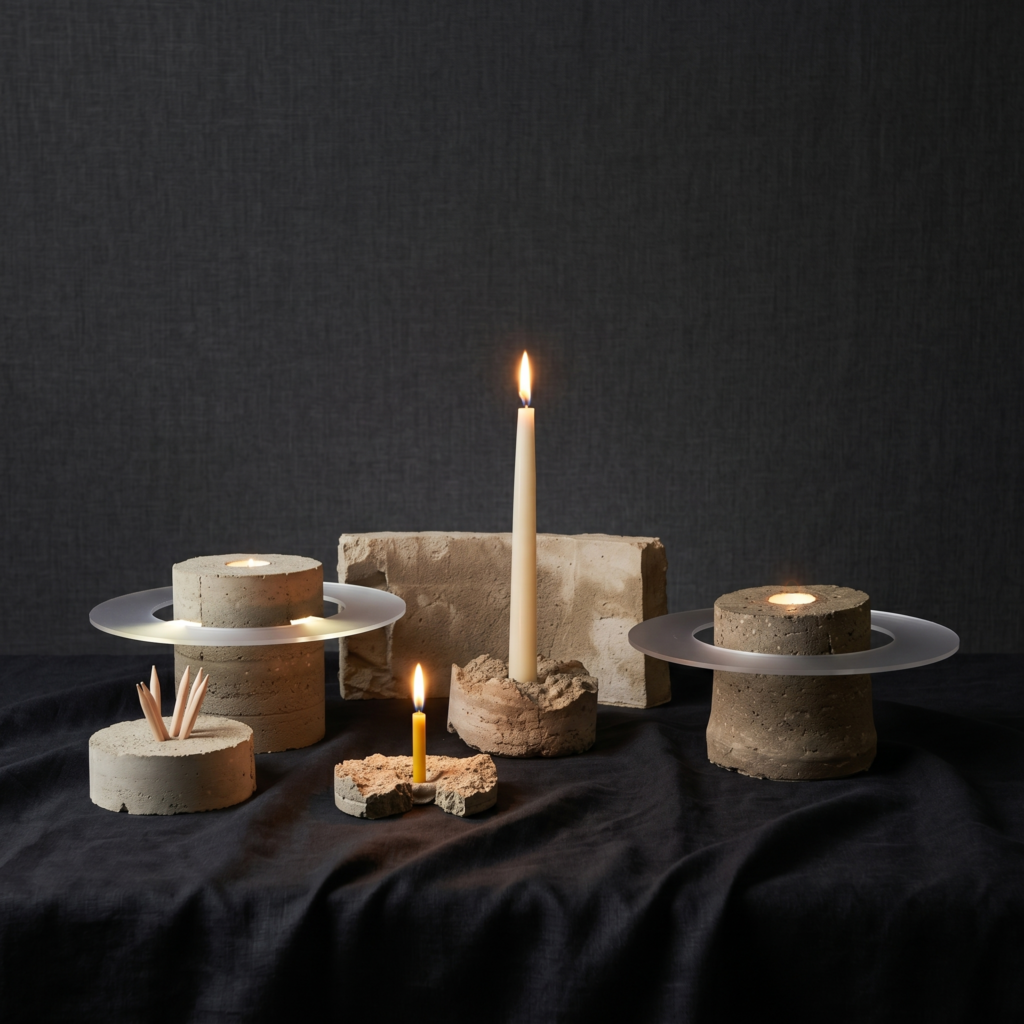
This object is not intended as a product or a finished design, but as a material prototype.
It consists of a rammed earth mass with an embedded element, and a central cavity that holds a light source. The inserted ring acts as an interface within the earth mass, and the light passes through this composite condition.
What becomes important here is not the form itself, but how light interacts with the material. The light reveals the thickness, the texture, and the relationship between the earth and the inserted element.
At this scale, we are able to control the variables more precisely and focus on how rammed earth behaves when it is no longer a single material, but part of a system.
So rather than designing a lamp, we are using light as a way to understand how a monolithic material can become composite, and how that affects spatial and material experience.