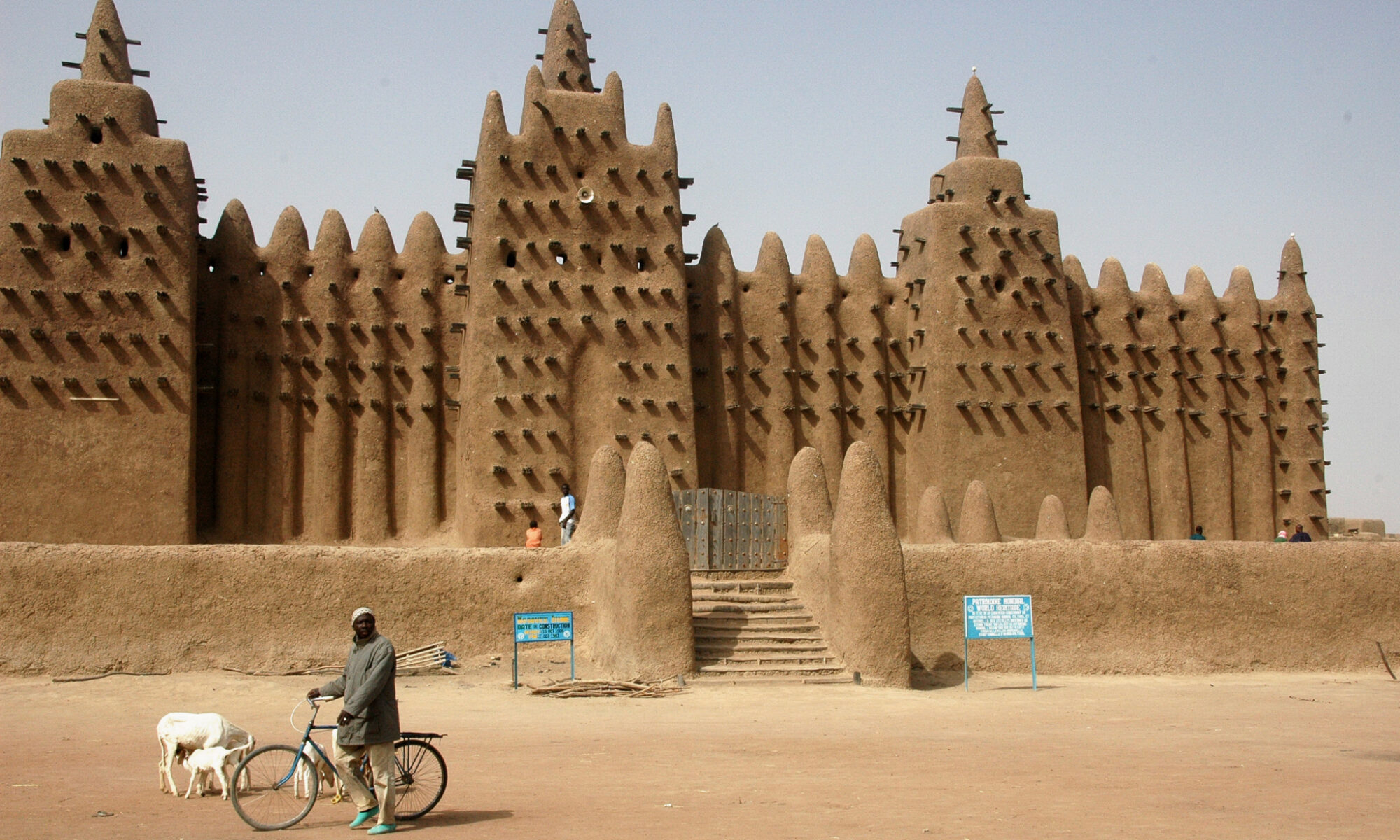
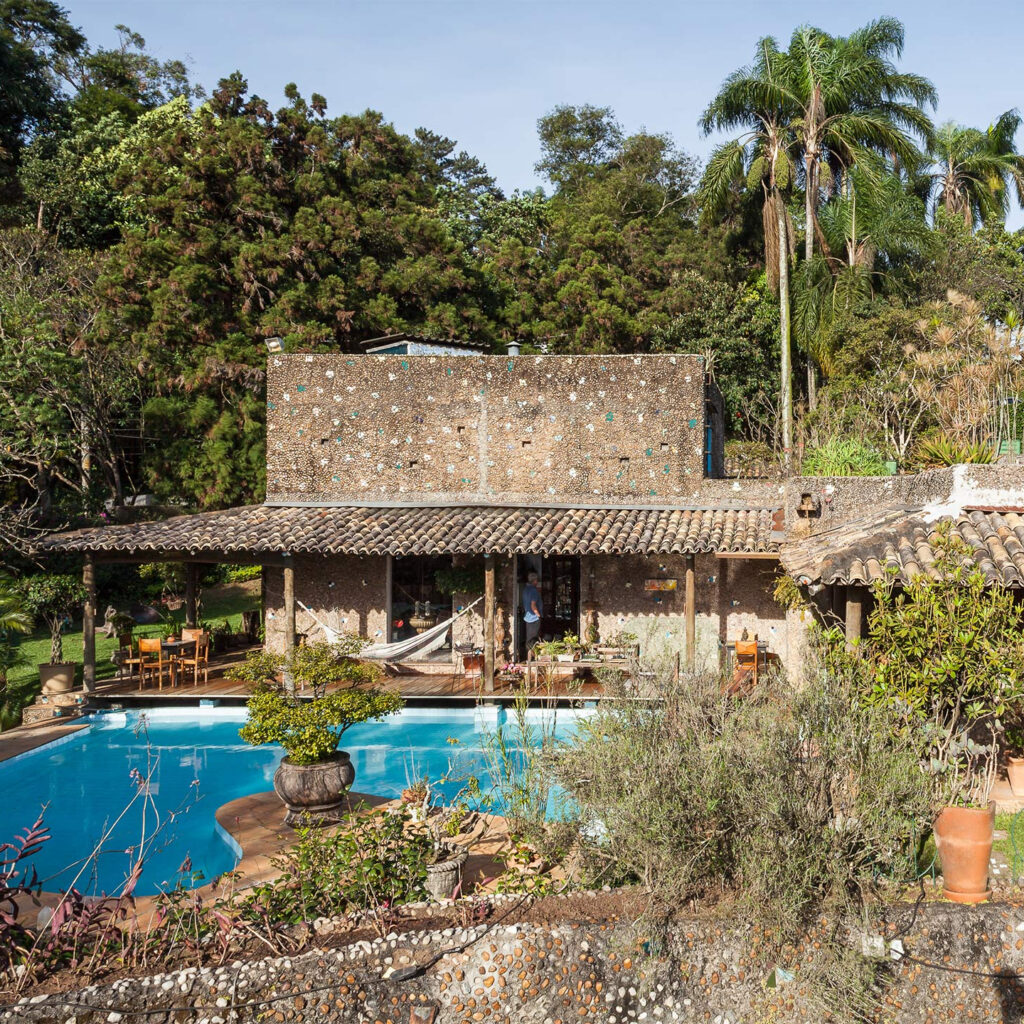
The project begins with two references: the earthen wall of the Valéria Cirell House and Studio Moffitt’s prototype-based model approach. While the Valéria Cirell House demonstrates how rammed earth can function as both structure and material expression, Studio Moffitt’s work proposes a different way of understanding architectural models, not as literal representations of buildings, but as prototypes that isolate and test specific architectural ideas through fabrication and abstraction.
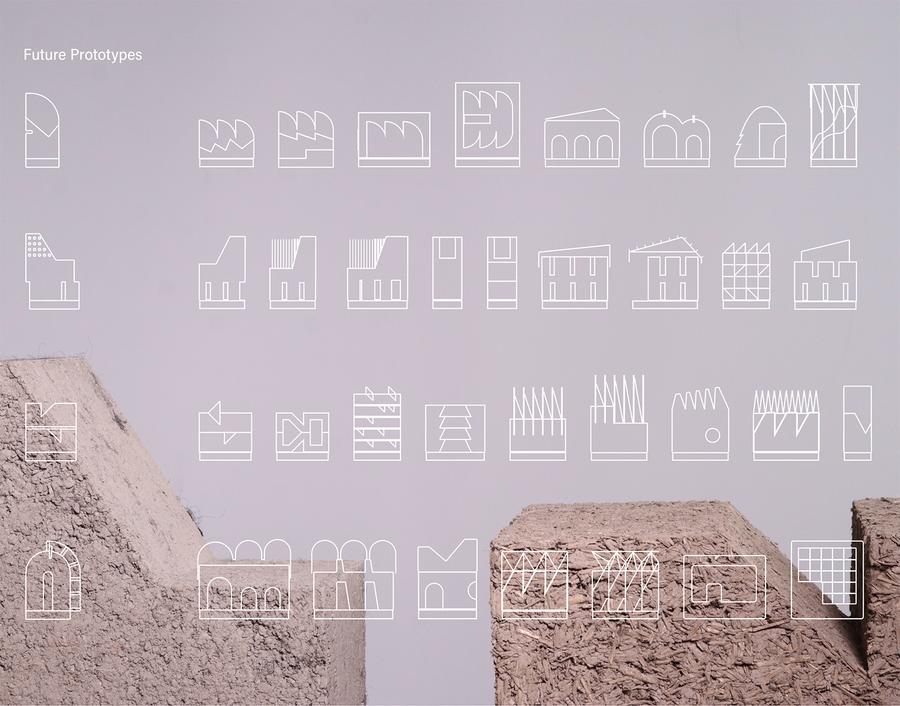
Studio Moffitt’s prototype-based model
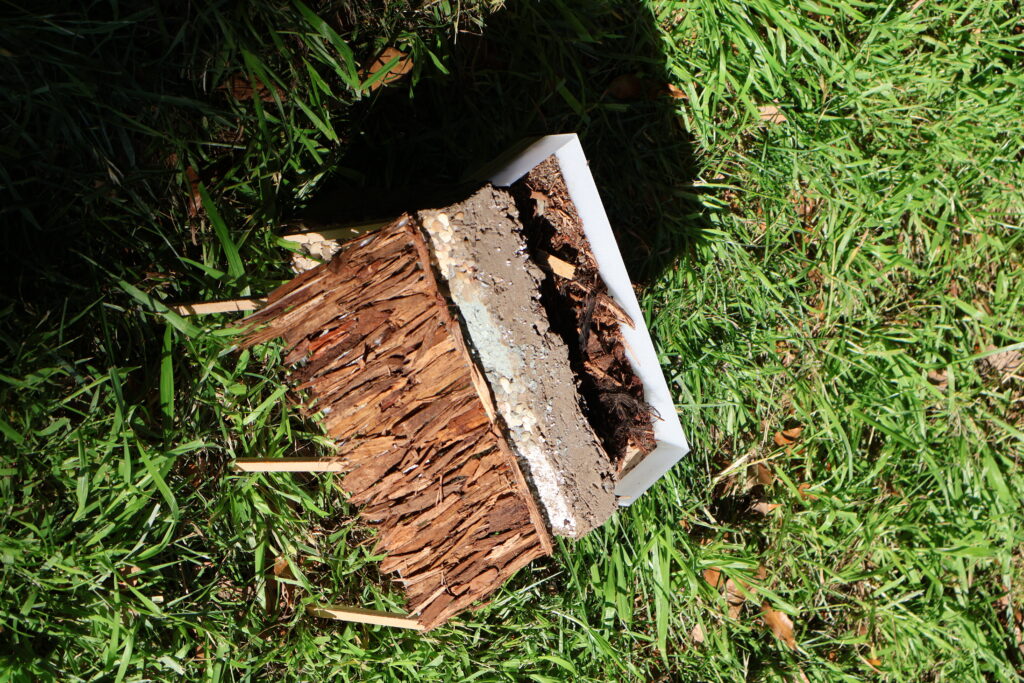
Inspired by these two approaches, the project does not attempt to reconstruct the original house through detailed representation or structural replication. Instead, it extracts the tectonic and material logic of earthen architecture and reorganizes it into an abstract wall prototype. The project therefore operates simultaneously as a fabrication experiment, a material study, and an architectural interpretation.
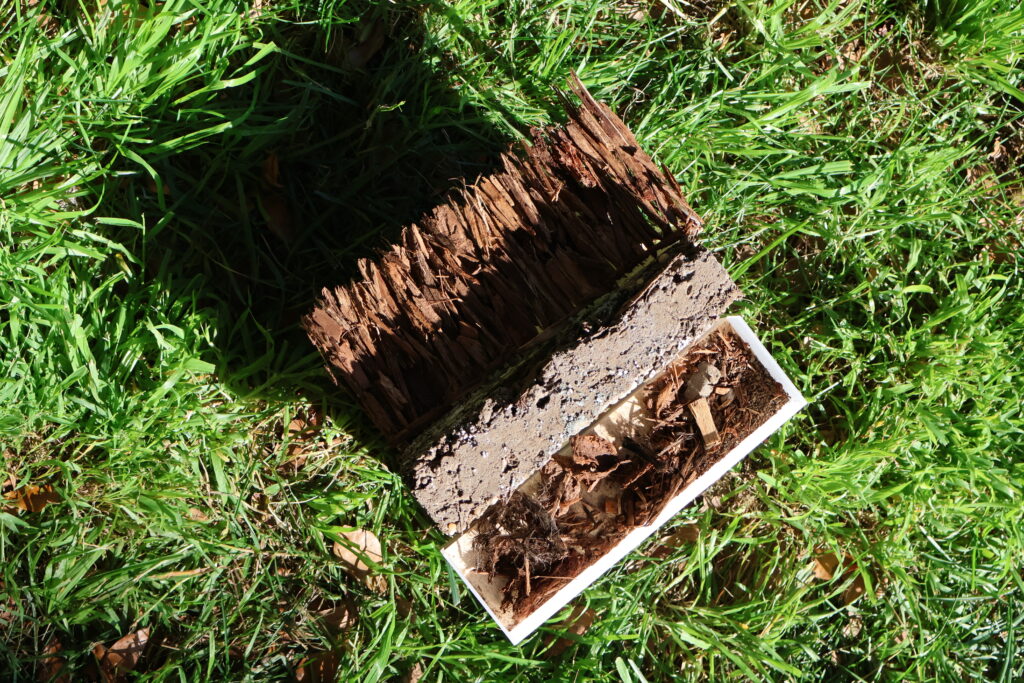
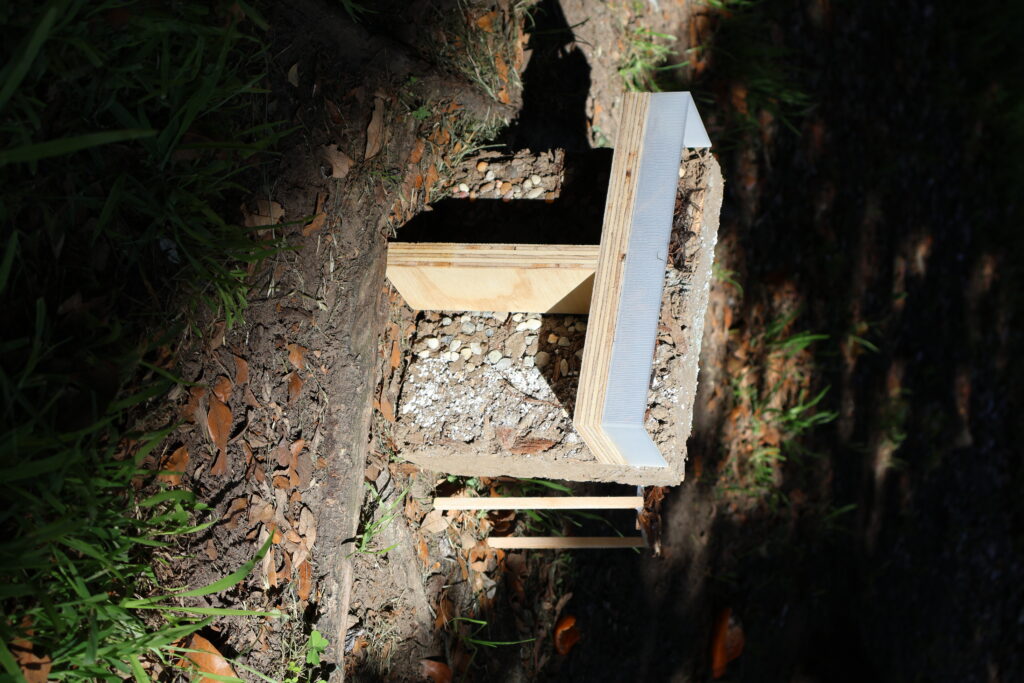
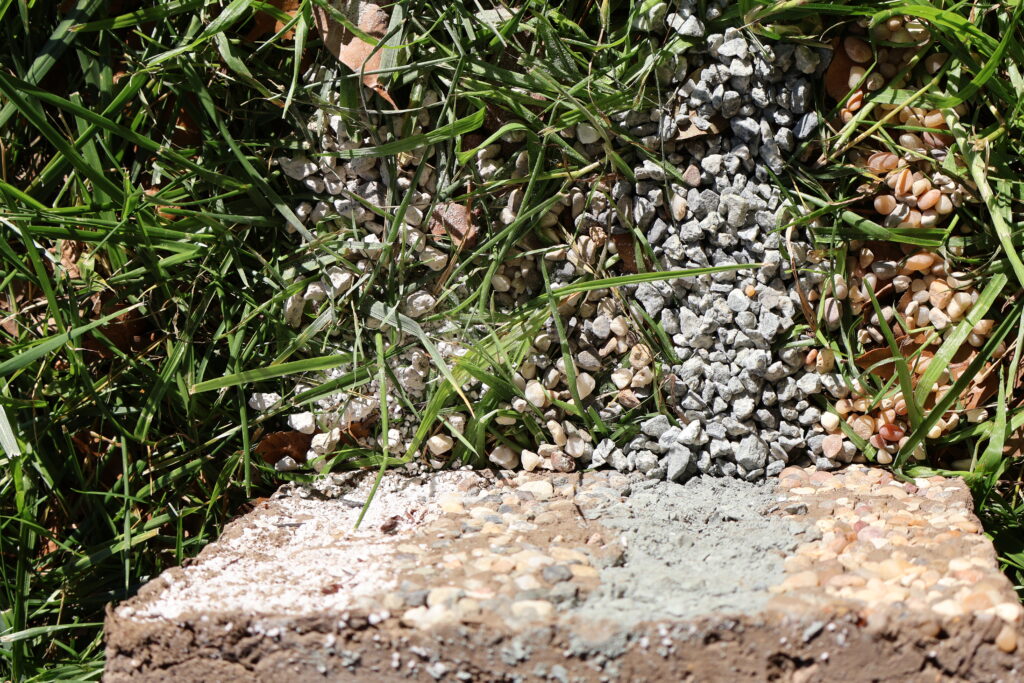
The physical prototype is constructed using rammed earth techniques. Clay is mixed with different fibers and aggregates to form the primary body of the wall, while various stones are embedded within the surface. Through layering and compaction, the materials are compressed into a dense monolithic mass. Rather than functioning as decorative additions, the embedded stones become integrated into the wall itself, producing a textured surface that emerges directly from the internal material composition.
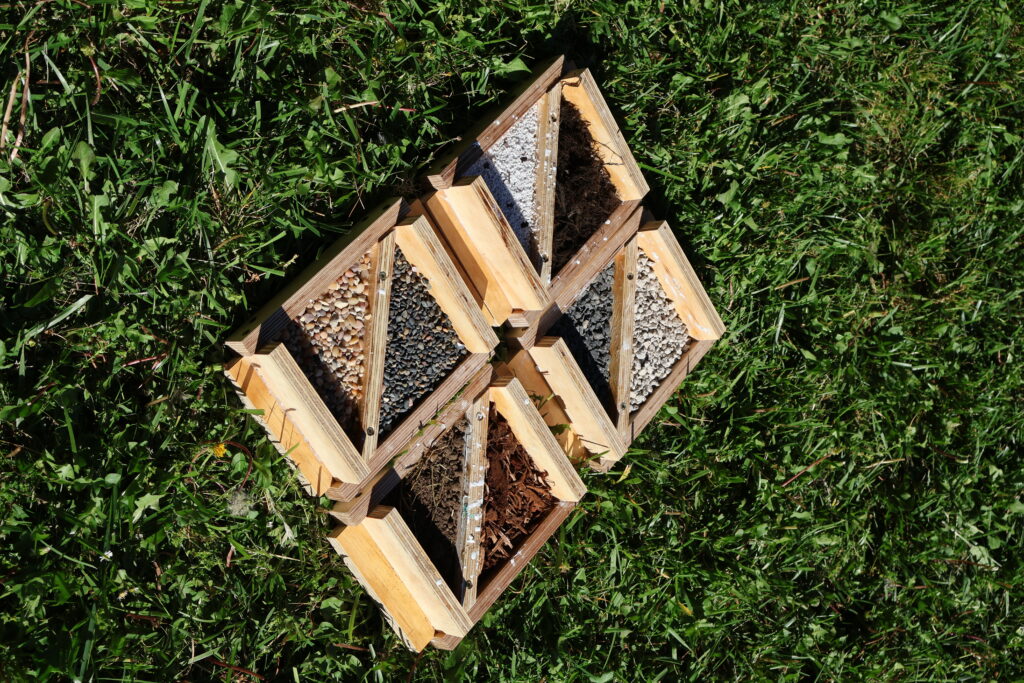
Material testing became an important part of the process. Different soils, granular materials, fibers, and stone fragments were explored in order to understand how texture, density, and structural stability could coexist within a single fabricated object. The goal was not to display isolated samples, but to investigate how multiple unstable materials could be transformed into a cohesive architectural system through compression and fabrication.
Beyond material experimentation, the project also explores a process of architectural abstraction. Instead of reproducing the original earth structure in detail, the prototype reinterprets it through a simplified geometric language. The project is interested in how modern architectural abstraction can translate primitive construction systems into reduced formal objects. In this sense, the prototype does not simply represent the original architecture, but reconstructs its essential relationship between mass, material, and structure in a contemporary form.
The wall therefore becomes more than a fragment of architecture. It operates as an artifact that records the interaction between material behavior, fabrication techniques, and formal abstraction. Texture is not applied afterward, but generated through the internal logic of layering, compaction, and embedded matter. The prototype ultimately positions rammed earth not only as a historical construction technique, but as a contemporary architectural language capable of integrating material expression, fabrication, and abstraction into a unified system.