Caleb Adams, Fernanda Loyola Cardoso and Isabelle de Metz
The project begins with an exploration of the Kiln Tower for the Brickworks Museum by Boltshauser Architekten. Designed as a contemporary reinterpretation of the site’s industrial heritage, the tower serves as both a landmark and an exhibition structure for the museum. Our interest, however, focused specifically on how the project investigates rammed earth as a contemporary structural system through prefabrication and vertical prestressing.
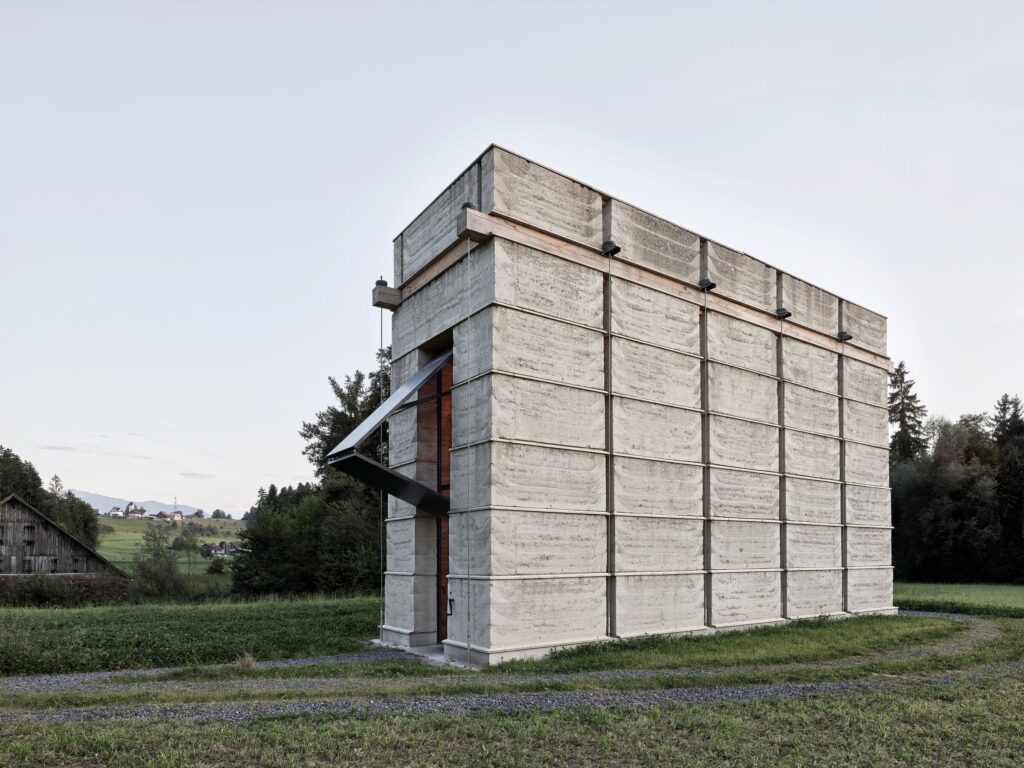
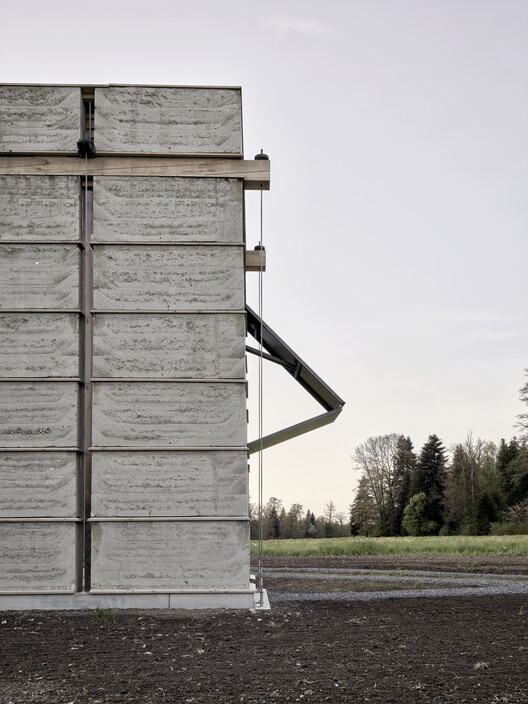
More specifically, the tower utilizes steel tension rods to compress stacked earthen blocks, transforming them into a 9-meter-high, earthquake-resistant structure. By placing the earthen elements in constant compression, the system overcomes earth’s inherent weakness in tension while enabling a tall, stable, and fully reversable building assembly.
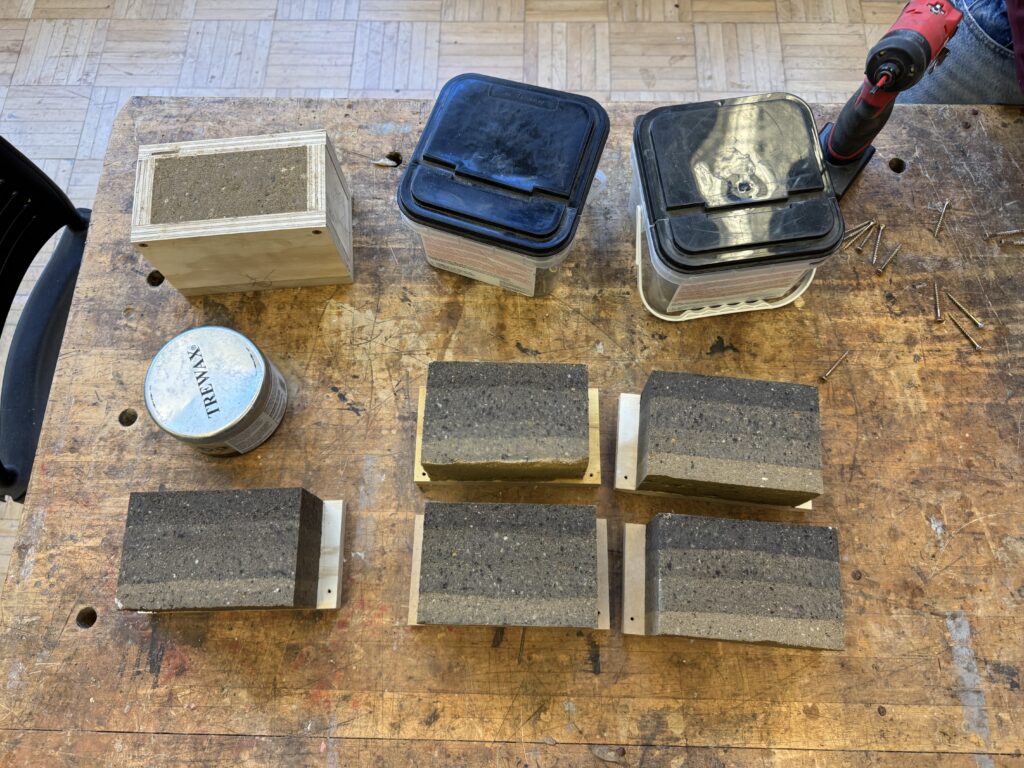
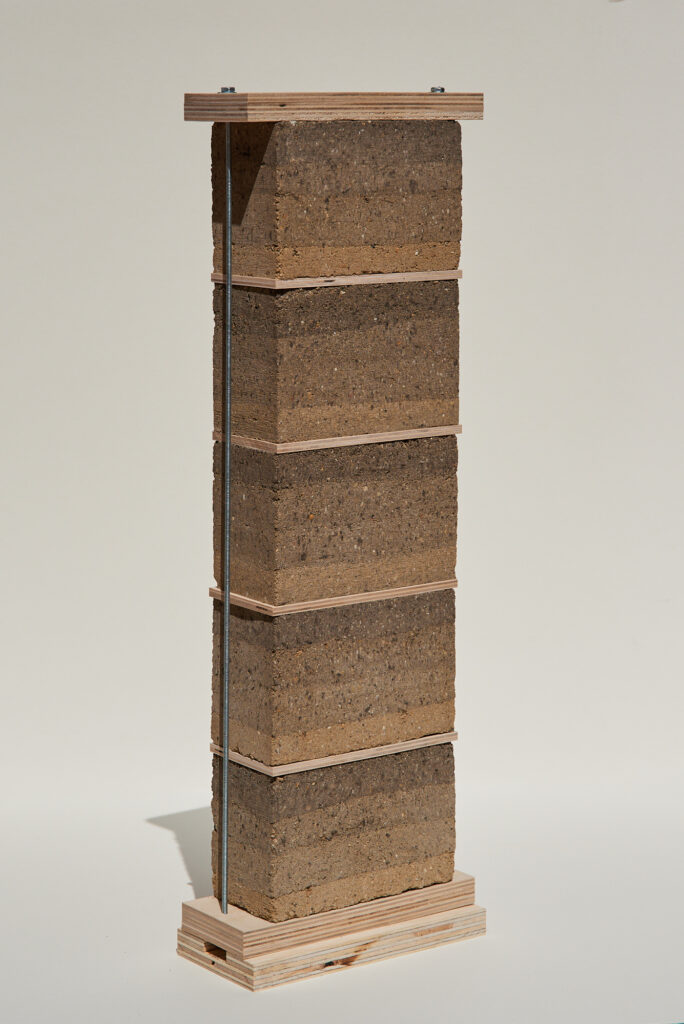
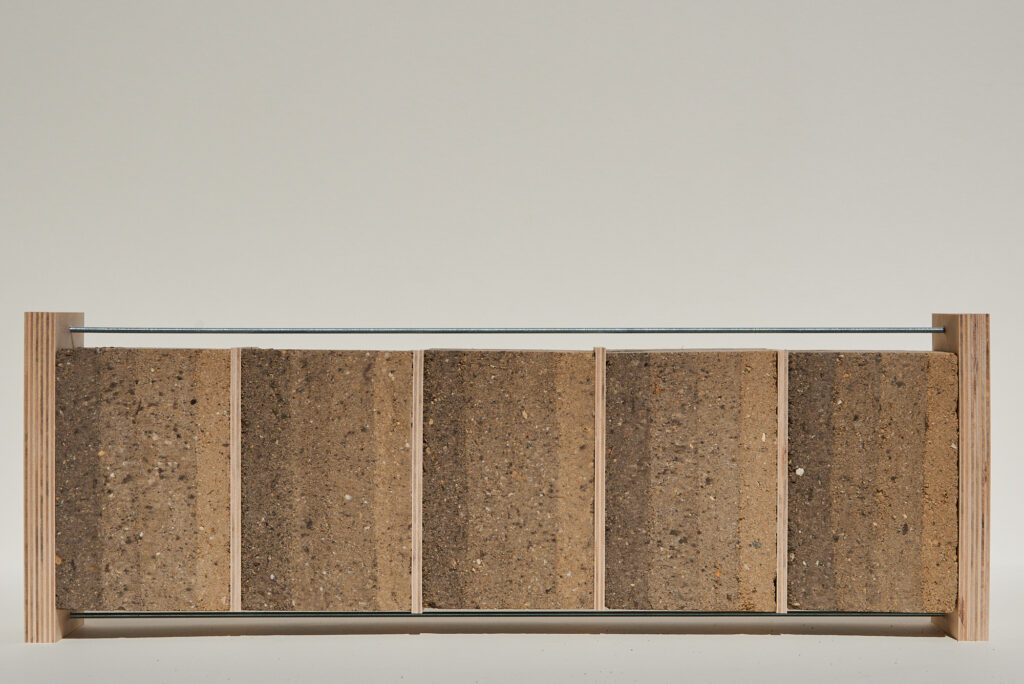
In an attempt to parallel the intricacy of this construction system, our team sought to create an earthen, modular prototype of the tower to explore the possibilities of earth and its compressive strength. To achieve this, our team began by experimenting with mixtures of three key ingredients earth, clay, and sand, using different ratios to produce bricks measuring 3”x4”x6” inches. A wooden formwork system was first constructed, along with a hand-made ramming tool fabricated from plywood to begin ramming the earth together. The proportions of the earth, clay, and sand were varied as the bricks were layered vertically in order to create visible striations throughout the assembly.
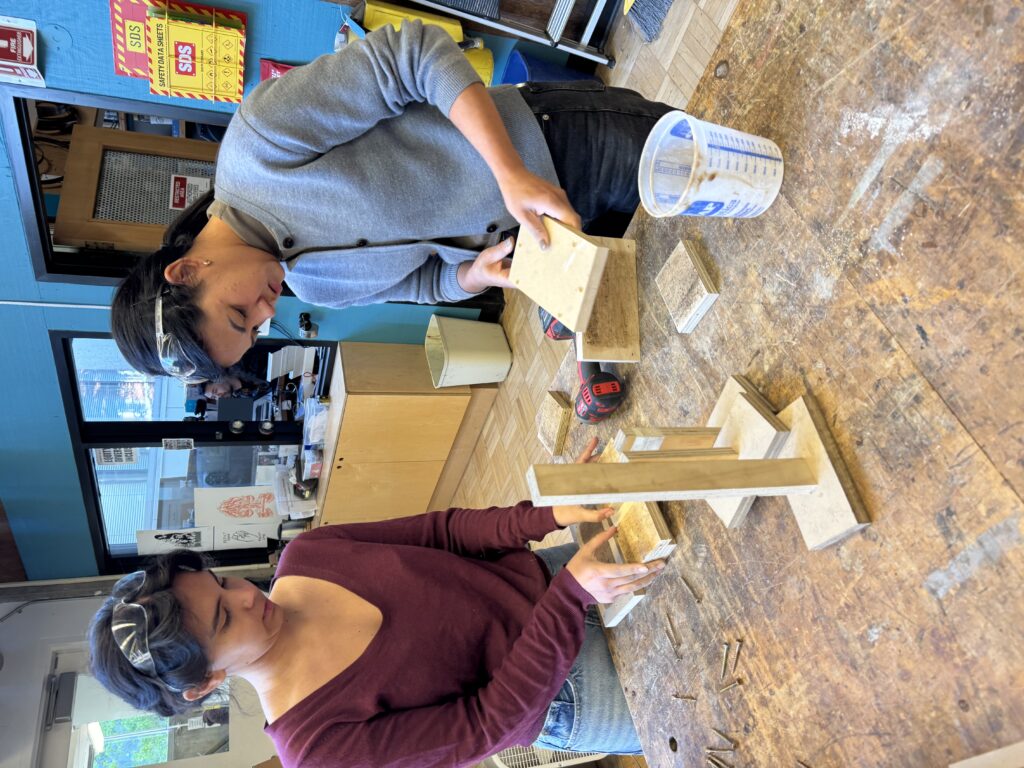
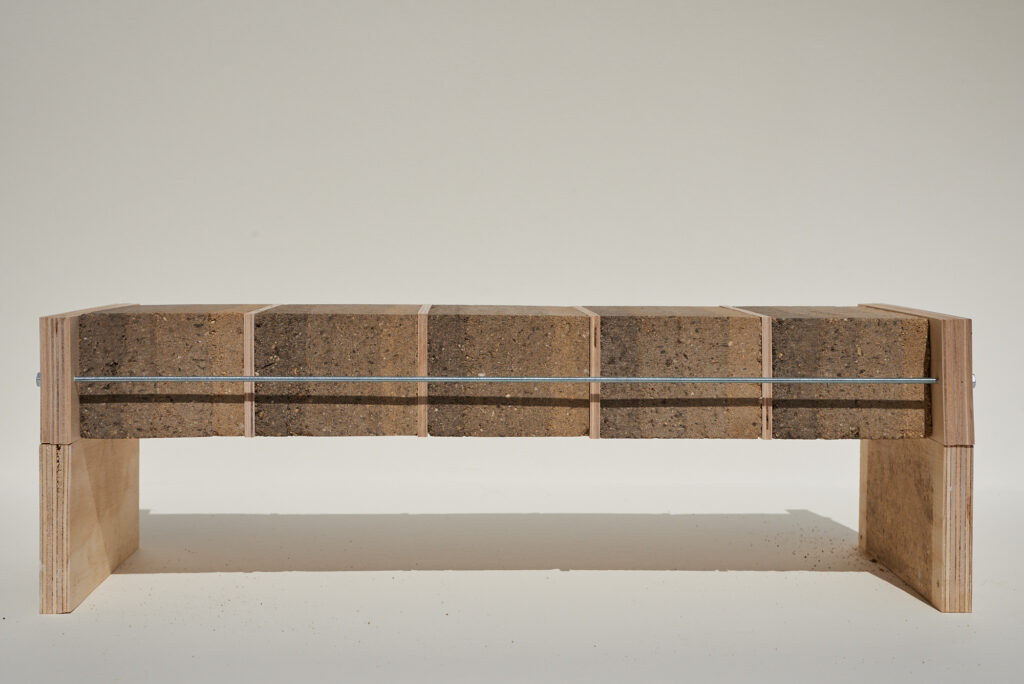
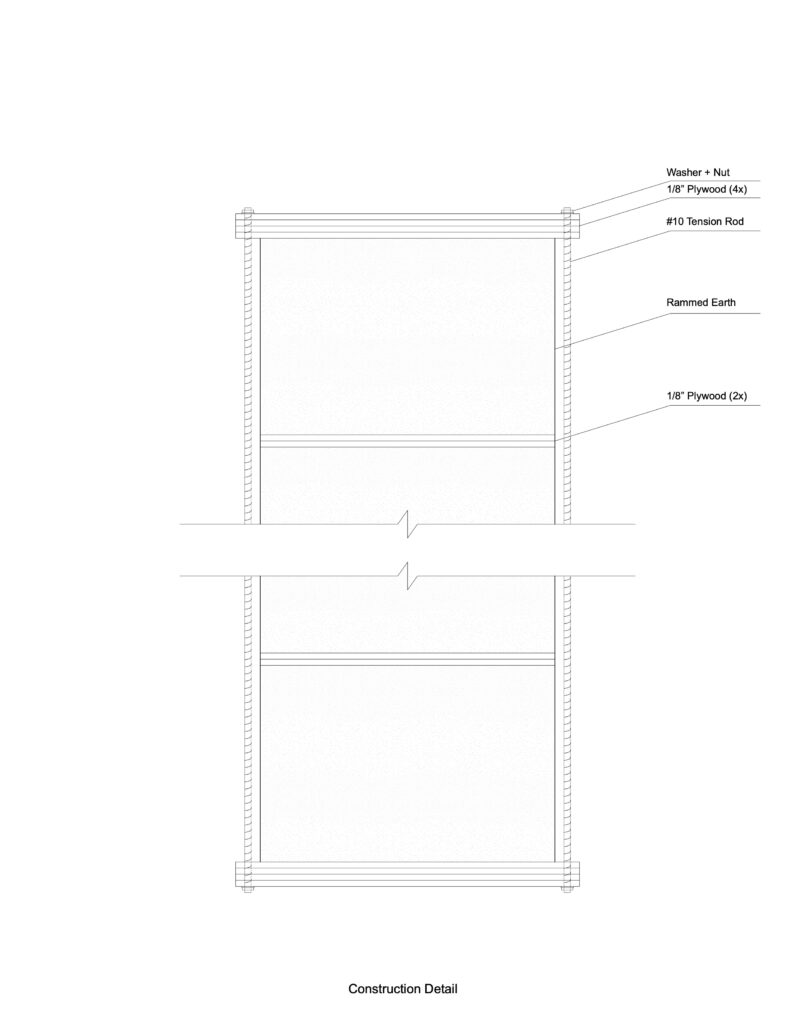
Next, we cut plywood rectangles matching the exact dimensions of the bricks to sandwich the central units together. Additional plywood plates, extending one inch beyond the top and bottom bricks, were then added to cap the assembly. Five bricks were stacked vertically, allowing us to drill a #10 tension rod through the entire length of the prototype. Tension was then achieved by tightening a nut and washer at the top of the rod, compressing the stacked earthen blocks together and replicating the prestressing strategy used in the original tower.
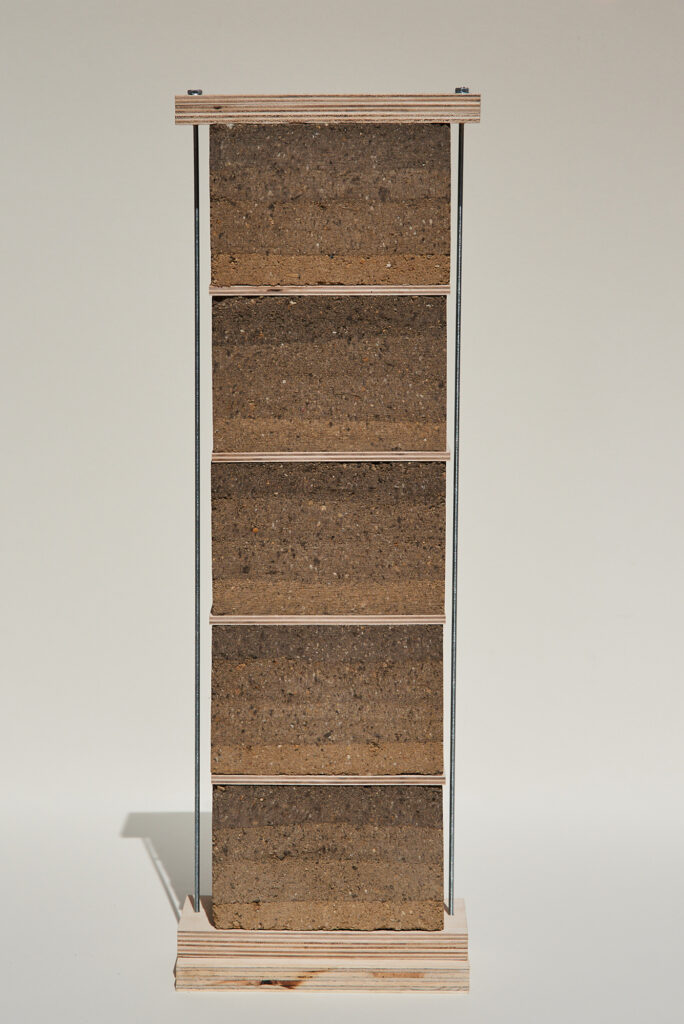
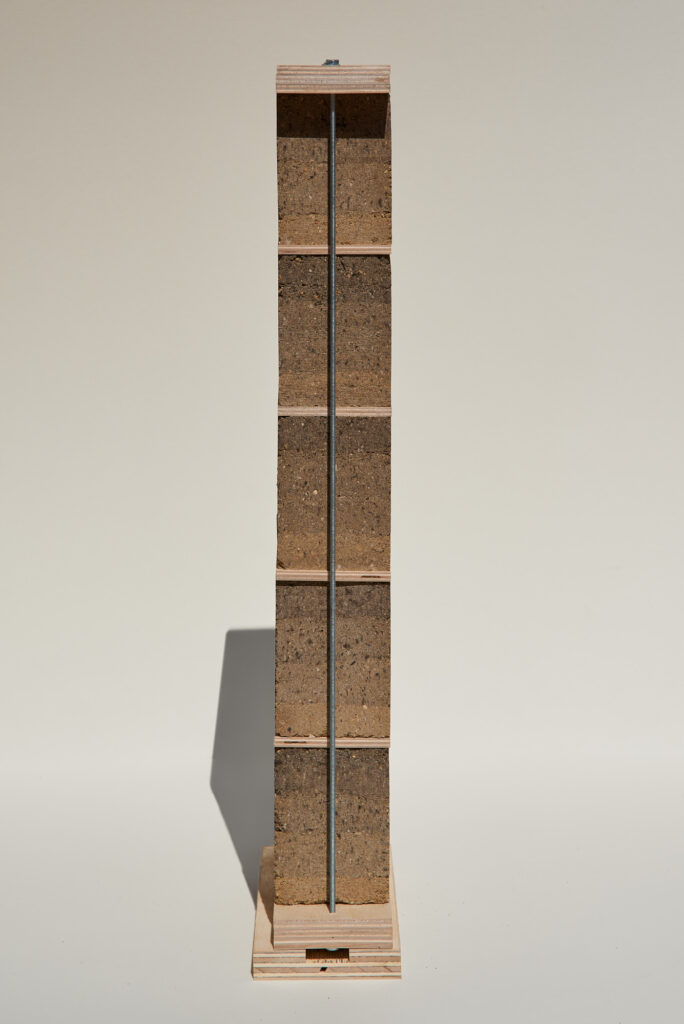
The final prototype successfully stacks five compressed earth blocks, demonstrating the structural viability of the prestressing strategy. The assembly can serve as both a vertical wall and horizontal ceiling/lintel condition. Our investigation turned towards its potential as a ceiling or lintel element, since achieving horizontal spans in earthen construction is a known difficulty due to the material’s poor tensile performance. We tested the model as a simple beam supported at two end points, and as a double cantilever supported in the center, and observed how the prestressed compression allows the earth to resist gravity loads that would have otherwise caused failure.
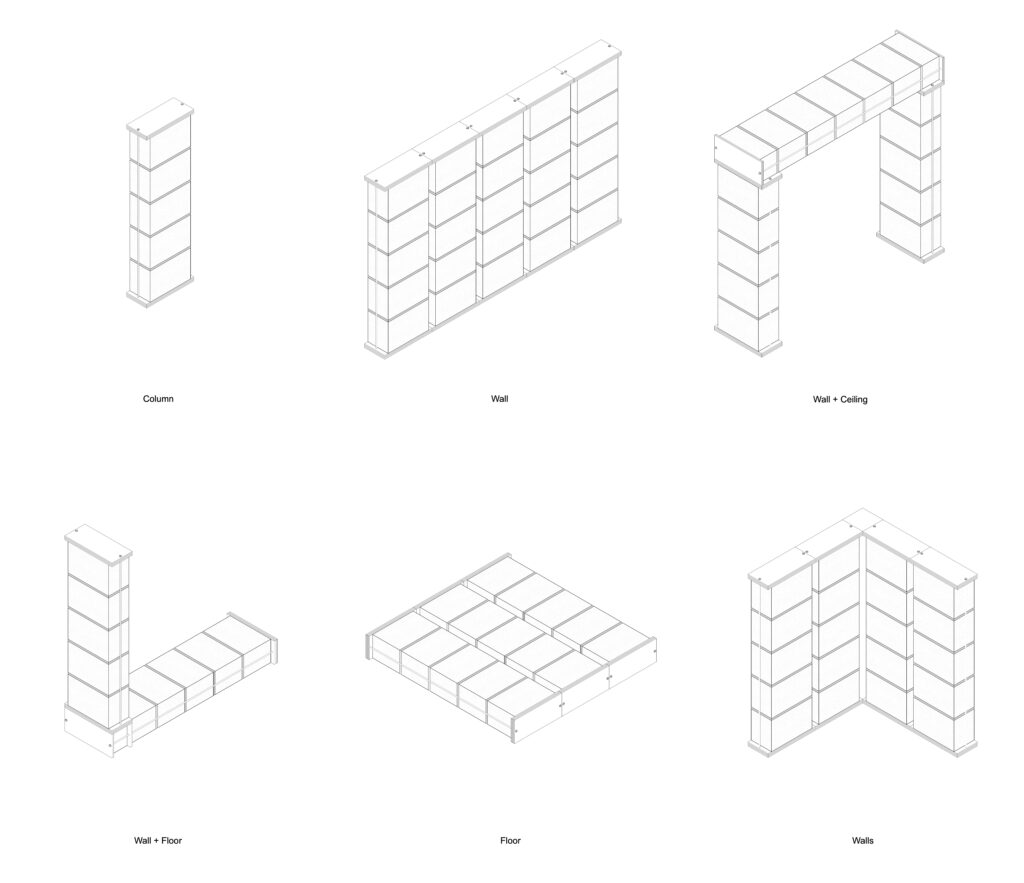
This study establishes a foundation for further investigations and possibilities of this novel system. There could be further testing of the module’s maximum load, determining the ideal span to depth ratios. Beyond the individual module, there’s an opportunity to explore how these modules could interlock adjacently to form a seamless ceiling or floor diaphragm. The tie rods could potentially pass through the bricks, or the plywood end plates elements might be redesigned to serve as structural joinery.
Finally, the long-term interaction between the wood, metal, and earth offers a compelling study in differential weathering. The accelerated erosion of earthen components will affect the tension of the steel rods, and together with the slower erosion of the wooden plates may affect the strength of the overall system over time. However, the different rates of erosion may create beautiful aesthetic contrasts.