Timeline
Spring 2026 – Summer 2026
Project Description
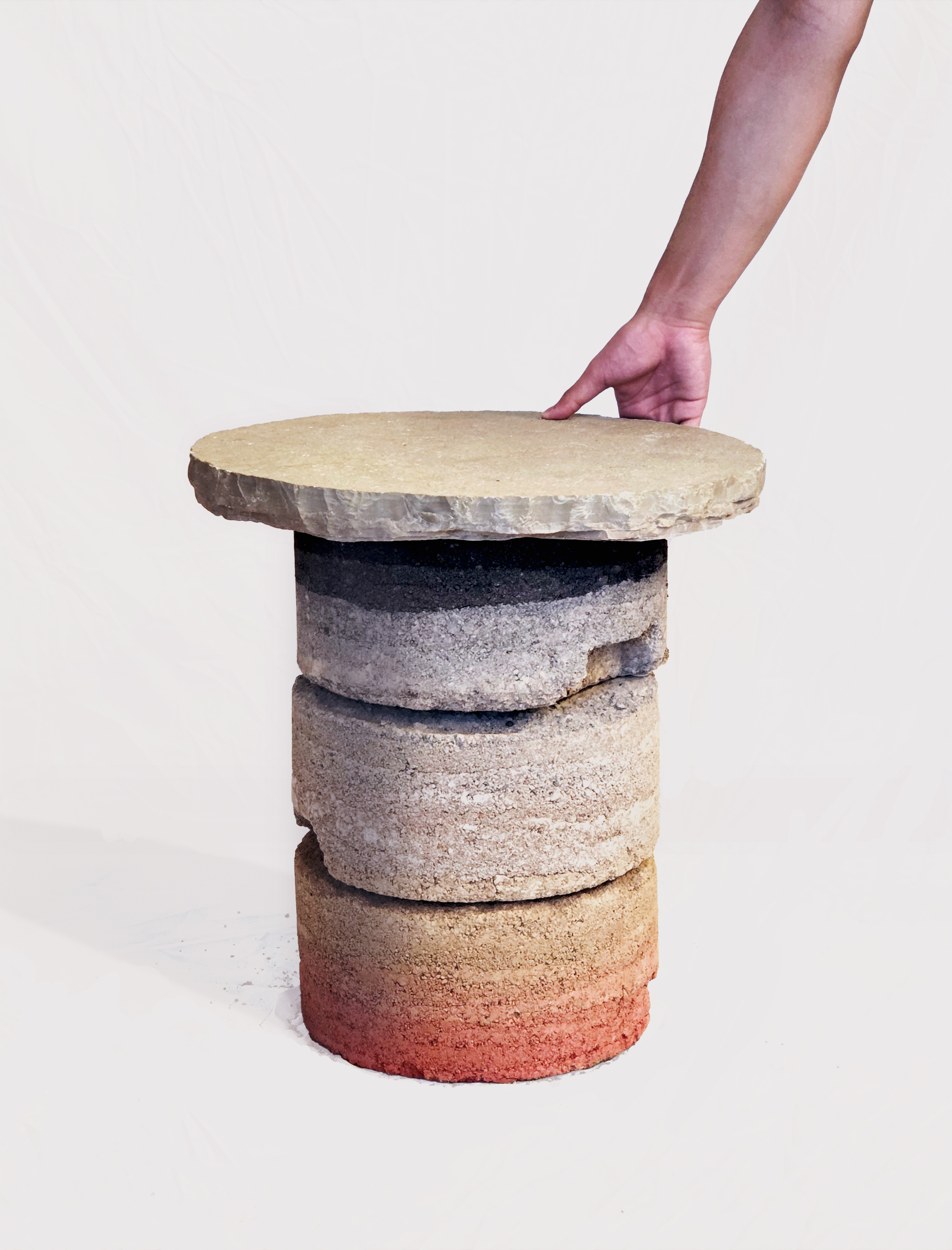
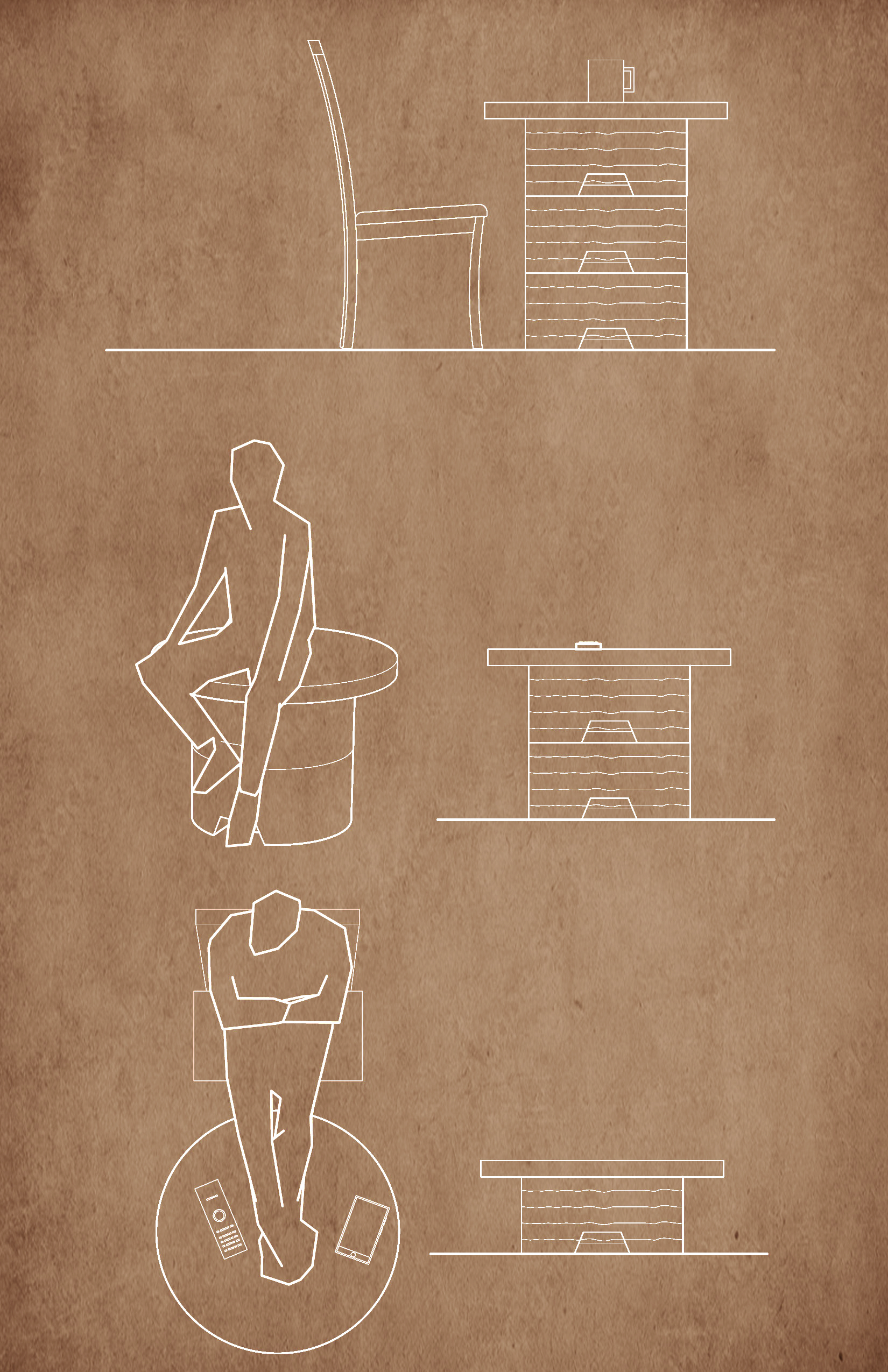
This project consists of a series of experiments aimed at prototyping a design for a rammed-earth coffee table.
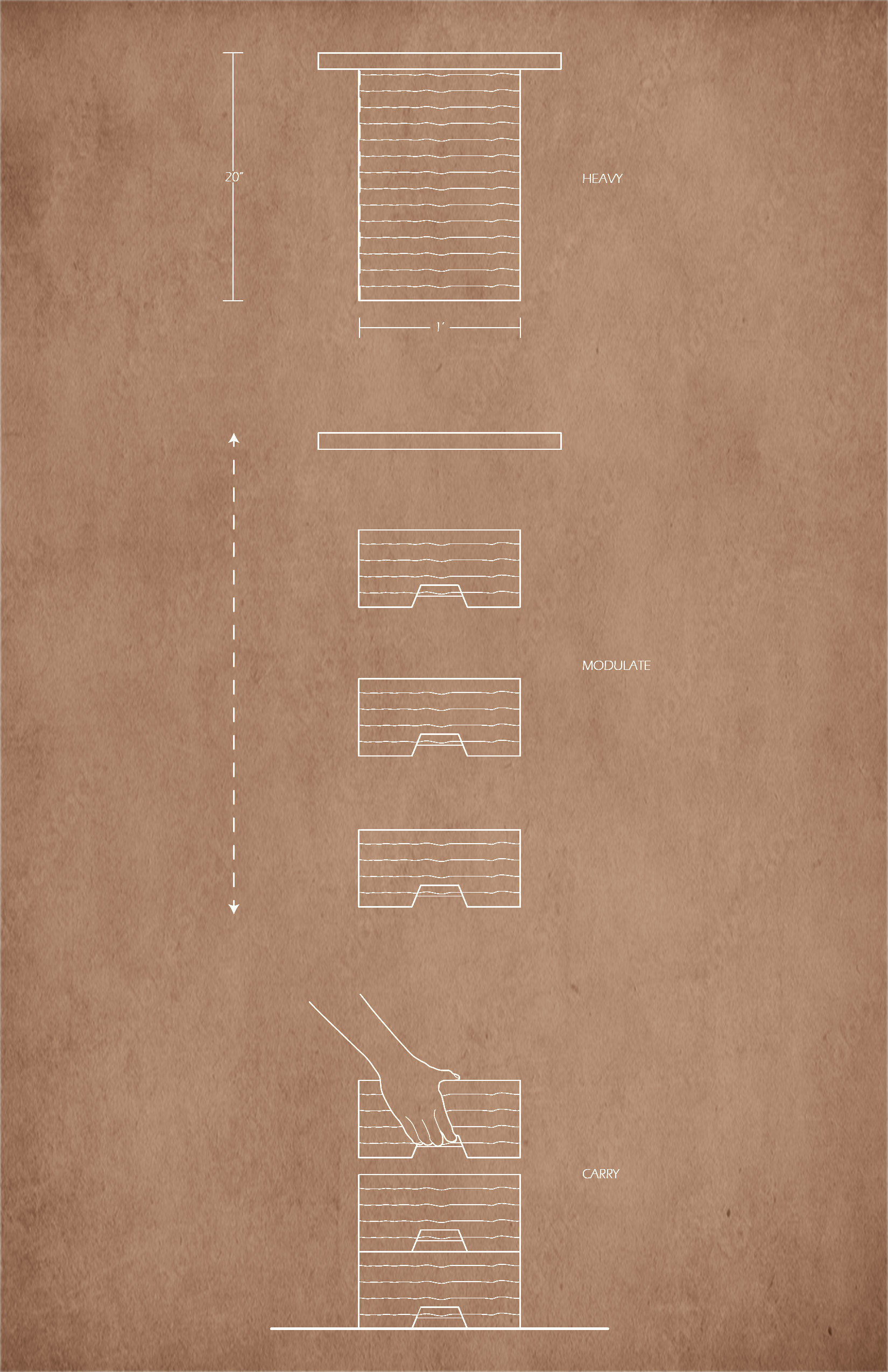
Intended to adhere to a series of constituents concerning weight, modularity, and color, this rammed earth prototype was designed such that it could be disassembled into smaller, more manageable components. These constraints led the designers to a prototypical model consisting of cylindrical blocks weighed down by a raw stone tabletop, ensuring that each module remains in compression and does not shift. The blocks themselves are rammed into a formwork, creating handles for carrying, easing transportation. Each module weighs ~35lbs and features a mixture of pigments that create a customizable gradient.
Ratios and Gradients
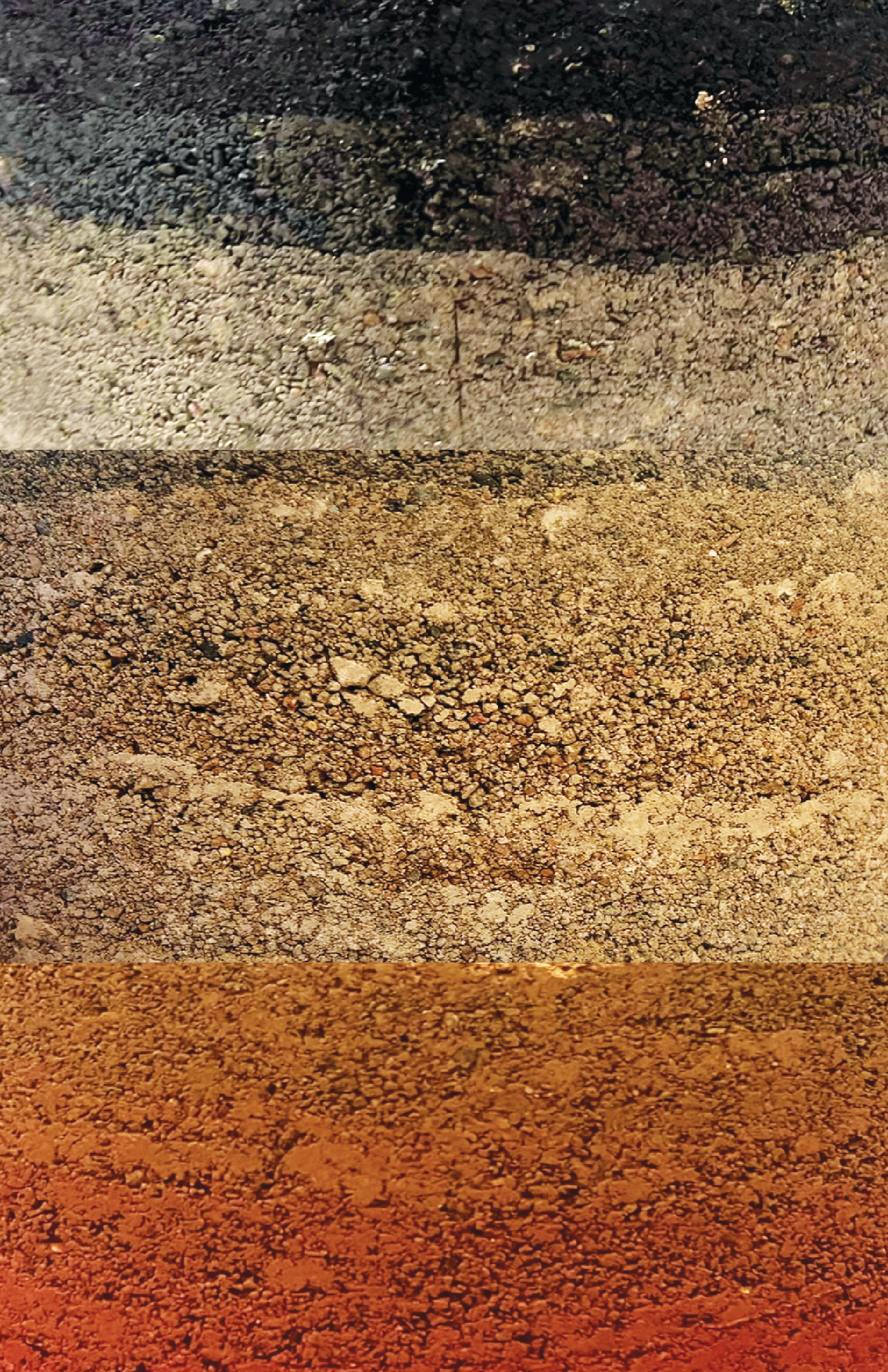
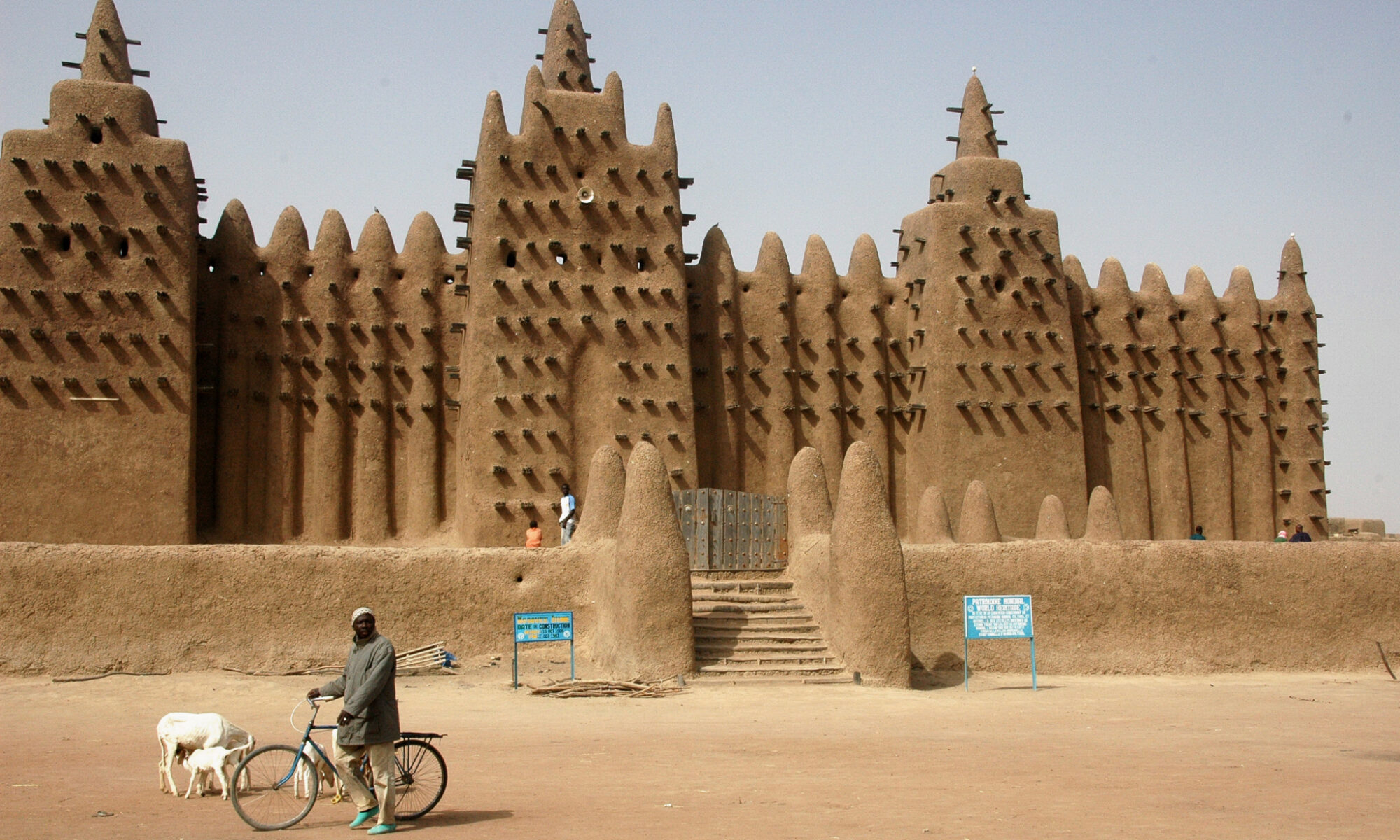
This project also sought to examine the aesthetic sensibilities of rammed earth as a construction material for furniture. Prototyping rammed-earth furniture necessitated extensive studies concerning the mixture of different soils and pigments to create colorful gradients for each module.
Rough, rocky earthen qualities are achieved through a basic mixture of soil from varying regions, alongside ~15% sand, ~20% gravely clay to provide enrichment. These mixtures were then enriched with increasing quantities of pigment (including charcoal and iron) to allow each rammed layer to take on a more saturated color during the production of each earthen module.
Form-work and “Molds”
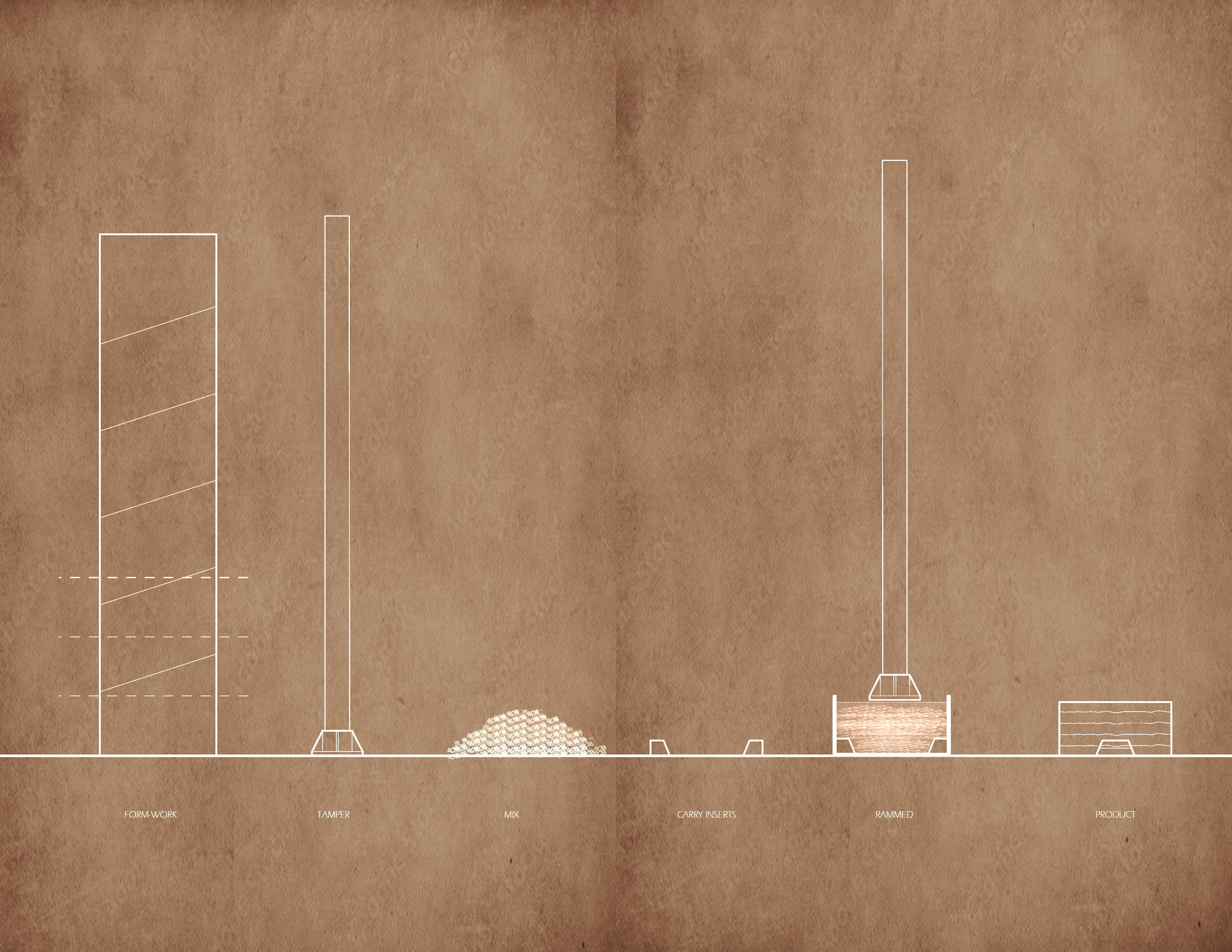
The contents of rammed earth require a formwork to take on the desired shape after settling. The foundation of this formwork, chosen for its size, shape, and flexibility, was a concrete form tube, often known by its brand name of Sonotube. These form tubes come in a variety of different sizes, meaning that the techniques we developed to create these rammed earth pieces can be transferred based on the desired scale.
If we had just used the sonotube, the outcome would simply be a cylinder. The next step was incorporating the physical additions that allow for handling and modularity. Utilizing 3d prints as a negative, mixed in with conventional building techniques such as cut and shaped wood, inserts were created that fit into the sonotube to create indents and features in the otherwise normal cylinder. These included handling grips, for ease of movement of the final product, to central cavities, reducing the overall weight, and even attempts at projections on the top surface to fit right into the handling grips, to help with positioning and balance of the pieces once put together.