Architects: Lara Fuster Prieto
Location: Boadilla de Rioseco, Spain
Year: 2022
Area: 142 m² (1,500 sqft)
Construction: Local Adobe
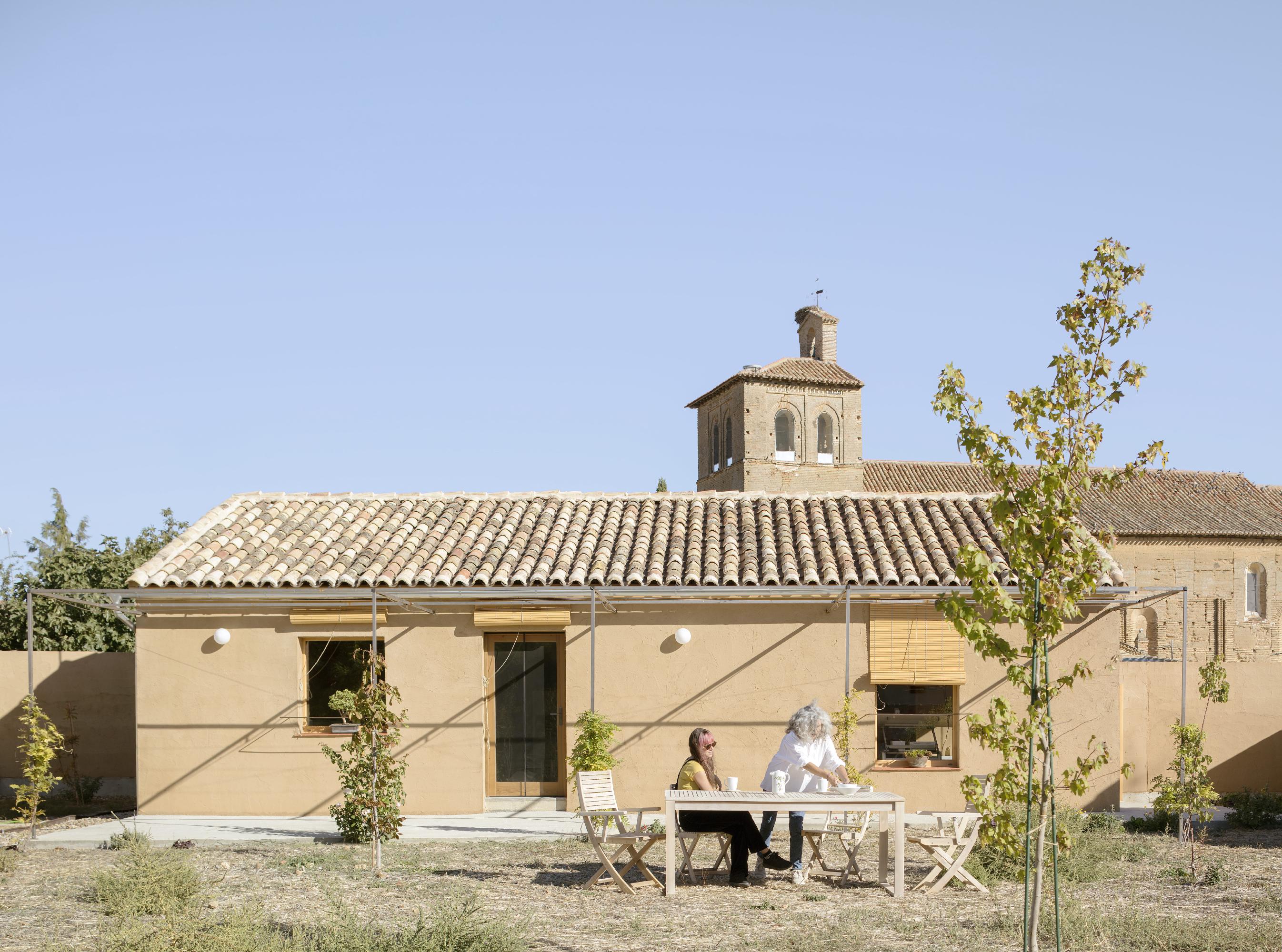
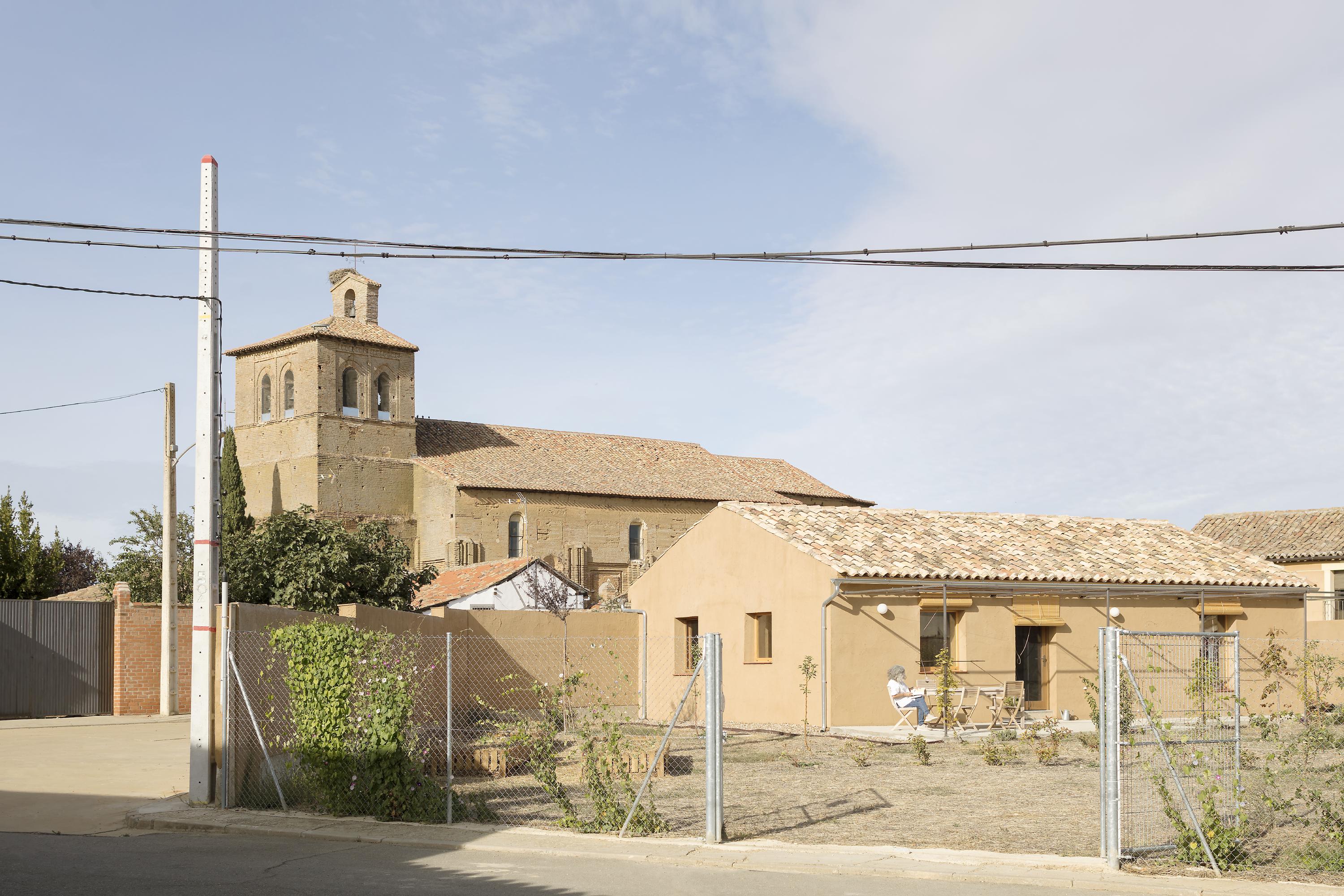
Earth House, designed by Lara Fuster Prieto, is located in the small town of Boadilla de Rioseco in rural Spain. The project explores how traditional building methods can still work for contemporary life. The house is designed as a permanent residence and focuses on sustainability, energy efficiency, and thermal comfort, while keeping its environmental impact low.
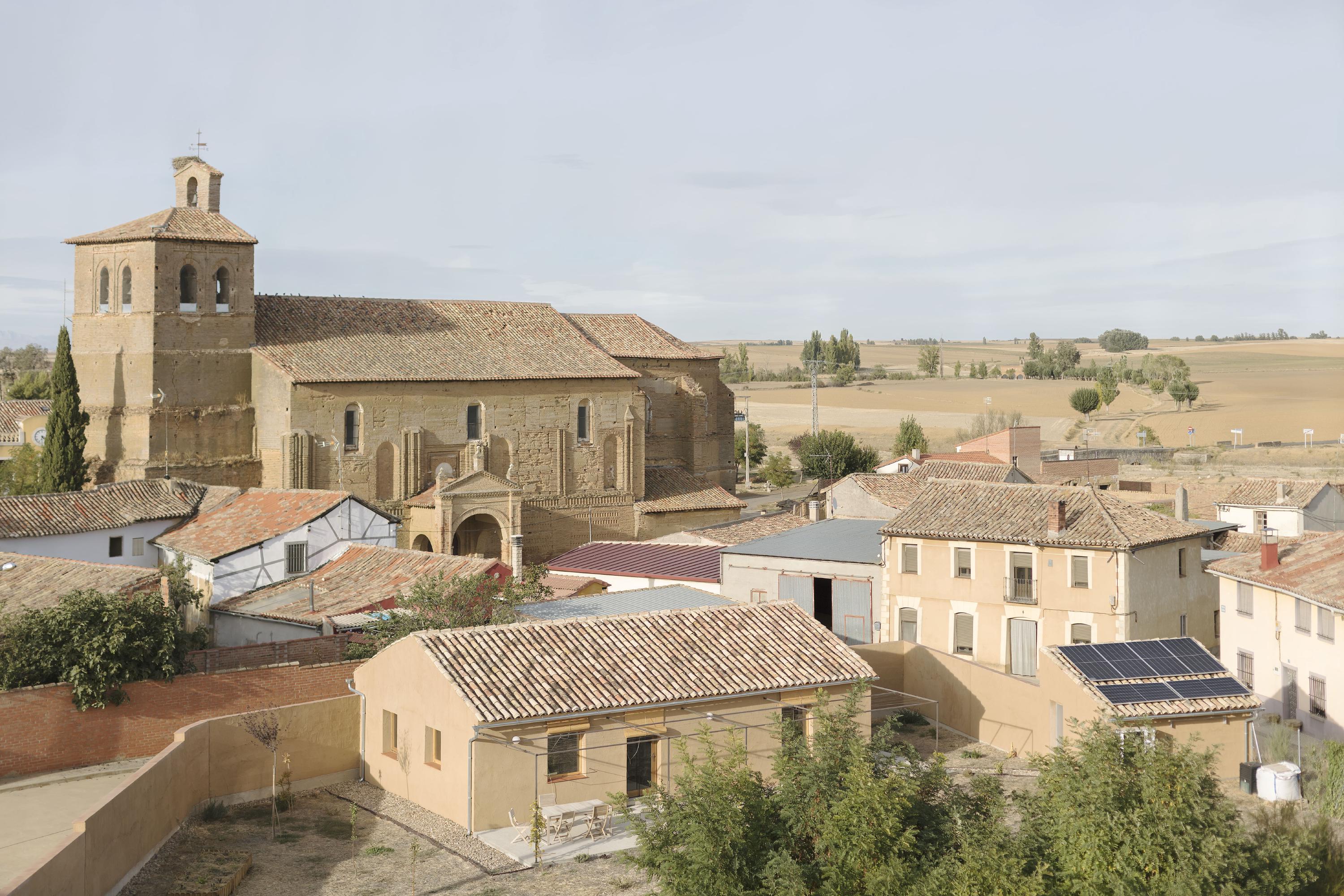
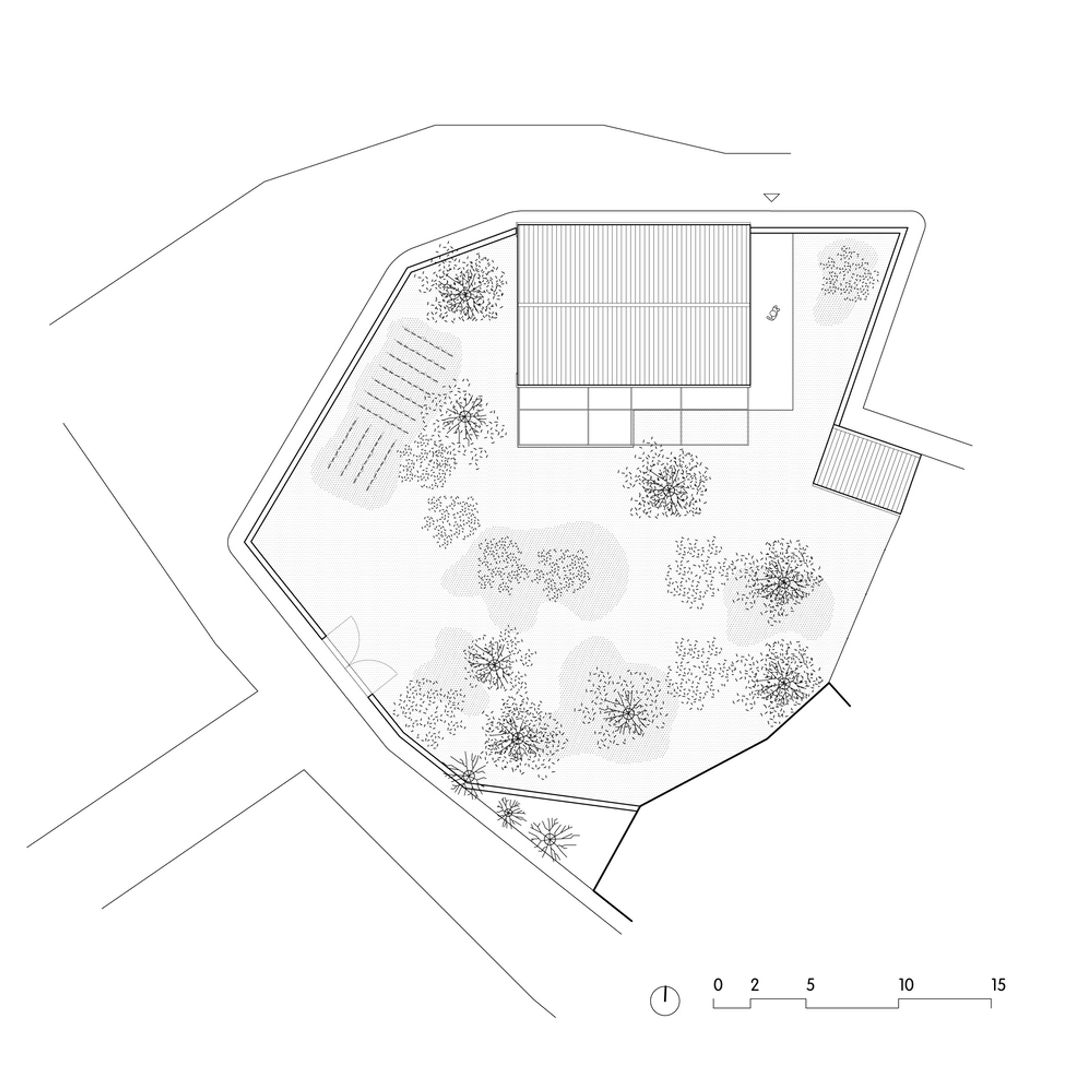
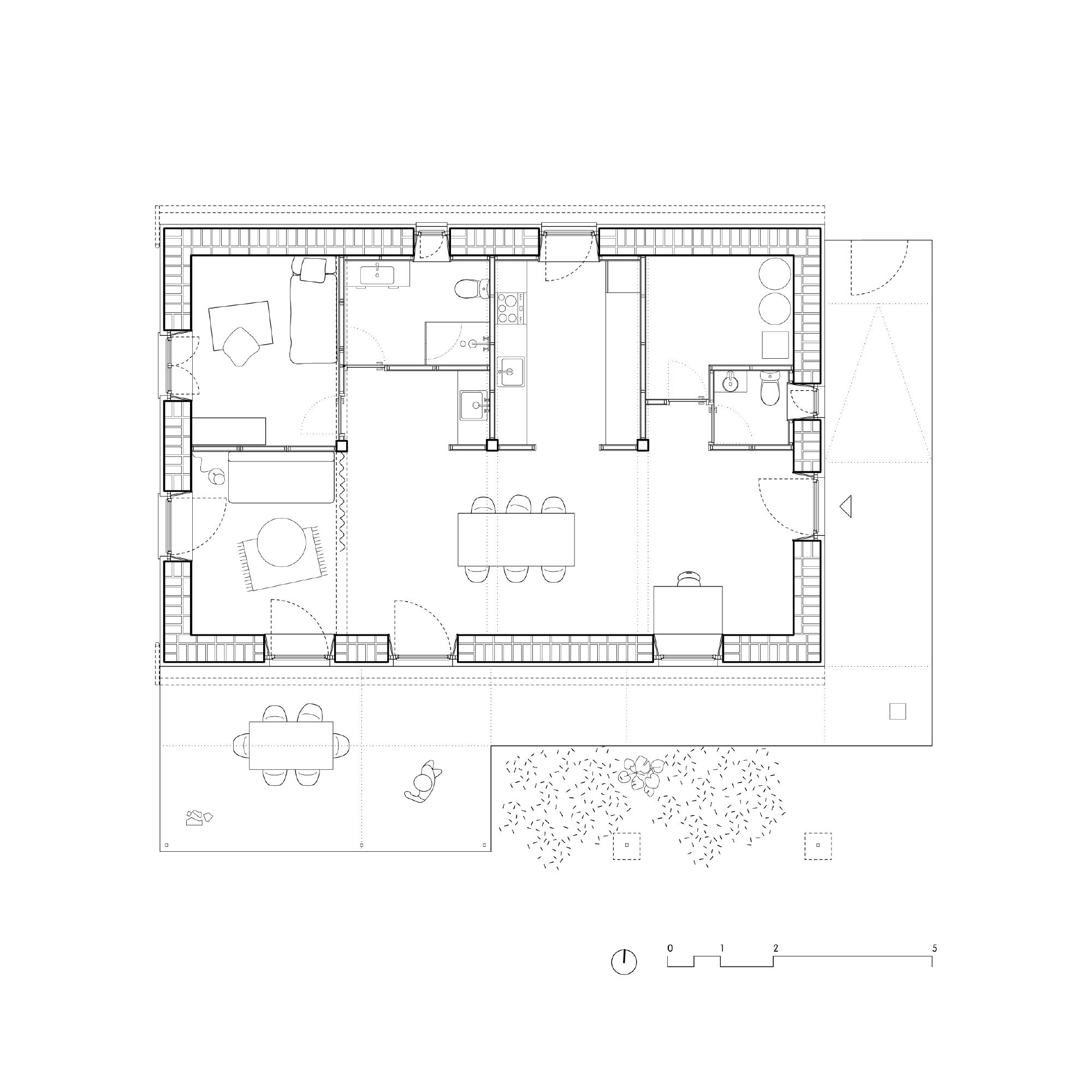
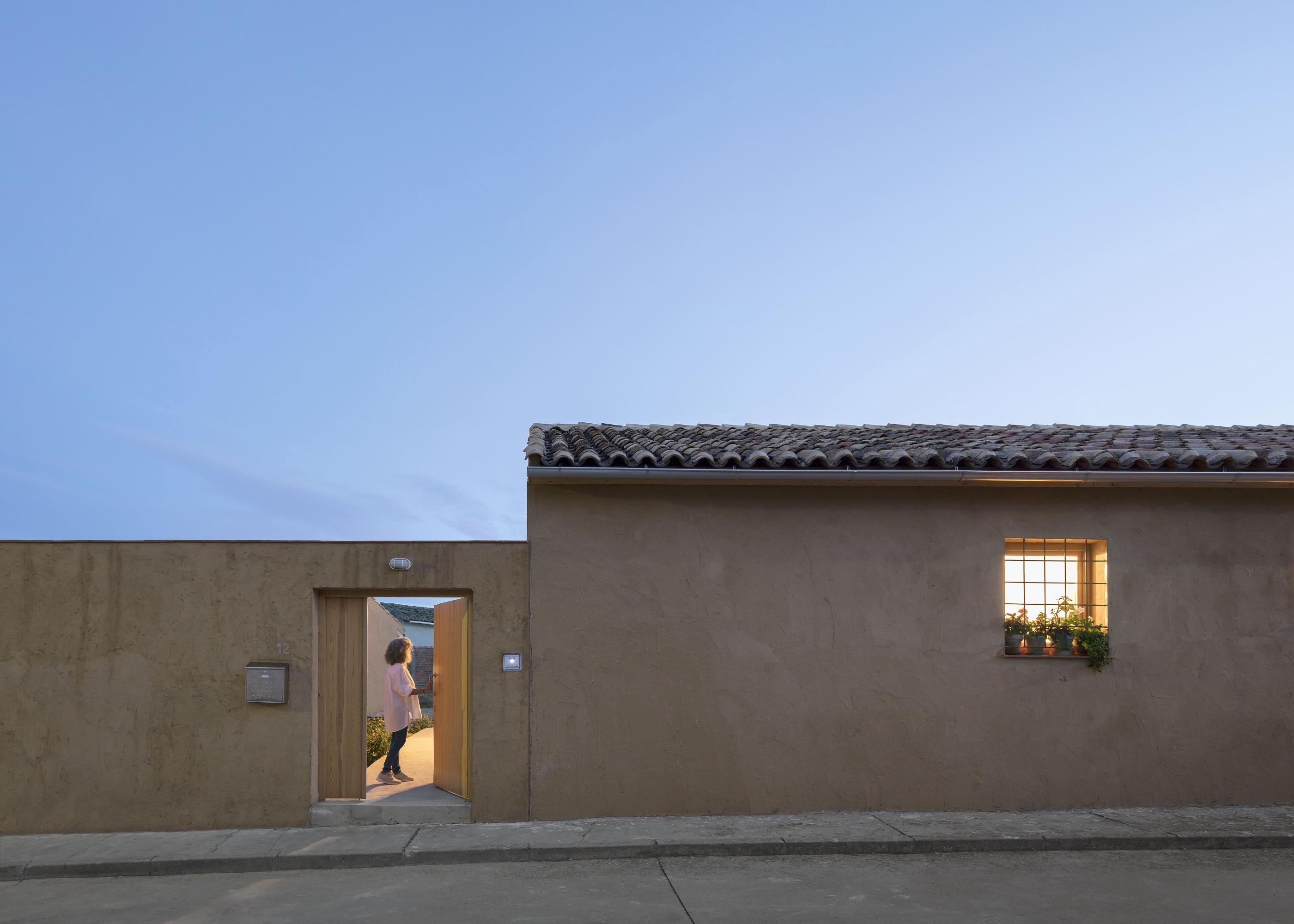
The building has a simple rectangular shape made up of four parallel bays running east to west, which helps maximize sunlight throughout the day. The north façade faces the street and has smaller, unevenly placed windows, similar to traditional houses in the area. On the south side, the house opens up with large windows that act as solar collectors during the winter months. In the summer, wooden shutters and a pergola covered with deciduous vines provide shade and help prevent overheating naturally.
The structure is built using load-bearing adobe walls made from locally produced bricks measuring 33 × 15 × 10 cm, sourced within 40 kilometers of the site. These walls are insulated on the exterior with cork panels, creating an external insulation system that greatly improves energy performance. The gable roof is made from a wooden sandwich panel with cork insulation and finished with reused curved clay tiles, allowing the house to blend in with the surrounding village buildings. Instead of cement, lime mortar mixed with straw is used for the exterior plaster. This material is breathable, helps regulate moisture, and is more sustainable over time. Wooden doors and windows further reduce the home’s carbon footprint, while roll-up shutters act as passive sun protection.
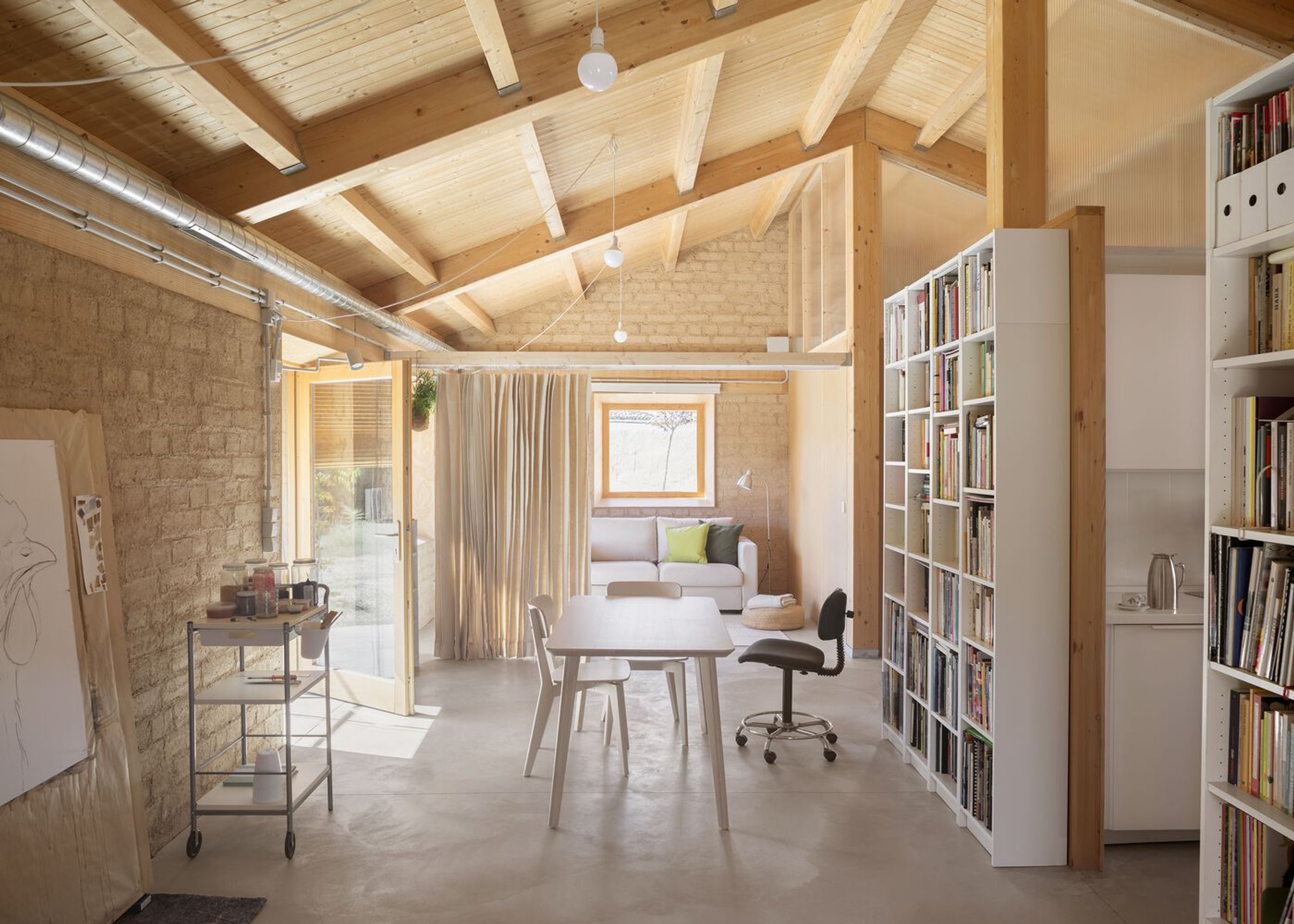
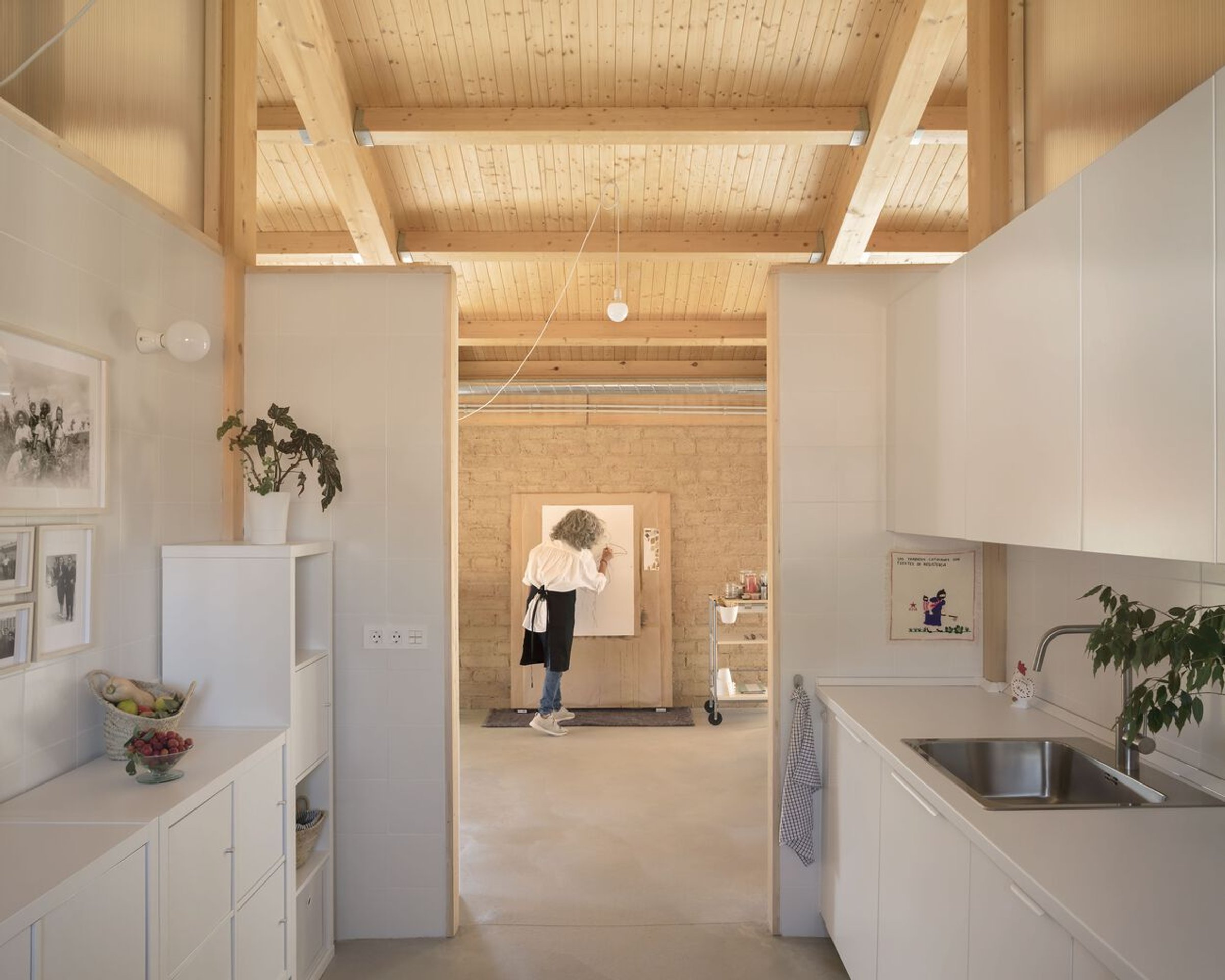
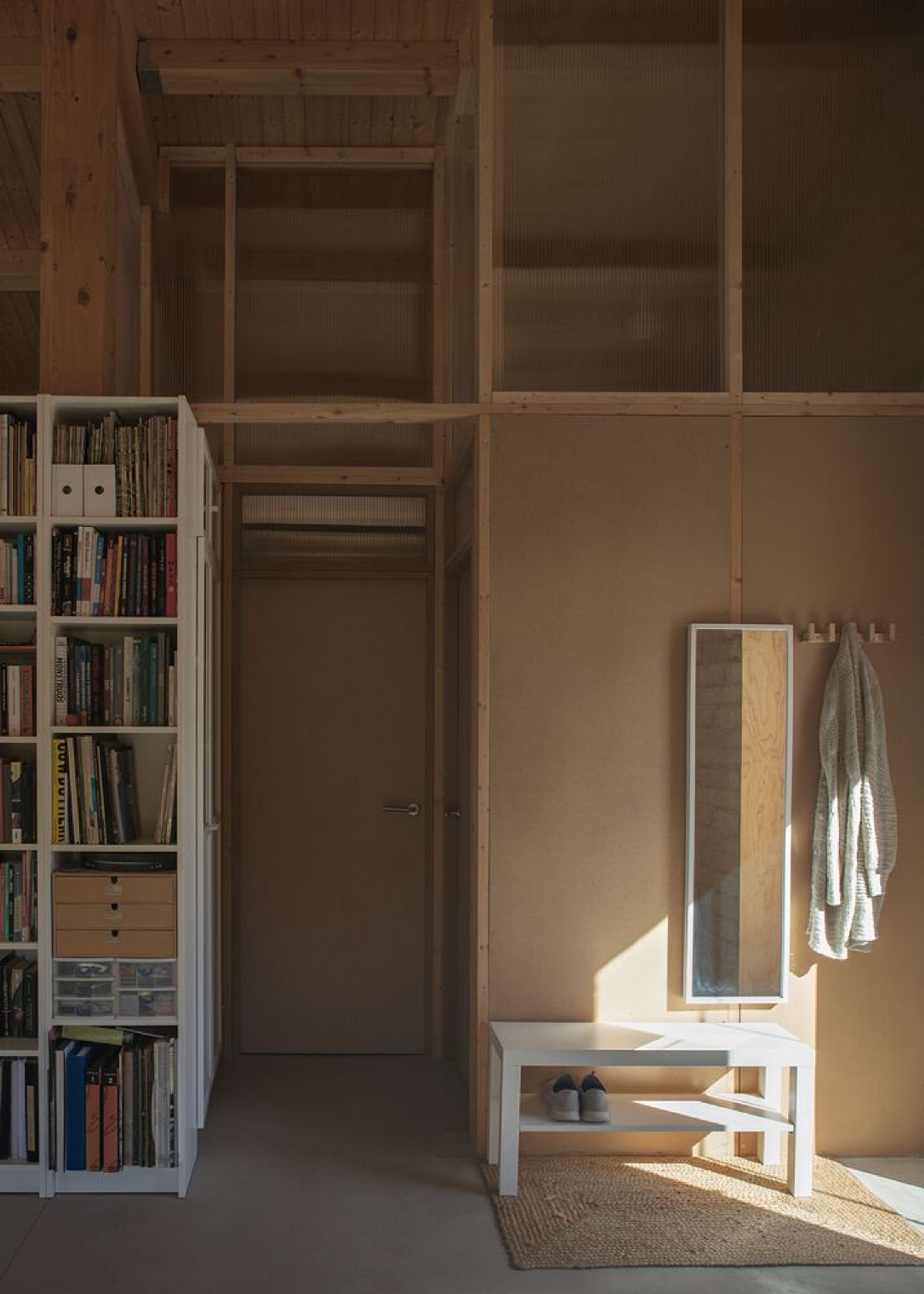
Inside the house, the partitions are lightweight and built with exposed wooden slats, recycled cotton insulation, and medium-density wood boards. To bring in more natural light and create a sense of openness, the upper portions of these walls include polycarbonate panels. Some of the adobe walls are left exposed, highlighting the material and giving the interior a warm, earthy feel.
Thanks to the thermal mass of the adobe, the house maintains stable indoor temperatures between 22 and 24°C during the summer, even when outdoor temperatures reach over 40°C. Because of this passive performance, the house does not require any active cooling systems and achieves an A-rated energy classification. In the winter, underfloor heating is used, inspired by the traditional “glorias” heating system found in the region.
In summary, the Earth House project focuses on reducing environmental impact while using local, traditional materials to stay connected to its cultural context.
Fuster Prieto, Lara. Earth House by Lara Fuster Prieto: A Sustainable Adobe Home in Rural Spain. UNI.xyz, 2 Apr. 2025, www.uni.xyz/journals/earth-house-by-lara-fuster-prieto-a-sust.
Fuster Prieto, Lara, and Milena Villalba. Casa de Tierra / Earth House Project Details. Divisare, 2023, www.divisare.com/projects/480657-lara-fuster-prieto-milena-villalba-casa-de-tierra