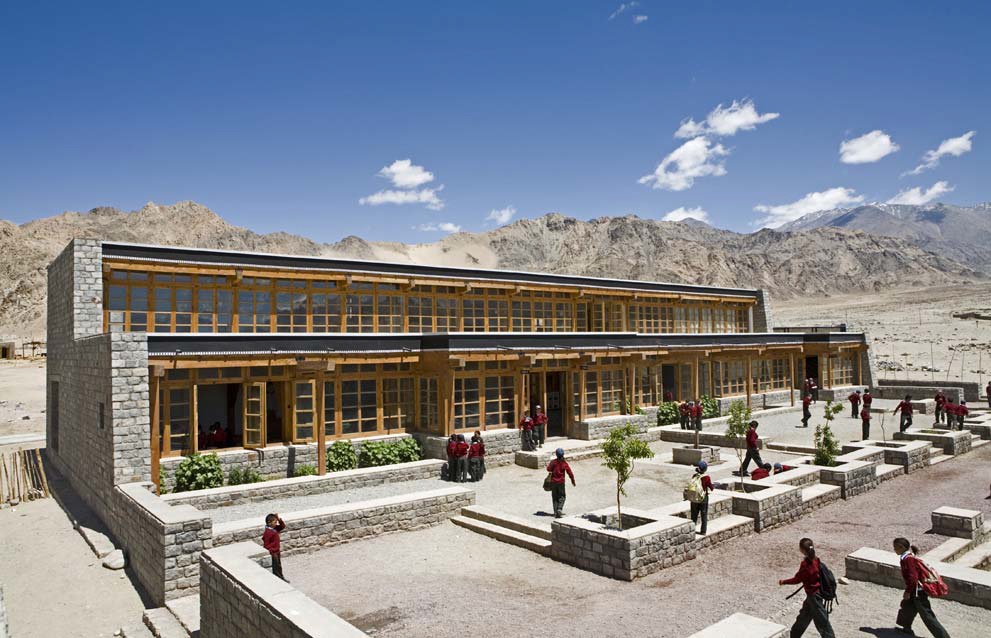
Druk White Lotus School: Arup Associates

Typology: Education School

Material: Granite Stone

Date: 2012

City: Shey

Country: India

Altitude: 3,500 meters

Nestled in the stunning mountainous landscapes of Ladakh, India, the Druk White Lotus School represents a landmark achievement in sustainable, climate-responsive design.

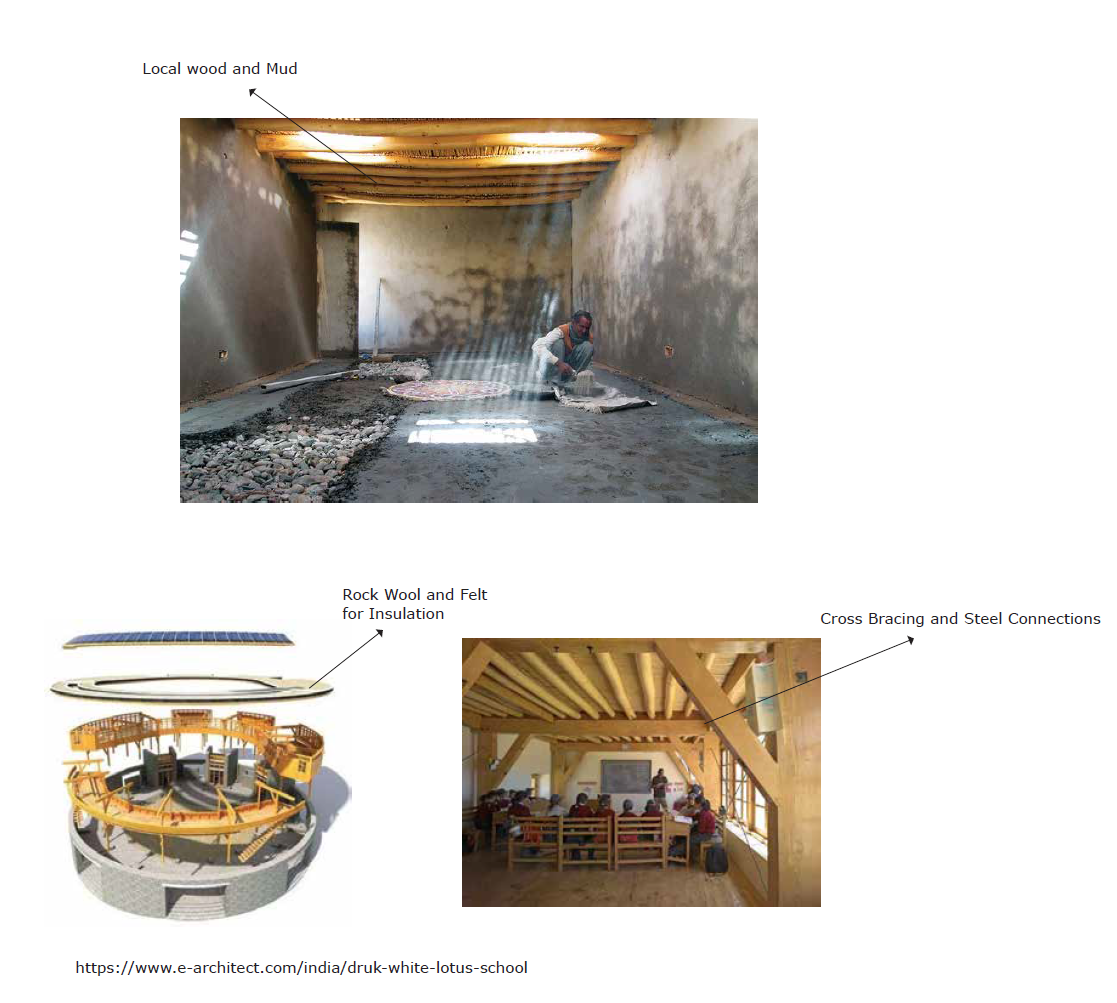
Conceived and designed by Arup Associates, the school embodies the seamless integration of modern architectural innovation and centuries-old local traditions, creating a space that is both environmentally sustainable and deeply connected to Ladakh’s cultural heritage. Inspired by the principles of Tibetan Buddhism and the region’s vernacular architecture, the Druk White Lotus School’s design prioritizes cultural authenticity. Local architecture in Ladakh is traditionally built using mud and wood, materials that are readily available and suited to the harsh climate of the region.
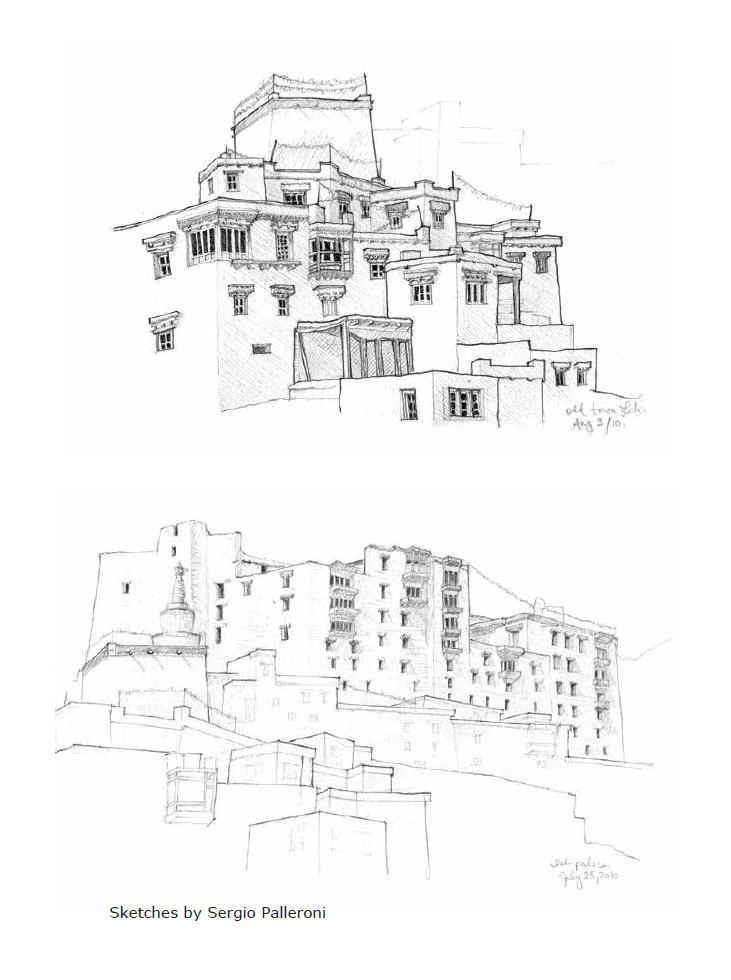
Arup Associates embraced these natural materials to create a structure that echoes traditional Ladakhi building methods while incorporating modern techniques to ensure long-term resilience.

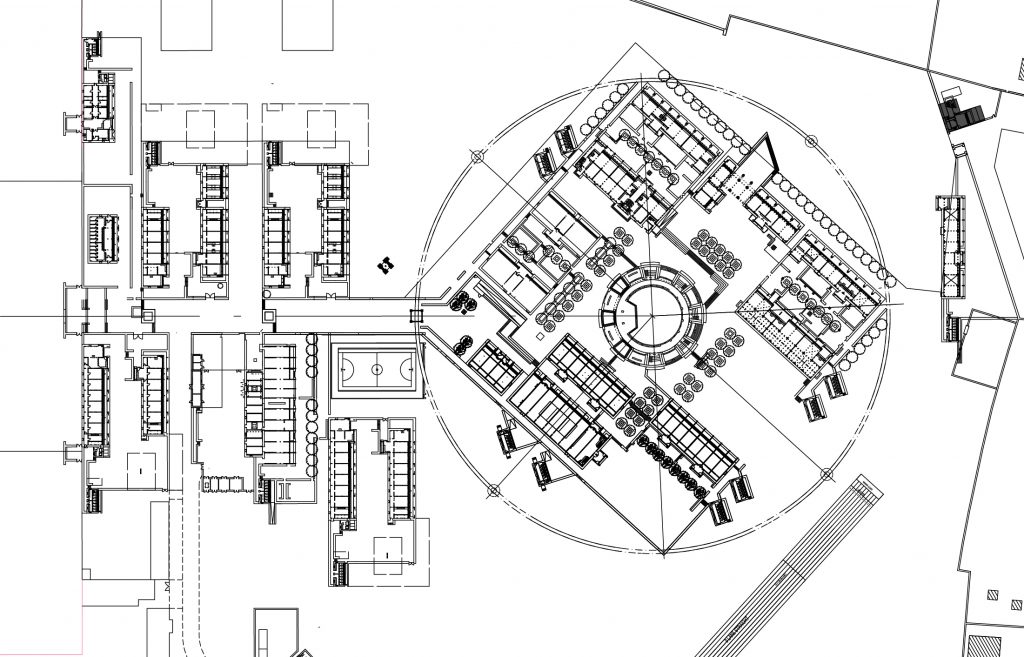
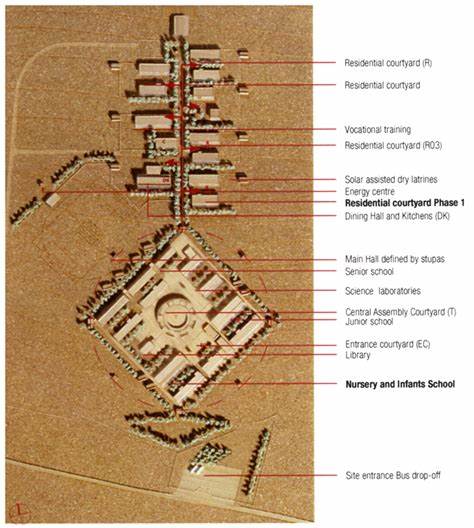
The layout of the school reflects a deep connection to nature and spirituality. Buildings are arranged in clusters, symbolizing Buddhist mandalas, creating a harmonious flow between the interior learning spaces and the surrounding natural environment. The design respects Ladakh’s spiritual heritage while ensuring that students learn in an environment that fosters a connection with their cultural roots.
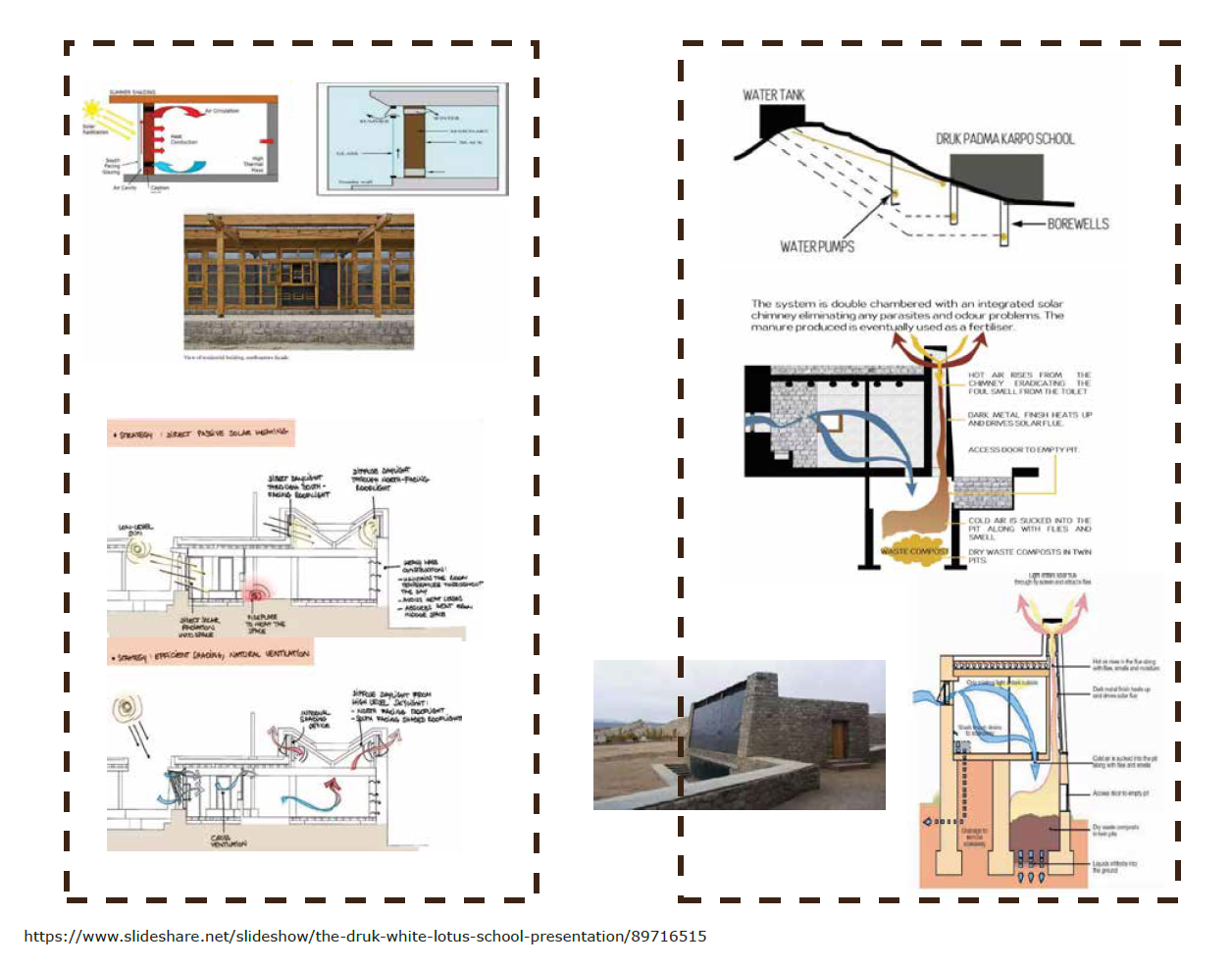
As well, such as the wooden eaves in the roof, earth-clad for better thermal performance. Wood is also used in the interior, both for floors and the frames of the large windows that bring light into the classrooms. Among the strategies applied to capitalize on passive solar gain are the building’s radiation-maximizing orientation, the functioning of the south facades as Trombe walls, and the use of solar thermal panels for heating and hot water. Water is saved through dry latrines with forced ventilation (by solar chimneys). Because the place is at such a high altitude and the skies are so bright, photovoltaic panels generate all the electricity the school needs.
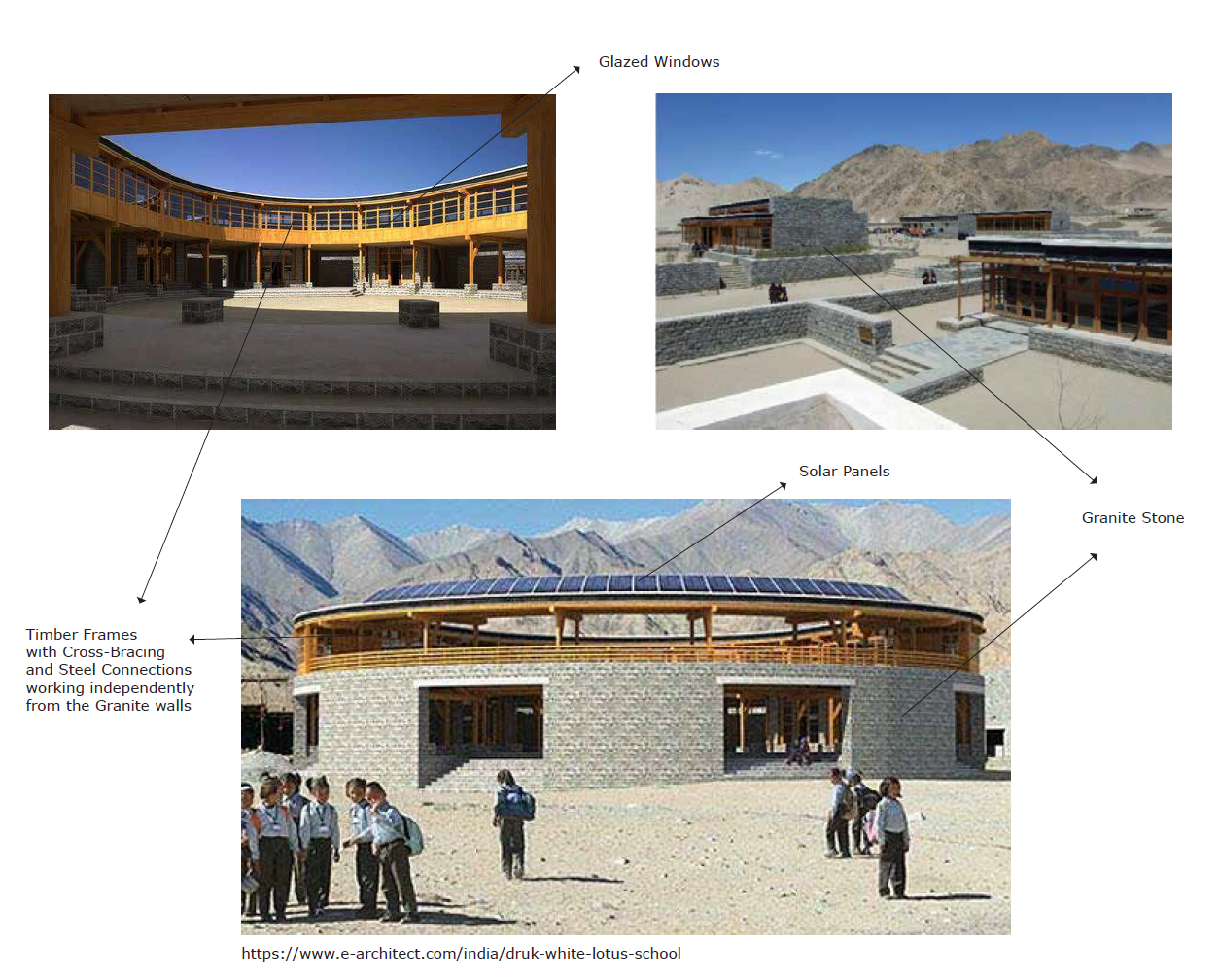
Engineering and architectural aspects focused very much on sustainability, which was particularly important given the challenges of the location, with limited water supply and sometimes adverse climate conditions.

The supply road to the area could be cut off by snow for up to six months of the year yet, on the positive side, sunlight hours are high. The school is located in an area of considerable seismic activity and the methods used to ensure improved safety in the event of an earthquake needed to be easy to emulate for future structures. Most traditional local buildings don’t benefit from seismic engineering so the Druk White Lotus will spark a new generation of safety-enhanced structures, better able to withstand the ravages of a natural disaster.

With relatively non-complex structural approaches, using timber frames to resist seismic loads, the school enjoys improved protection from earth movements. Blocks used for the external walls were quarried on site, making effective use of available resources. During cold evenings resident pupils feel the benefit of ventilated cavity walls, made of mud brick and glass.

Solar energy is stored through the day and used to heat the interior at night. Solar panels generate electrical energy, minimizing local emissions and making maximum use of the high sunlight hours. The panels feed battery packs in an energy center, powering lighting, water supply, and even computers.

Ventilation is natural and the building is positioned to receive natural light.
Limited water supply led to the creation of a dual recycling and distribution system for irrigation. Ground water is pumped using solar power to a tank at the top of the site. Rainfall is directed to planted trees and gravity fed to gardens and water points.

A solar pump powers the unique recycling system, which supplies drinking water to the school’s occupants. The circuit is completed with the disposal of wastewater: waste is filtered down pipes, eventually feeding and sustaining the shady trees surrounding the school. The introduction of Ventilated Improved Pit (VIP) latrines is a cost effective, low-tech method of maintaining a high standard of renewable sanitation – they do not use water but instead a solar driven flue to counteract smells and insects.

The building is a truly self-sufficient operation on all counts: an effective reusable energy engine and a valid health and sanitation system.
References

1- Architectural Case Study on Druk White Lotus School | PPT (slideshare.net)

2- Druk white lotus school study for material.pptx (slideshare.net)

3- Druk White Lotus School – Arup Associates | Arquitectura Viva
Impact Printing: Gramazio Kohler Research

Location:  ETH Zurich
Year:  2021-2024
​Research: Gramazio Kohler Research


Source: https://gramaziokohler.arch.ethz.ch/web/e/forschung/451.html

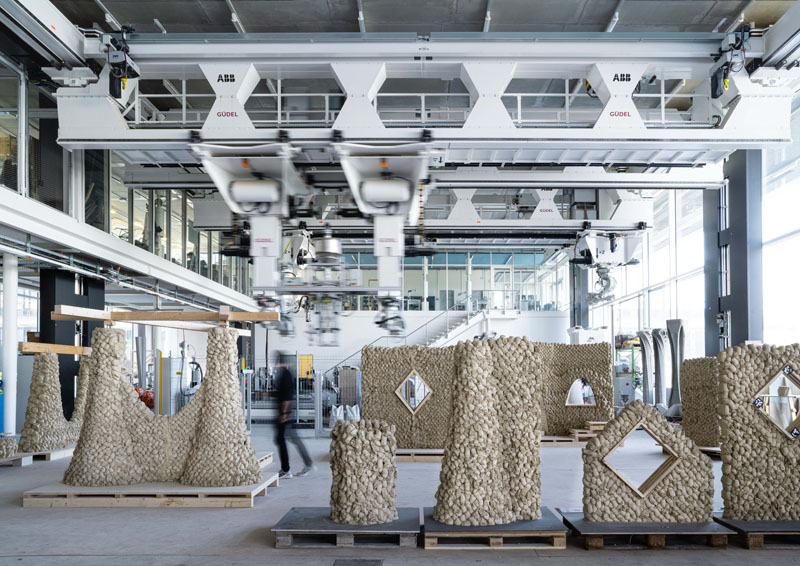
Impact printing is an innovative robotic construction method that creates full-scale, freeform structures using a custom earth-based material. Unlike traditional layer-based 3D printing, it employs high-velocity deposition, allowing for interlayer bonding at speeds of up to 10 meters per second. The environmentally friendly material consists mainly of locally sourced secondary materials with minimal mineral admixtures.

Currently, prototypes are being developed at ETH Zurich’s Robotic Fabrication Laboratory, with plans to integrate this technology into the HEAP autonomous excavator. The research also focuses on developing a digital design and construction strategy, utilizing advanced computational design and sensing methods. This work aims to enhance sustainable, mobile robotic construction, leading to groundbreaking techniques in the design and manufacturing of earthen structures.

Video


Source: https://www.research-collection.ethz.ch/handle/20.500.11850/668921

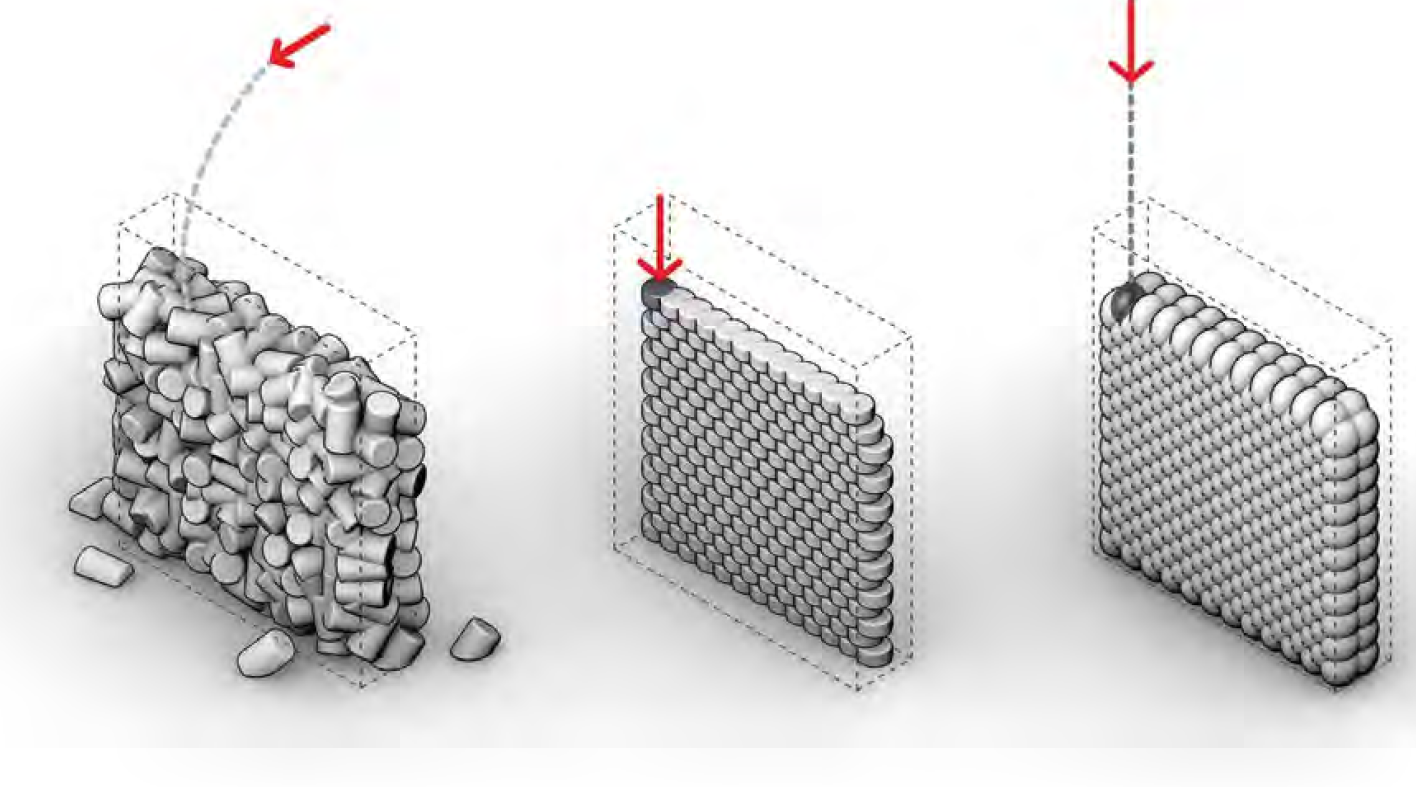
The diagram displays different concepts of earth material fabrication methods.

Left: ‘throwing’ technique used during Remote Material Deposition in 2014, Middle:‘pressing’ technique used during Clay Rotunda in 2021,  Right: ‘shooting’ technique currently investigated during Impact Printed Structures.

Source: https://www.research-collection.ethz.ch/handle/20.500.11850/668921

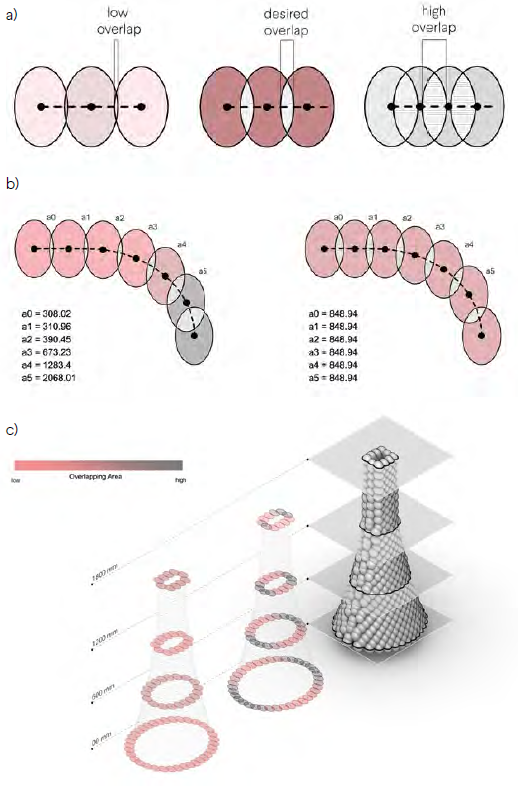
The diagram above illustrates the ideal overlap between each deposited component.

Source: https://www.research-collection.ethz.ch/handle/20.500.11850/668921

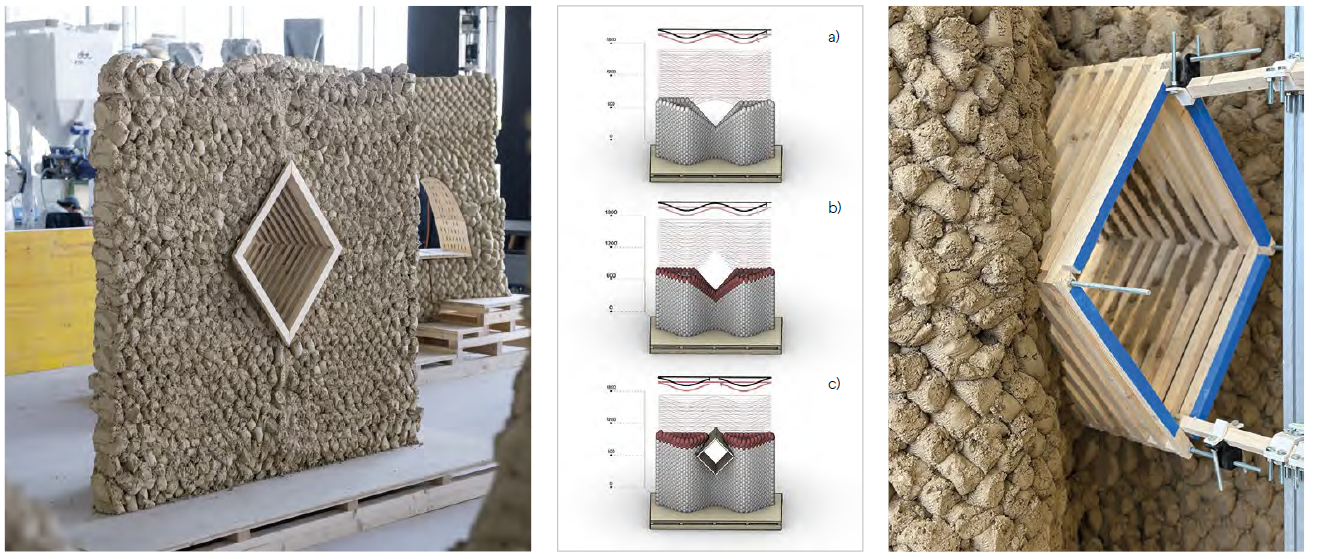
The photo above shows the process of printing a wall with a window embedded.

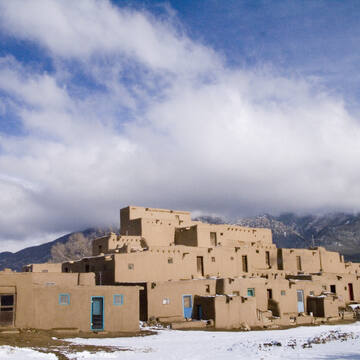
Taos Pueblo


Pueblo de Taos
© Edmondo Gnerre
https://whc.unesco.org/en/list/492/gallery/

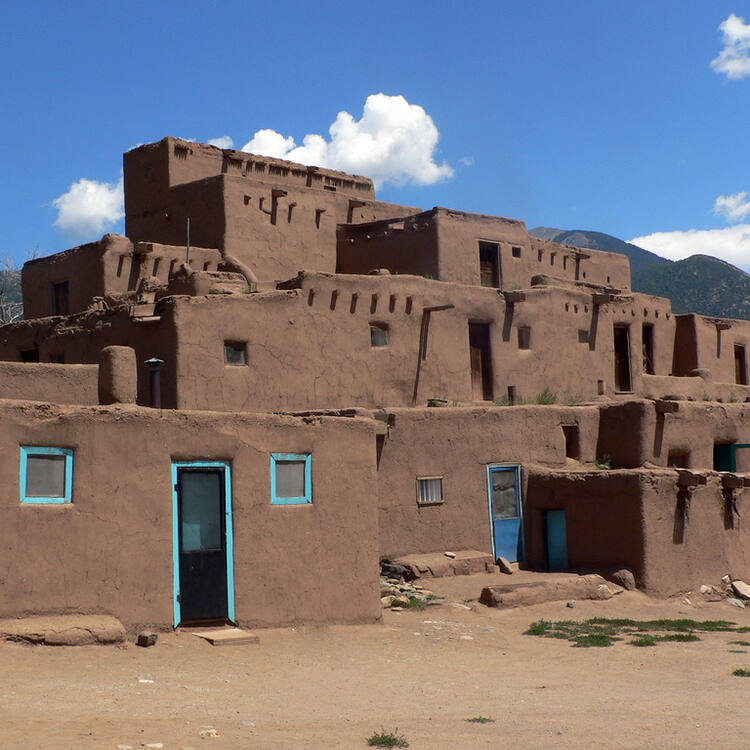
Taos Pueblo is an ancient, occupied multi-generational community in Northern New Mexico. “Pueblo” refers to both the physical buildings and community (stylized “pueblo”) and the native people of those communities (stylized “Pueblo”). The people are also known as Puebloans, or Pueblo peoples, and are native to the Southwestern United States (New Mexico, Arizona, Texas). They share a common culture, including food and agriculture, history, traditions, and religious practices. Aside from Taos, inhabited pueblos include San Ildefonso, Acoma, Zuni, and Hopi.

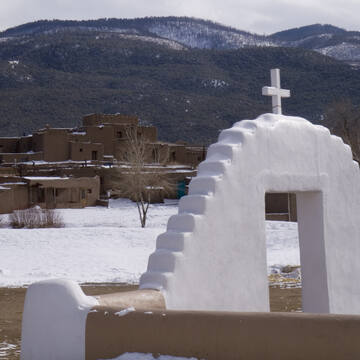
Taos Pueblo
© OUR PLACE The World Heritage Collection
Author: David Muench
https://whc.unesco.org/en/list/492/gallery/

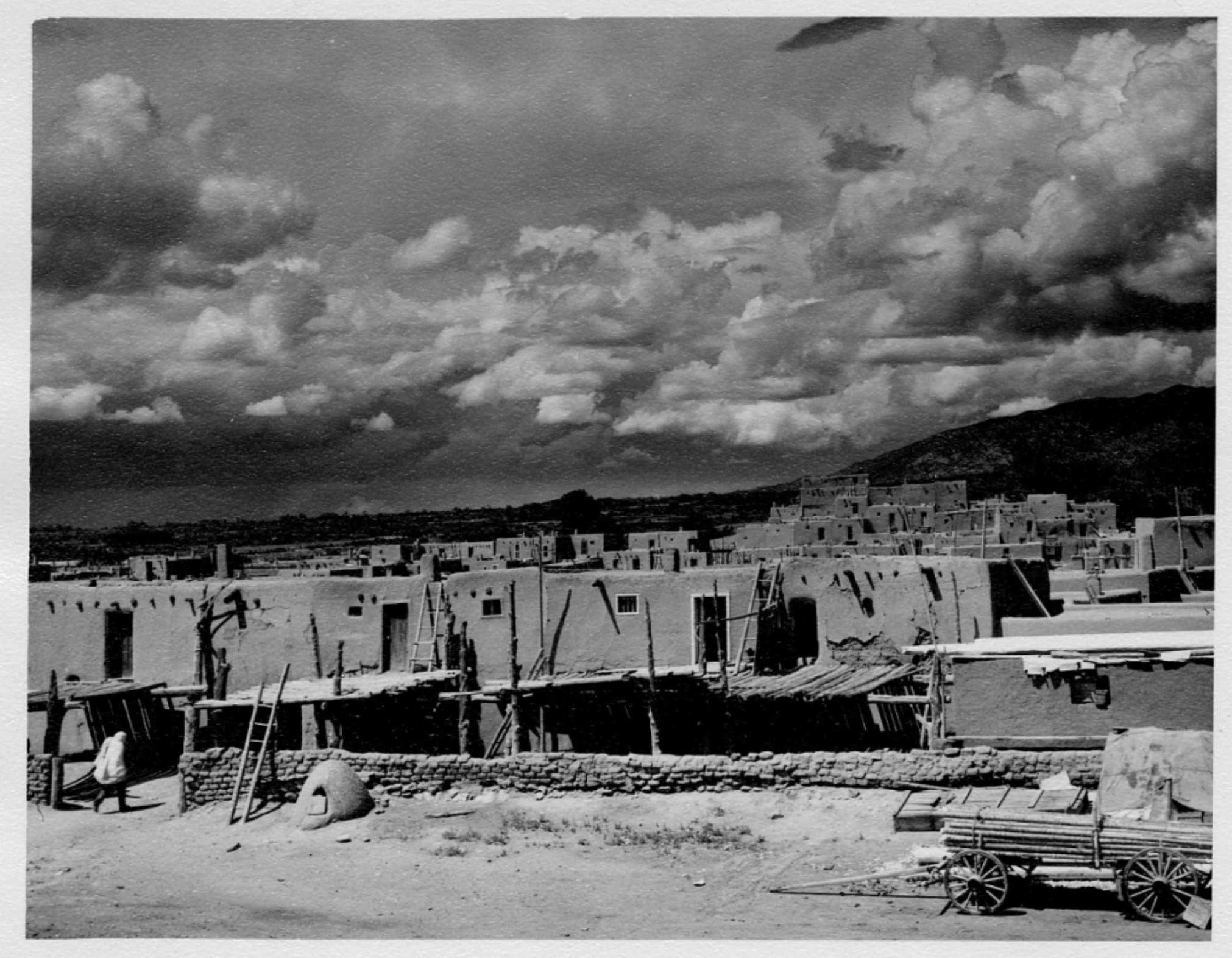
The most recognizable feature of the Taos Pueblo community are the multi-story, red clay and adobe homes and community buildings. They span both sides of the Sacred Blue Lake/Rio Pueblo de Taos (a tributary of the Rio Grande) which is also the population’s only source of water. The community has been continuously occupied for over 1000 years, likely originally built between 1000 and 1450 C.E. It is both the longest continuously inhabited community in the United States, and the largest of the pueblos.

Taos Pueblo
© OUR PLACE The World Heritage Collection
Author: David Muench
https://whc.unesco.org/en/list/492/gallery/

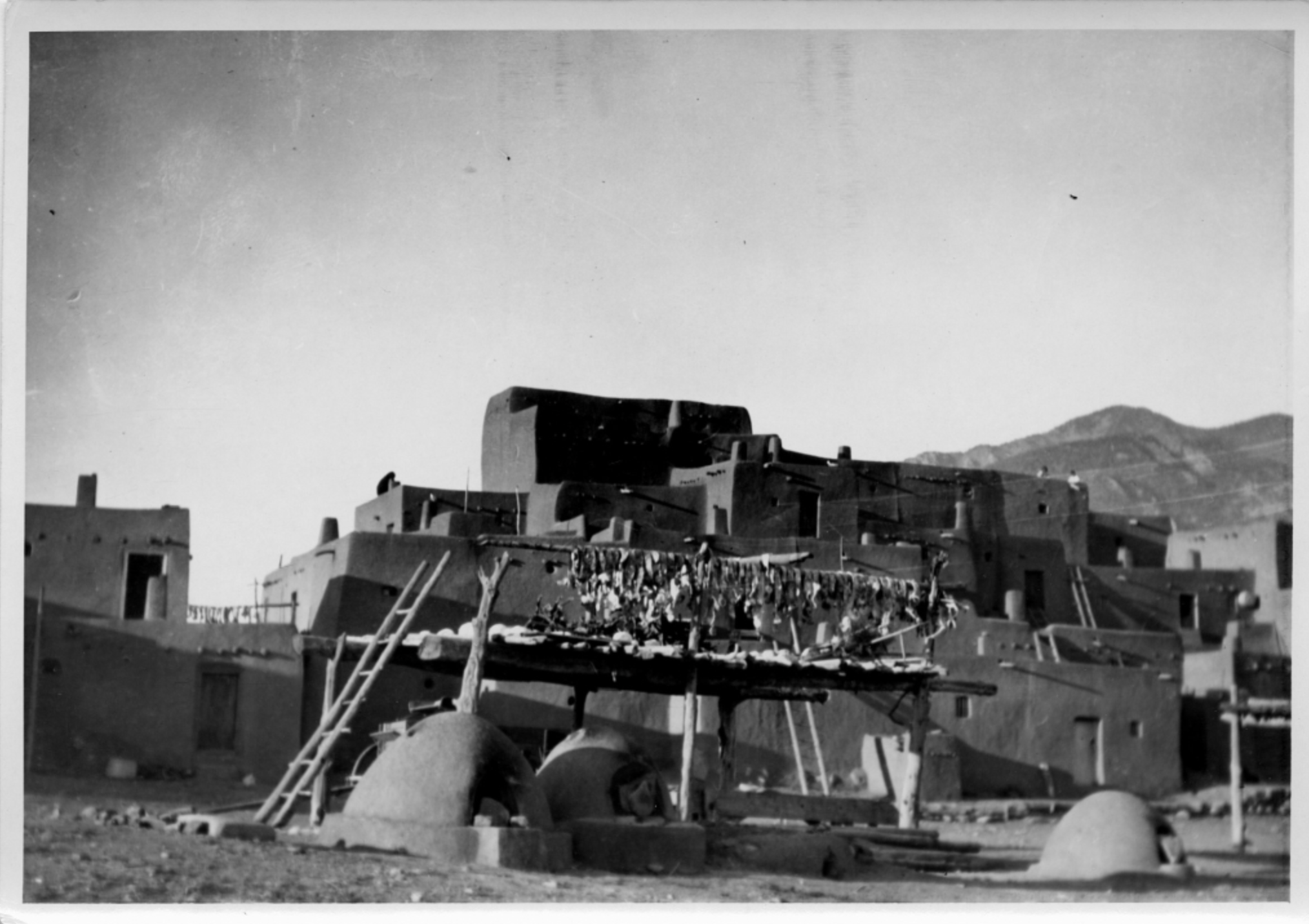
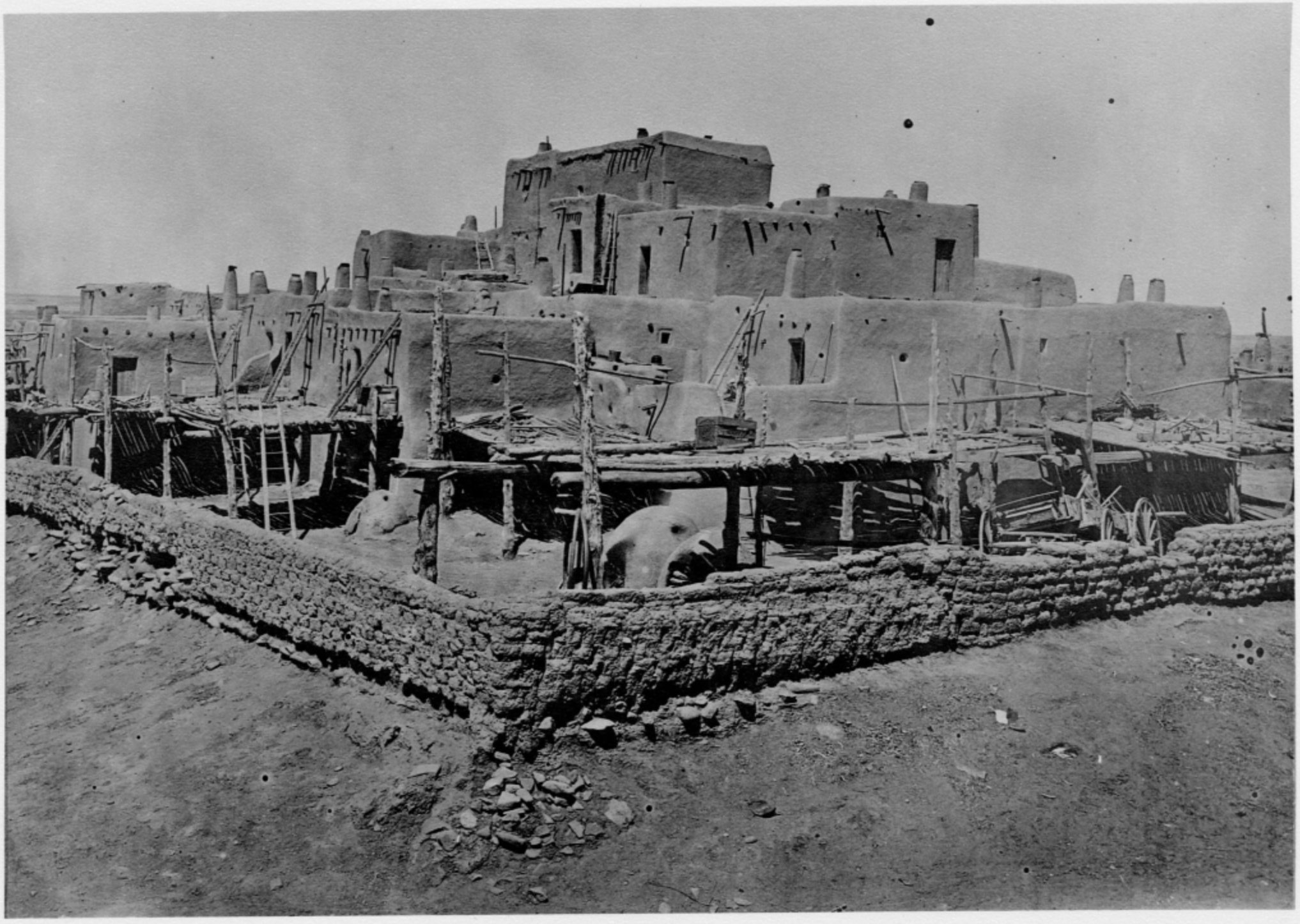
The structures are built in terraced tiers, extending out as they descend toward the ground, and a height of five stories at maximum. “The property includes the walled village with two multi-storey adobe structures, seven kivas (underground ceremonial chambers), the ruins of a previous pueblo, four middens, a track for traditional foot-races, the ruins of the first church built in the 1600s and the present-day San Geronimo Catholic Church” UNESCO. The community sits at the base of the Taos mountains, the Sangre de Cristo range of the Rocky Mountains

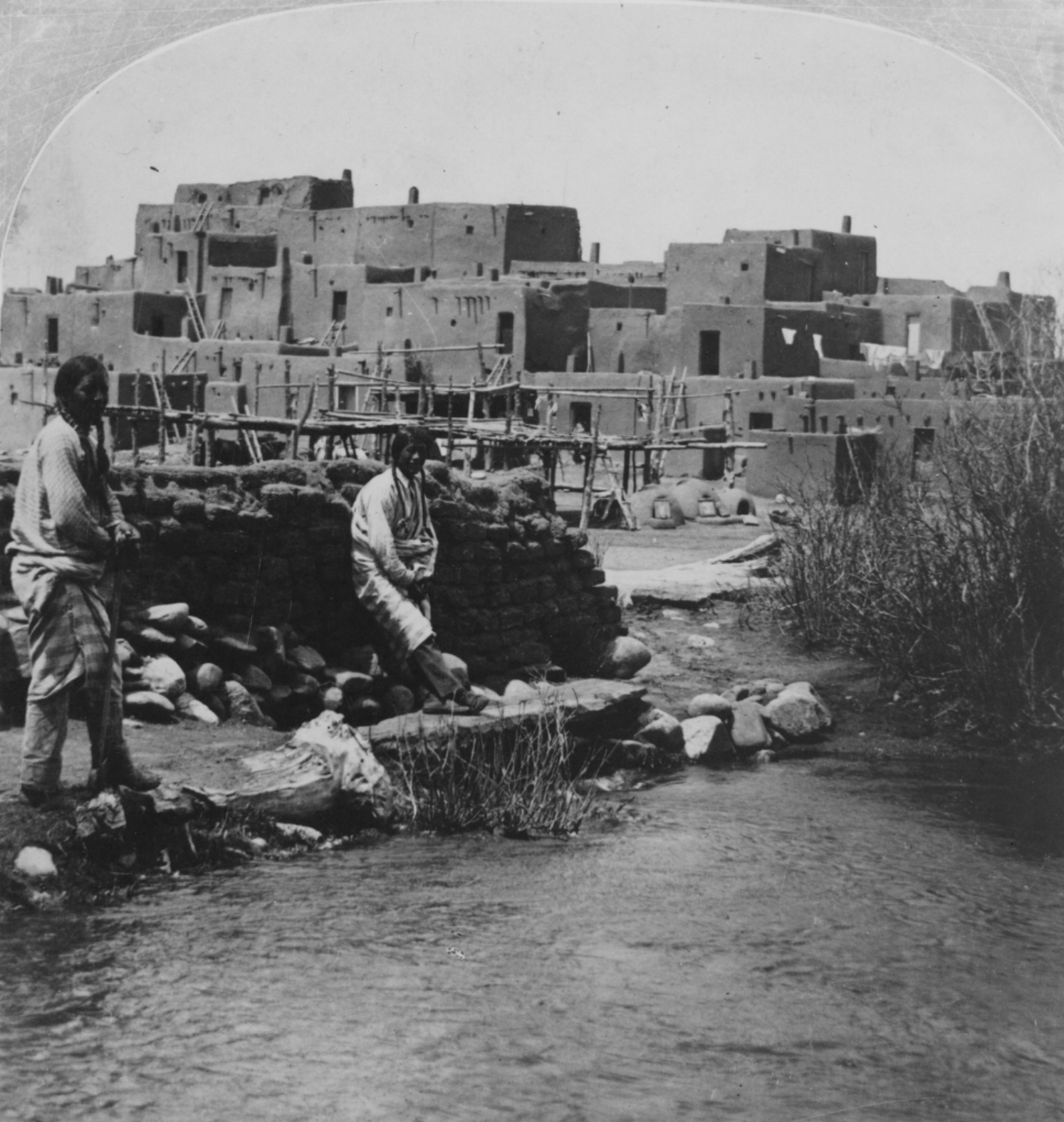
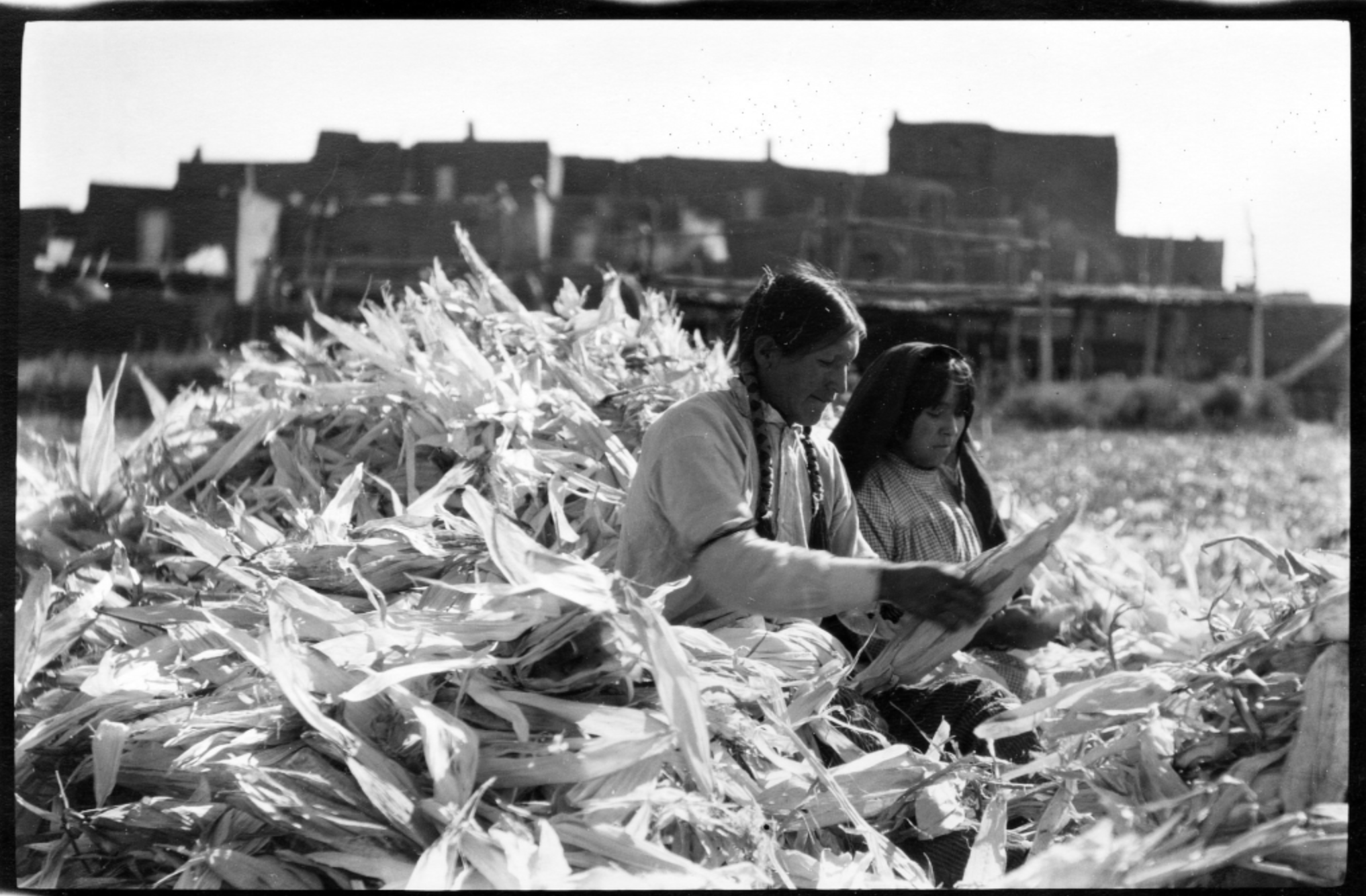
old-taos-images-historic-museum-of-taos-015
https://taospueblo.com/history/

Spanish explorers arrived in 1540 C.E. and originally believed the community to be one of the Seven Golden Cities of Cibola, a legend of Aztec mythology pursued by Coronado, among others. The miccaceous mineral (micca) found in the clay that is used to re-mud the homes every year shimmers in the light, seemingly like gold.

It is an occupied, inhabited, living community, with dwellings passed on within the family from eldest son to eldest son throughout generations. Taos Pueblo is recognized as both a U.S. National Historic Landmark and a UNESCO World Heritage Site. Visitors are welcome, but as an occupied space, access is limited to businesses and tourist centers, and photography of certain parts of the physical community and people is limited. The tribal land encompasses 95,000 acres with about 4,500 inhabitants. Approximately 150 people lived in the historic pueblo adobe dwellings as of 2010.

old-taos-images-historic-museum-of-taos-008
https://taospueblo.com/history/
old-taos-images-historic-museum-of-taos-003
https://taospueblo.com/history/
old-taos-images-historic-museum-of-taos-002
https://taospueblo.com/history/
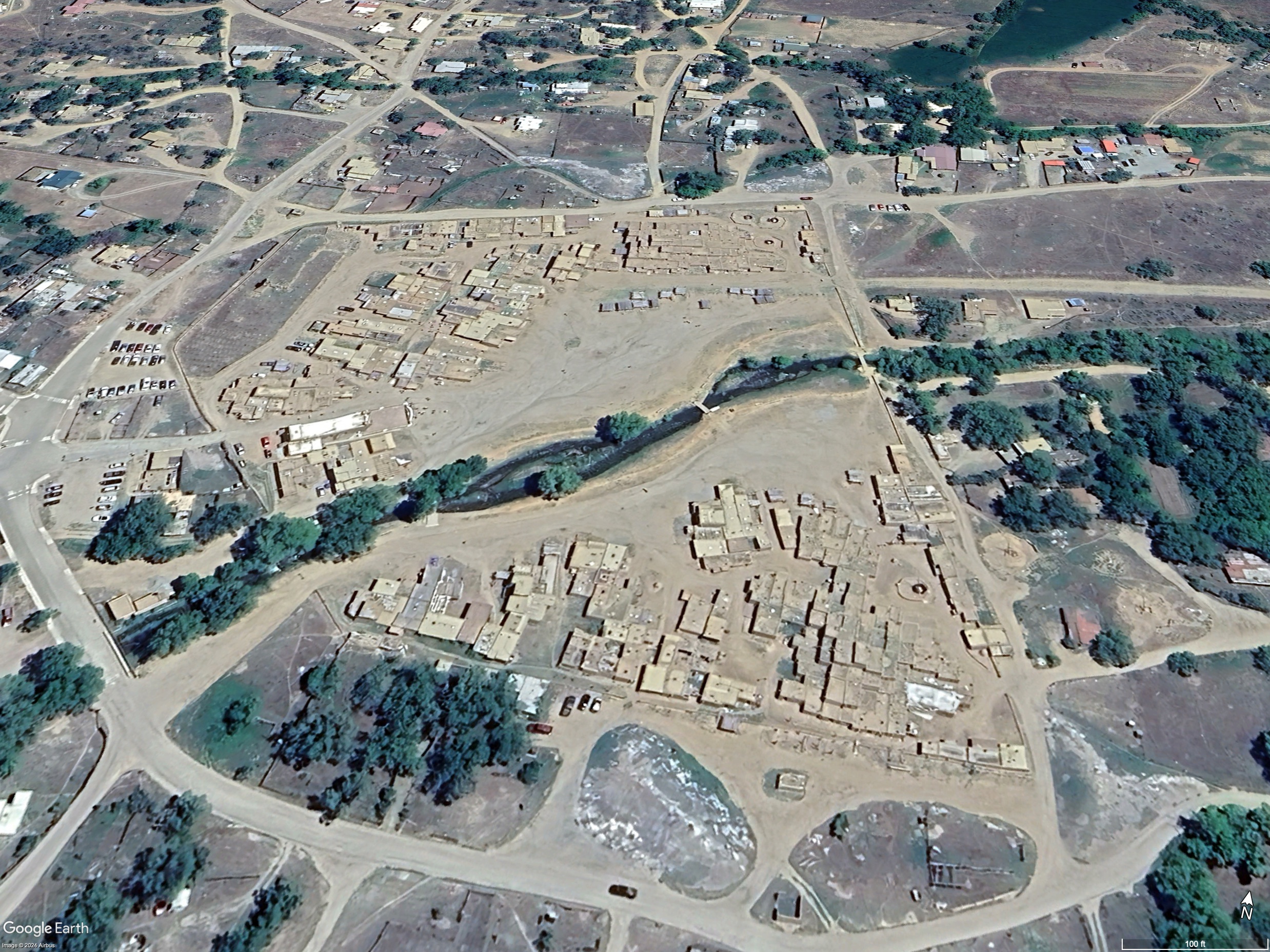
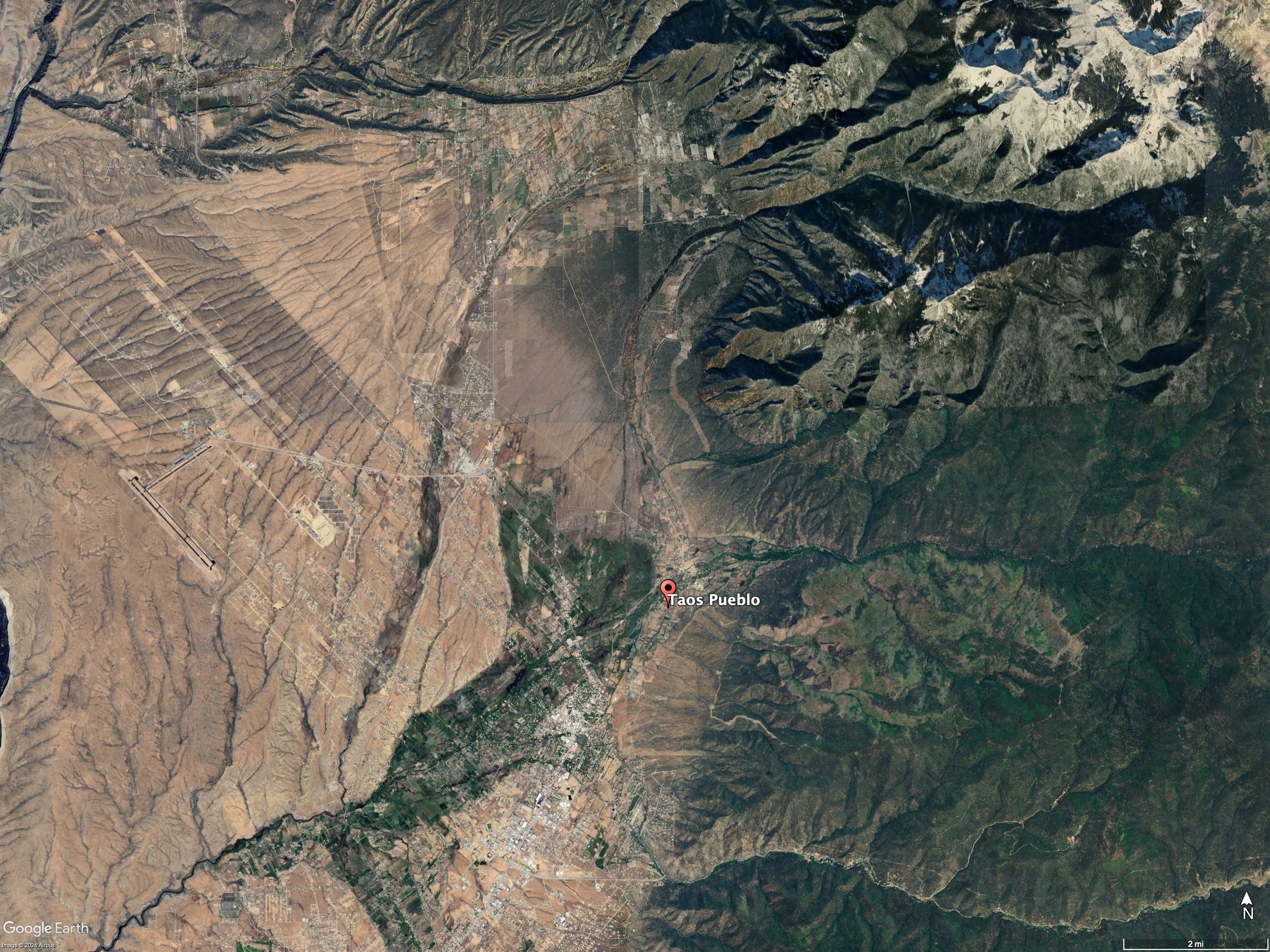
Google Earth 3D aerial of Taos Pueblo buildings
Google Earth aerial of Taos Pueblo land

REFERENCES

Shibam: Manhattan of the Desert

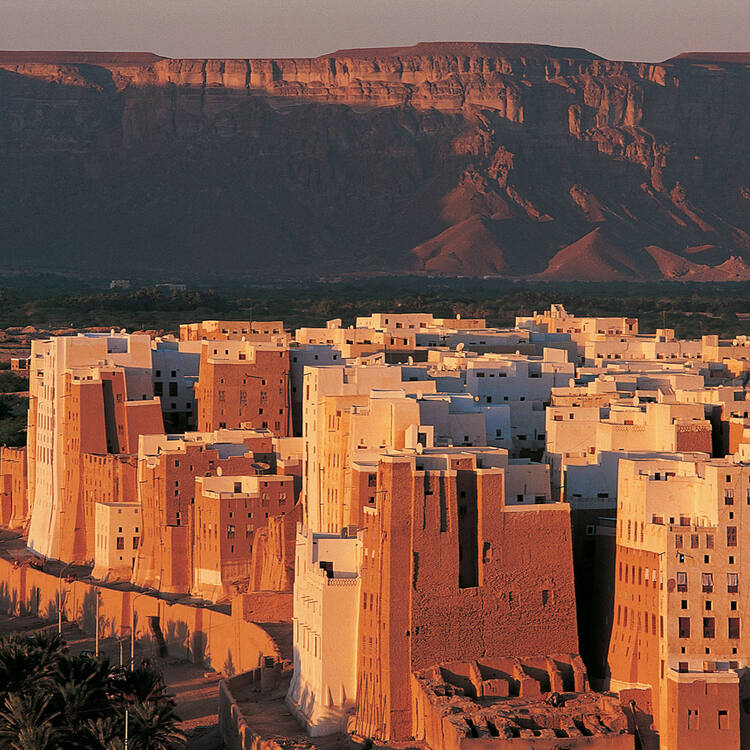
Yemen is located on the southern coast of the Arabian Peninsula, and the city of Shibam is renowned for its densely packed mudbrick buildings. These high-rise structures were built in close proximity as a defensive measure against Bedouin raids.

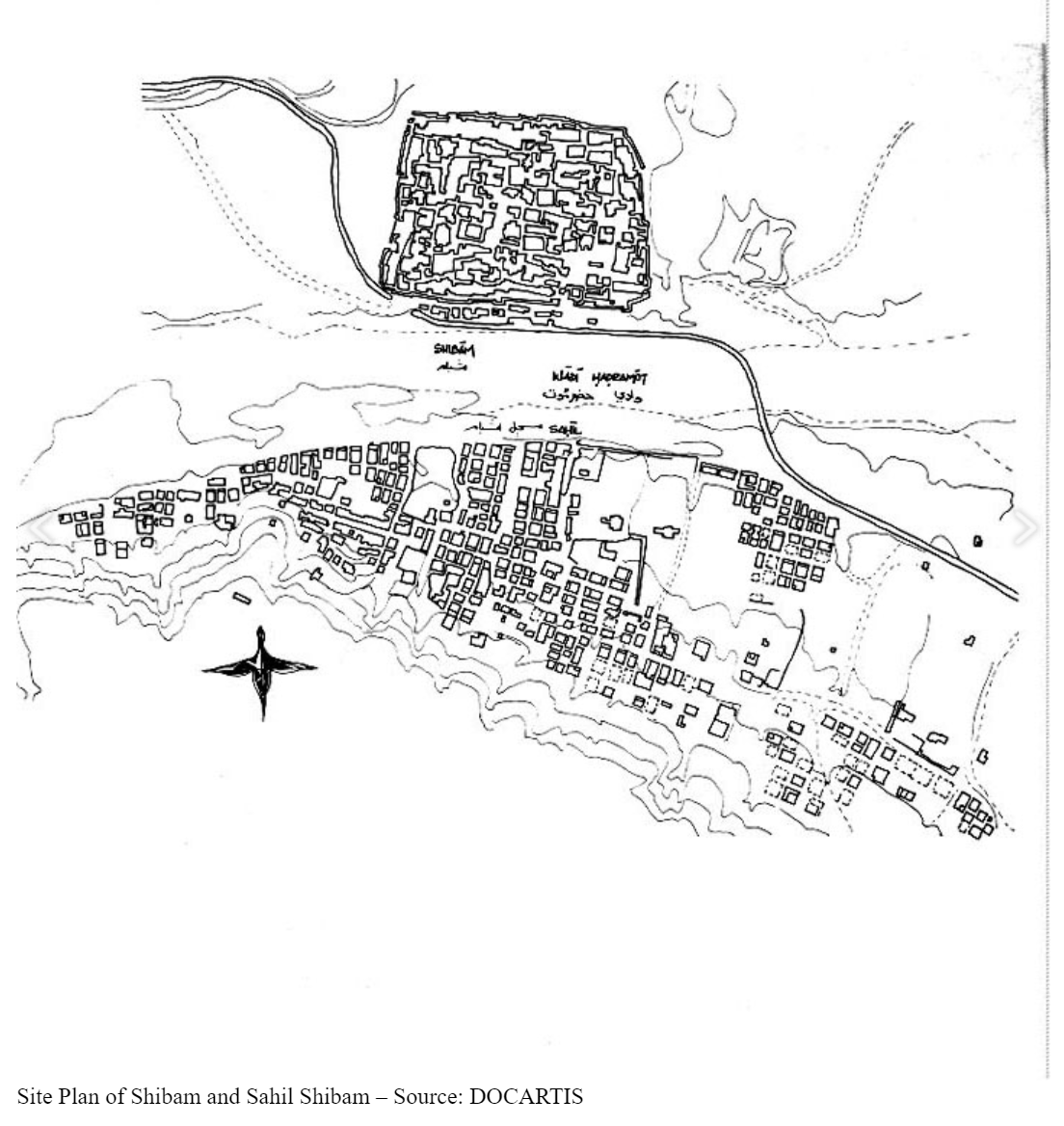
With its 500 narrow houses bunched close together, built like a fortress in the midst of Wadi Hadramaut, Shibam is architecturally unique. Its six-storey houses, built of mud with stone foundations, look like skyscrapers. The nickname “Manhattan of the desert” is an apt one. Twice destroyed in the 13th and 16th centuries, Shibam has scarcely altered since it was last rebuilt after 1553.

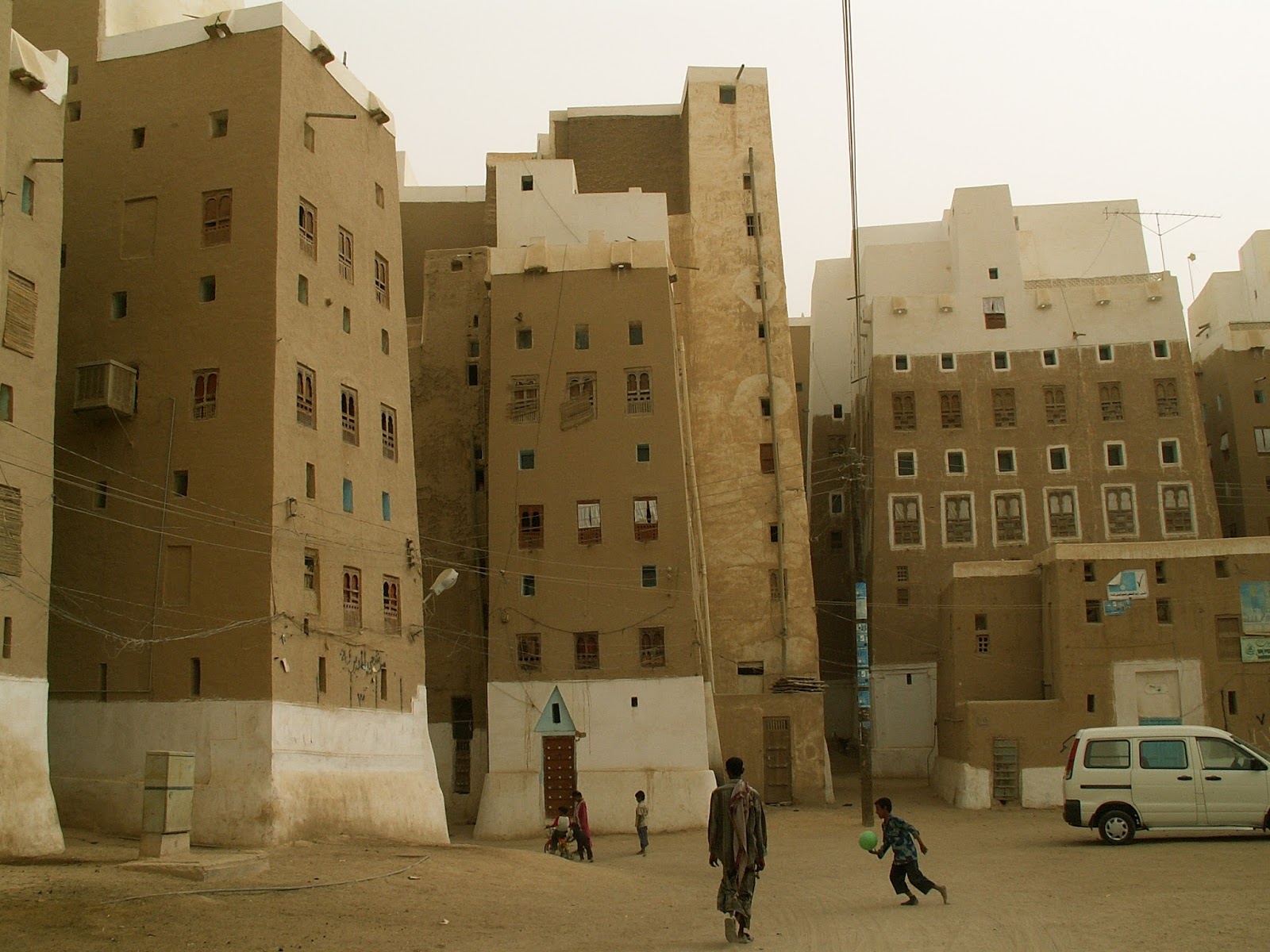
Shibam’s buildings are multistory (up to 11 stories), and the city is considered one of the earliest examples of vertical urban planning. The towers range between 5 to 11 stories, made primarily of adobe bricks reinforced with wooden beams.

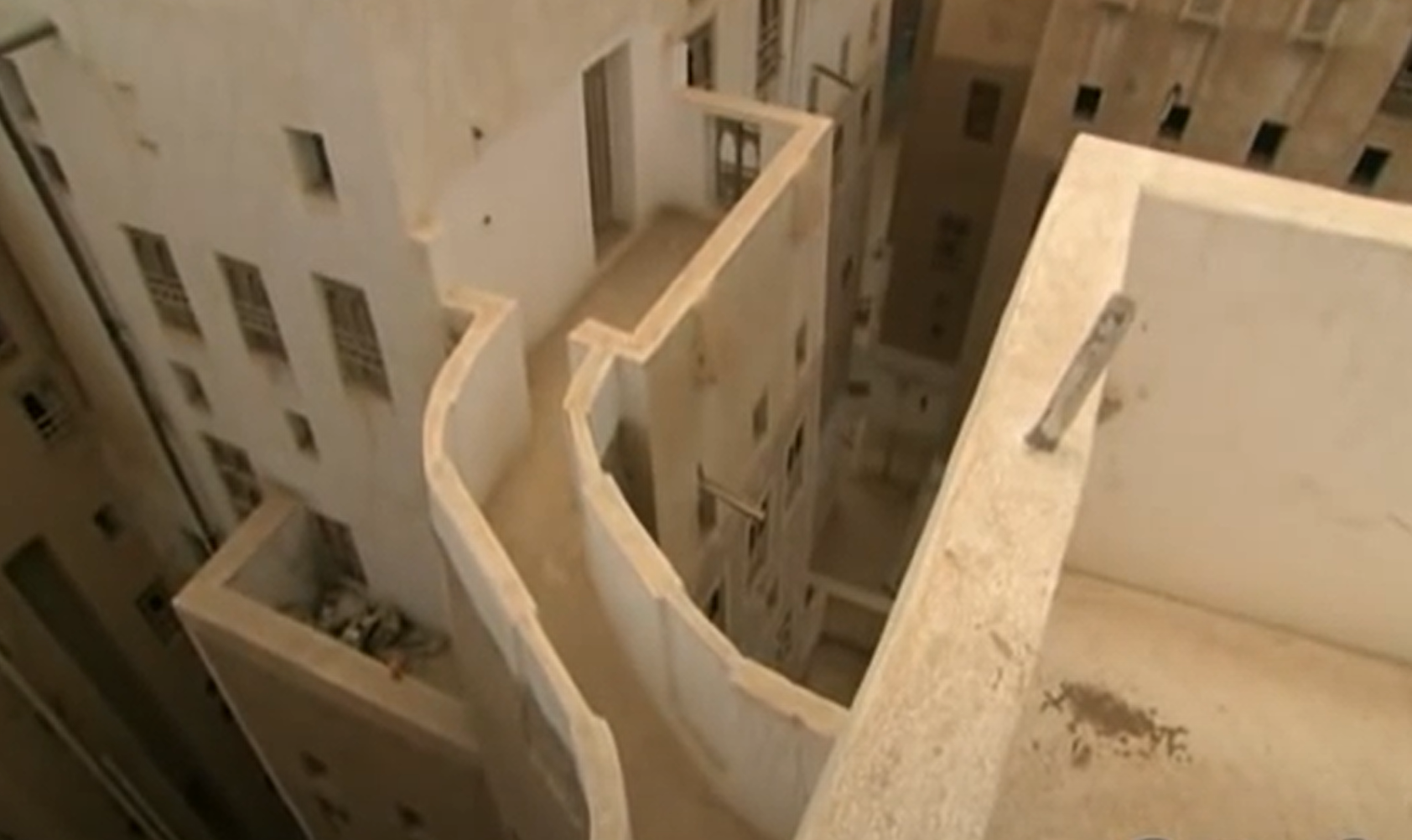
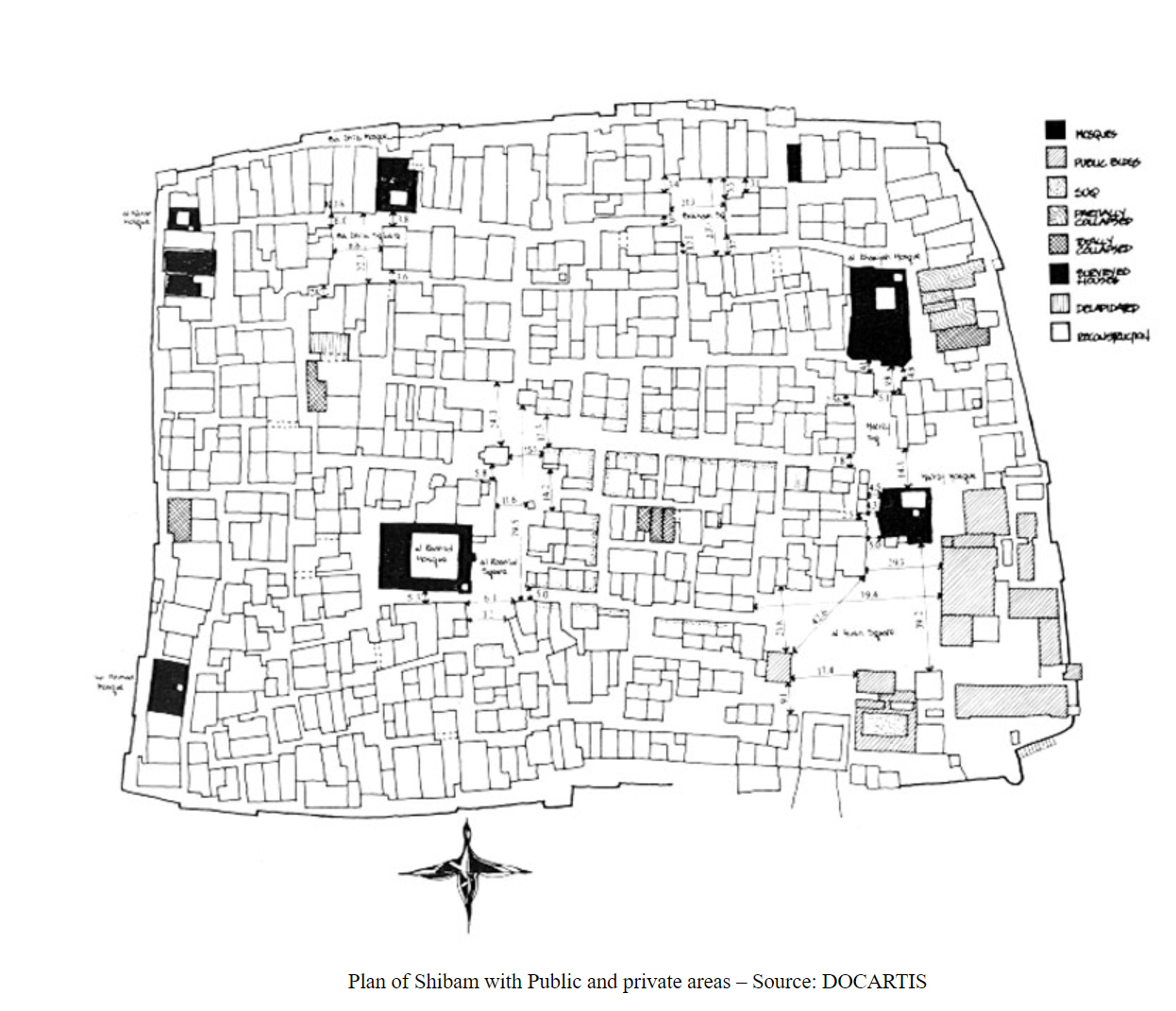
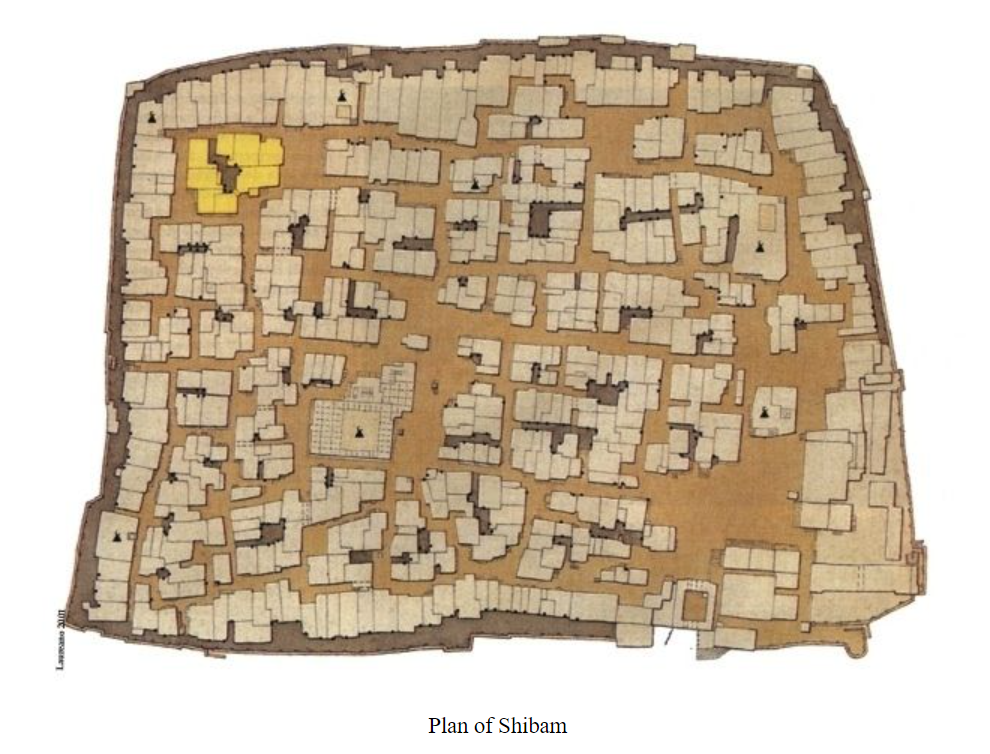
The city is enclosed by a protective wall, with two gates serving as entry points. The compact clusters of five- to eight-story buildings create a unique skyline, with some homes connected by elevated corridors. These corridors allow residents to move between houses quickly, providing a means to defend against attackers. The buildings feature wooden window frames set into mud-plastered walls, with many windows carved into elegant arches. While Shibam’s history dates back to the third century, most of the existing structures were built in the 16th century. Regular maintenance is required for these earthen buildings, as the walls must be replastered periodically to combat erosion from wind and rain. And the roofs and the exterior of the mud towers had sustained the most damage.


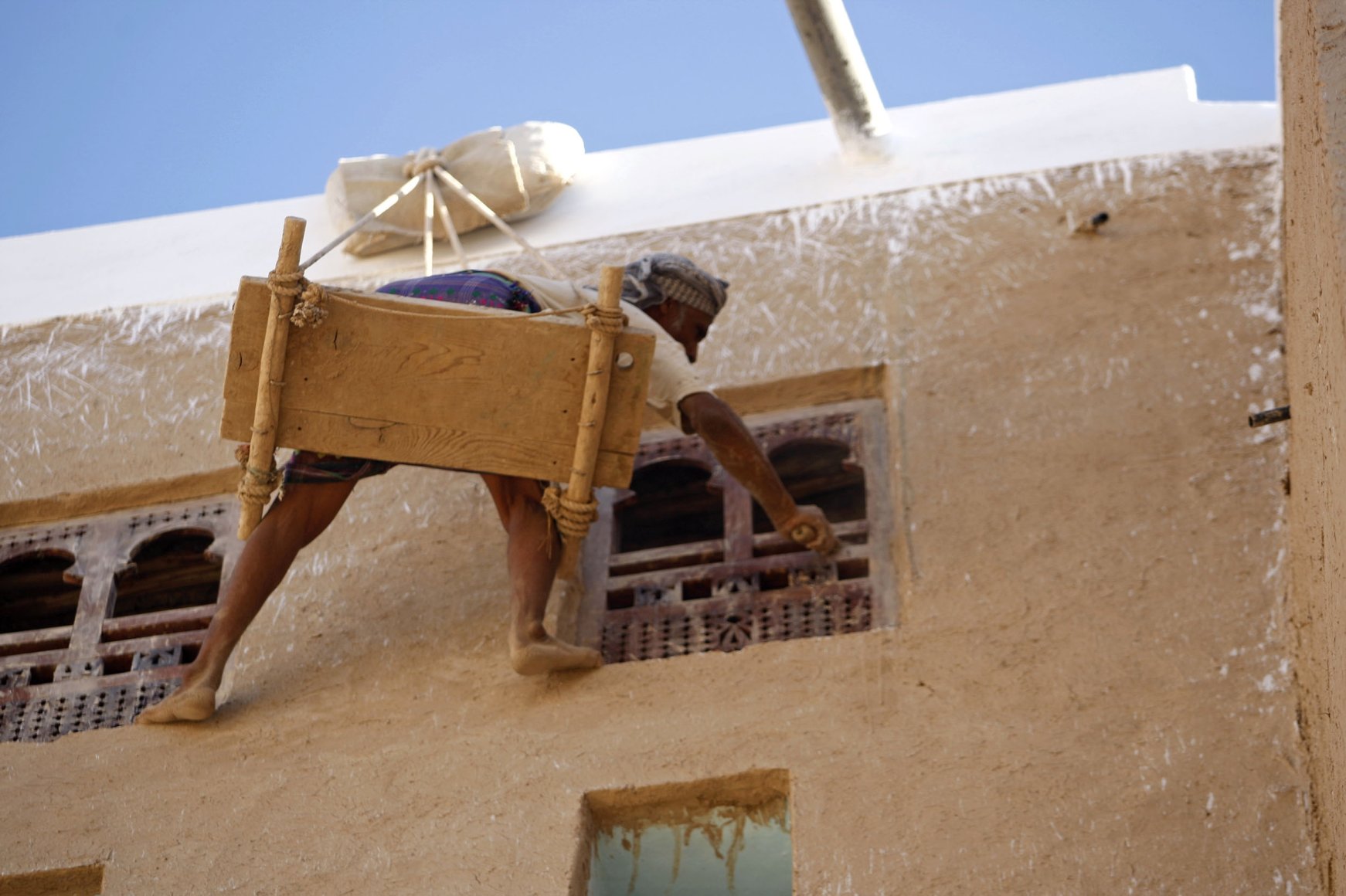
The bricks used in Shibam’s buildings gradually decrease in size on the upper floors, resulting in thinner walls as the structure rises and giving the buildings a trapezoidal shape. This design helps to reduce the load on the lower floors, enhancing the overall stability and strength of the buildings. Typically, each building is occupied by a single family, with living spaces located from the third floor upwards. The first and second floors are often designated for food storage and livestock stables, allowing families to keep cattle inside during periods when the town was under siege.


Citations:

  • UNESCO World Heritage Centre. “Old Walled City of Shibam.” Accessed September 2024. https://whc.unesco.org/en/list/192.
  • Al Sayyad, Nezar. “The Architecture of Mud: Construction and Repair Technology in the Hadhramaut Region of Yemen.” Environmental Design: Journal of the Islamic Environmental Design Research Centre, 1988.
  • Serageldin, Ismail. Traditional Architecture: Shibam and the Hadramut Region. London: Academy Editions, 1991.
  • Alhussein, Redhwan, and Tetsuya Kusuda. “Performance and Response of Historical Earth Buildings to Flood Events in Wadi Hadramaut, Yemen.” Built Heritage, vol. 5, no. 1, 2021, https://doi.org/10.1186/s43238-021-00044-8. Accessed 23 September 2024.
  • DaliySabath. “Shibam: Yemen’s ancient ‘Manhattan of the Desert'”. Agencies. https://www.nationalgeographic.com/travel/article/shibam-mud-skyscraper-yemen. December 17, 2020.

Centinela Chapel

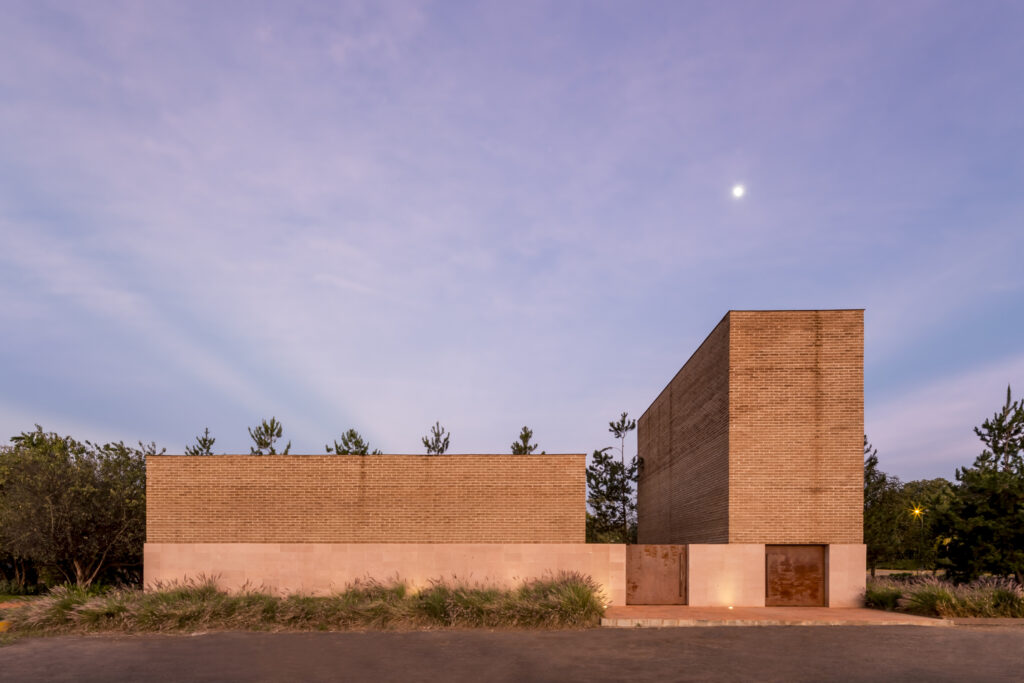
The front facade of Centinela Chapel captured at dusk. (César Béjar via Arch Daily)

Architect: Estudio ALA

Location: Jalisco, Mexico

Year of Completion: 2014

Area: 480 square meters

Centinela Chapel was designed by Estudio ALA based in Gaudalajara, Mexico. The studio was established in 2012 by Luis Enrique Flores and Armida Fernandez. Flores received his undergraduate education from Universidad de Guadalajara, and a Master’s in Landscape Architecture from the Harvard GSD.  Fernandez began her education in industrial design at Instituto Tecnológico y de Estudio Superiores de Monterrey before continuing on to a Master of Design Studies at the GSD.  Their view of the architectural discipline is as interdisciplinary as their educational backgrounds might suggest,  approaching each project with a holistic mindset that in their words is rooted in “[the time, the history, the place, and the people]”[1]. You can read more about their approach in this interview with the Architectural League of New York.

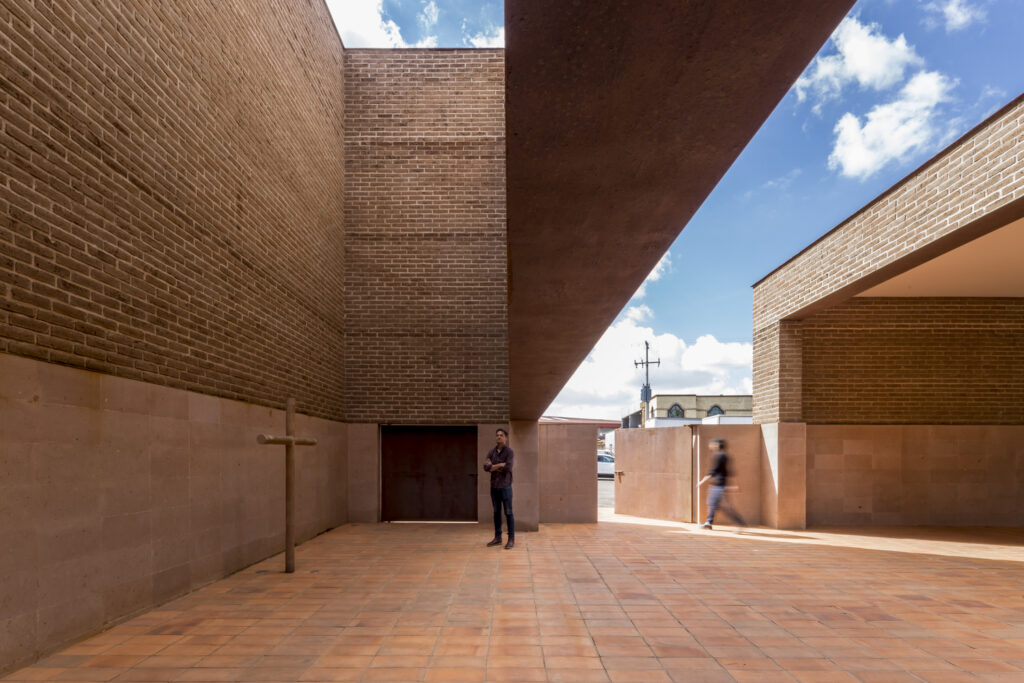
These design imperatives are evident in Centinela Chapel. The 480 square meter building, a small chapel located inside of a Tequila production facility in Jalisco, sits in a verdant landscape with broad views to a pond and adjacent fields [2]. The chapel consists of two rectilinear volumes, open to the air and sky. Used primarily by the facility’s workers, the open plan allows great flexibility and large capacity with a very small building, all while elegantly connecting to the landscape.

Plan of Centinela Chapel (Arch Daily)

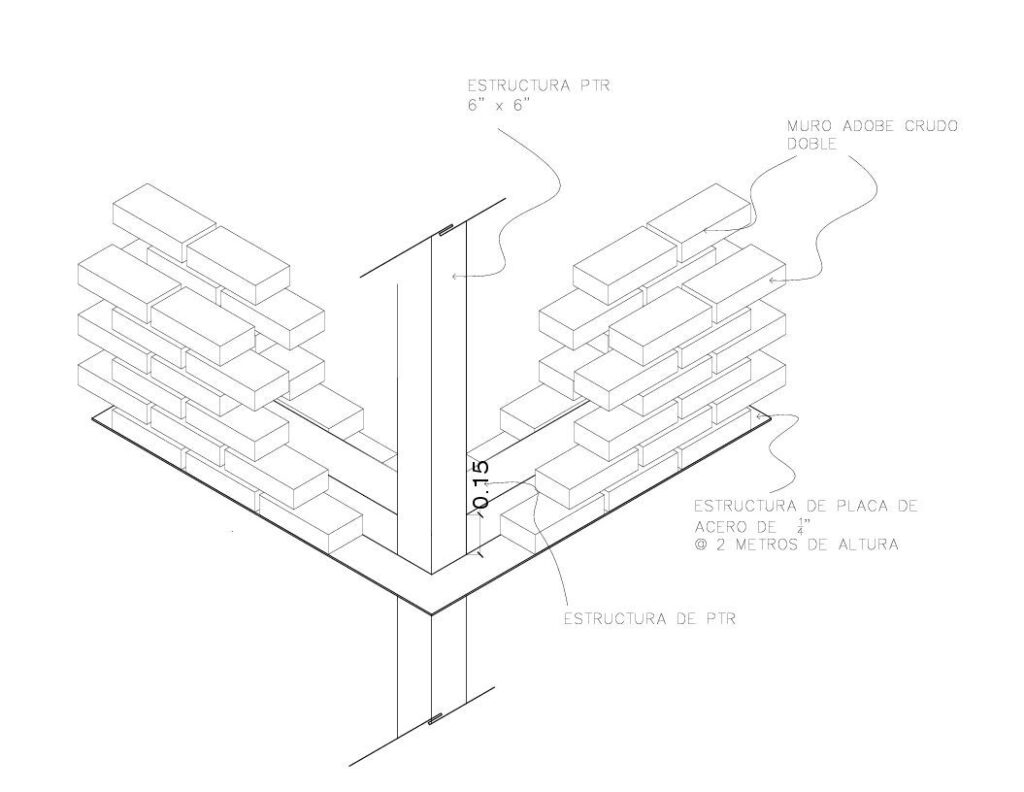
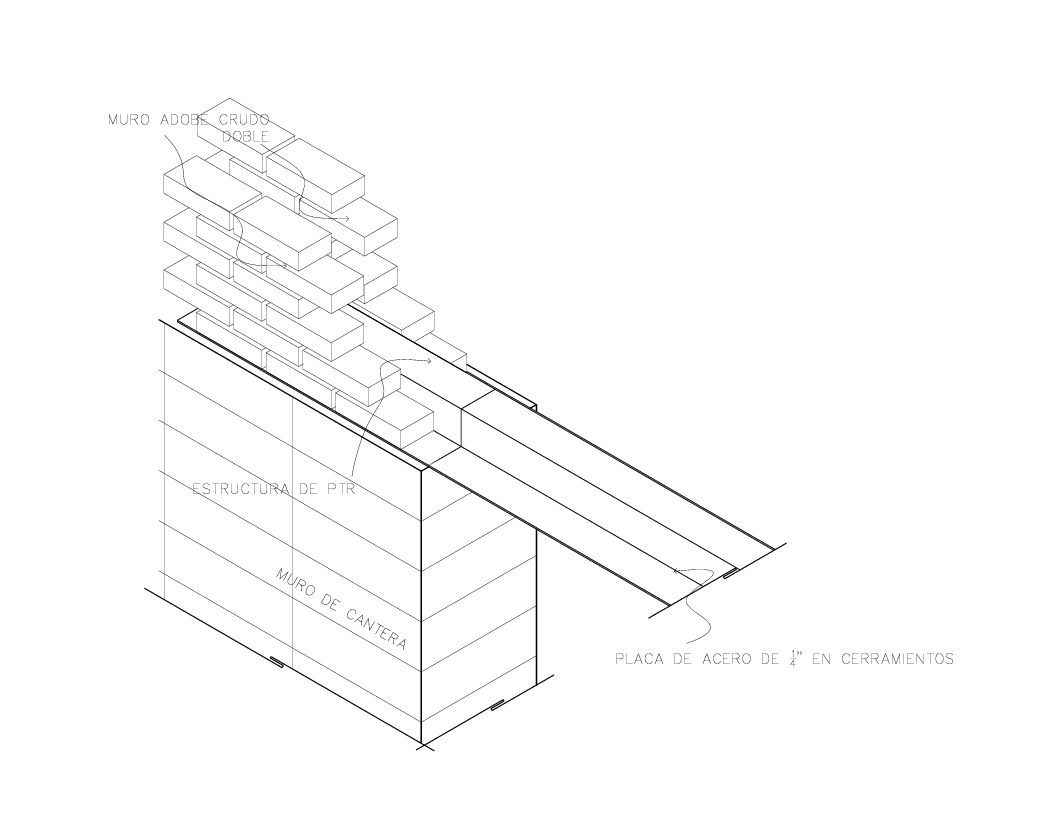
Adobe bricks and pink terracotta tiles are the dominant material expression of the Chapel. However, the primary structural system is in fact steel, which allows for large span openings,  and a flexible open plan with wide views. Although the adobe bricks incorporated here are not structural they do play an important role of tying the Chapel to its site, by enhancing thermal comfort, and relating the building to local architecture. Estudio ALA puts great emphasis on the materials as means of connecting a project to its surroundings [3], and the adobe walls undoubtedly achieve this at Centinela Chapel. As a whole the building is an interesting case study of a hybrid material composition, where adobe is the protagonist, but has been enhanced beyond its traditional formal limits with the introduction of a steel structure. The project demonstrates that even where traditional adobe construction may not be feasible for the given form the material can still be a critical part of a building’s identity given its cultural, aesthetic, and climatic significance.

A construction detail illuminated the relationship between steel structure, and adobe bricks (Arch Daily)


The interior of the chapel. The unusually large spans and flexible plan, and openess to the air and sky are evident (César Béjar via Arch Daily).

1. Estudio ala. Estudio ALA. (n.d.-a). https://estudioala.com/

2. Arch Daily. (2015, December 29). Centinela Chapel / Estudio Ala. ArchDaily. https://www.archdaily.com/779489/centinela-chapel-estudio-ala

3. Be critical, adapt constantly, and connect. The Architectural League of New  York. (2024, July 30). https://archleague.org/article/be-critical-adapt- constantly-and-connect/


Contemporary Architects Association: Observatory in the Desert

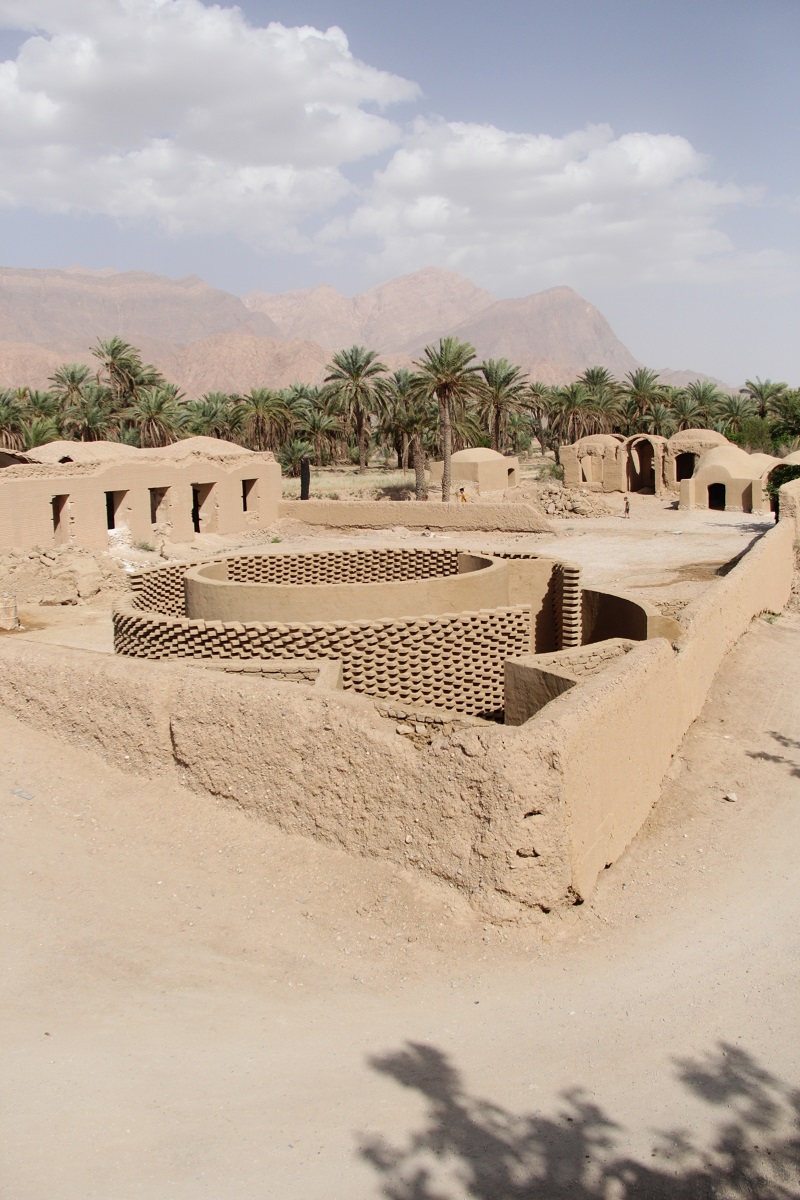
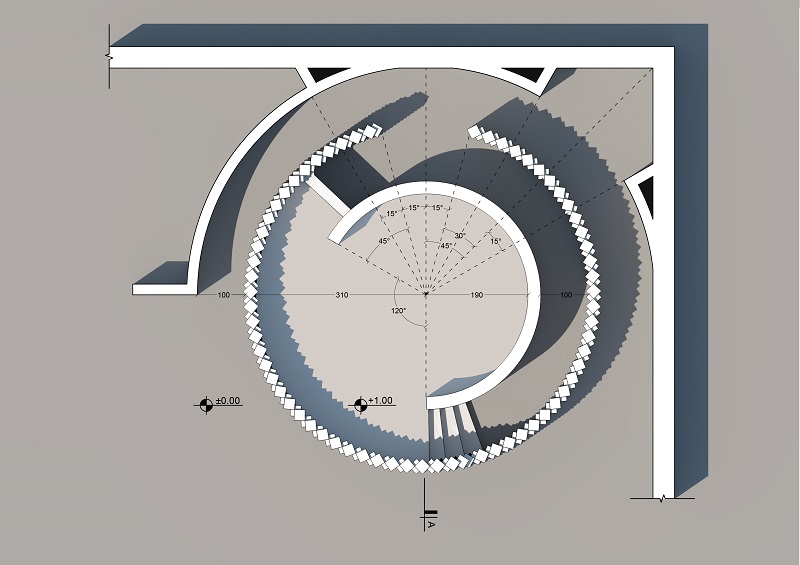
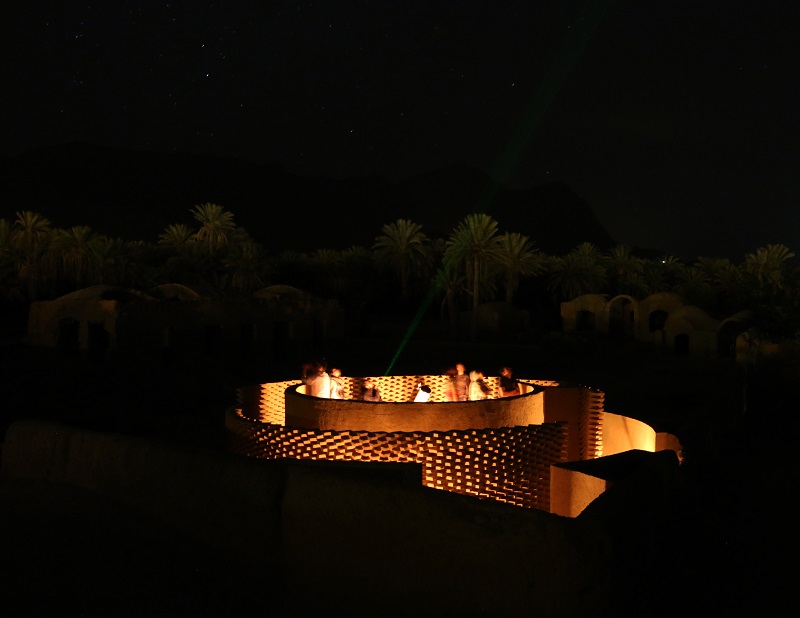
The Observatory in the Desert is a public addition to a decaying mud village located in Esfahak, Iran, a village in the north-east of the country. The structure consists of mud brick and rammed earth walls, creating a concentric pattern that leads a person to the center raised platform between the highest walls; a perfect place for an observatory.

The project was conceived by the Contemporary Architects Association an organization based in Tehran, dedicated to “creating an environment where its teachers and students, equipped with a deep understanding of architectural knowledge, history, and theories, engage in meticulous observation of the current state with an analytical and research-driven approach,” and the Esfahak Mud Center (E.M.C) . The main lead of the project was Pouya Khazaeli, founder of Esfahak Mud Center (E.M.C), an organization whose aim is of reviving traditional clay and mud construction in Esfahak Village.

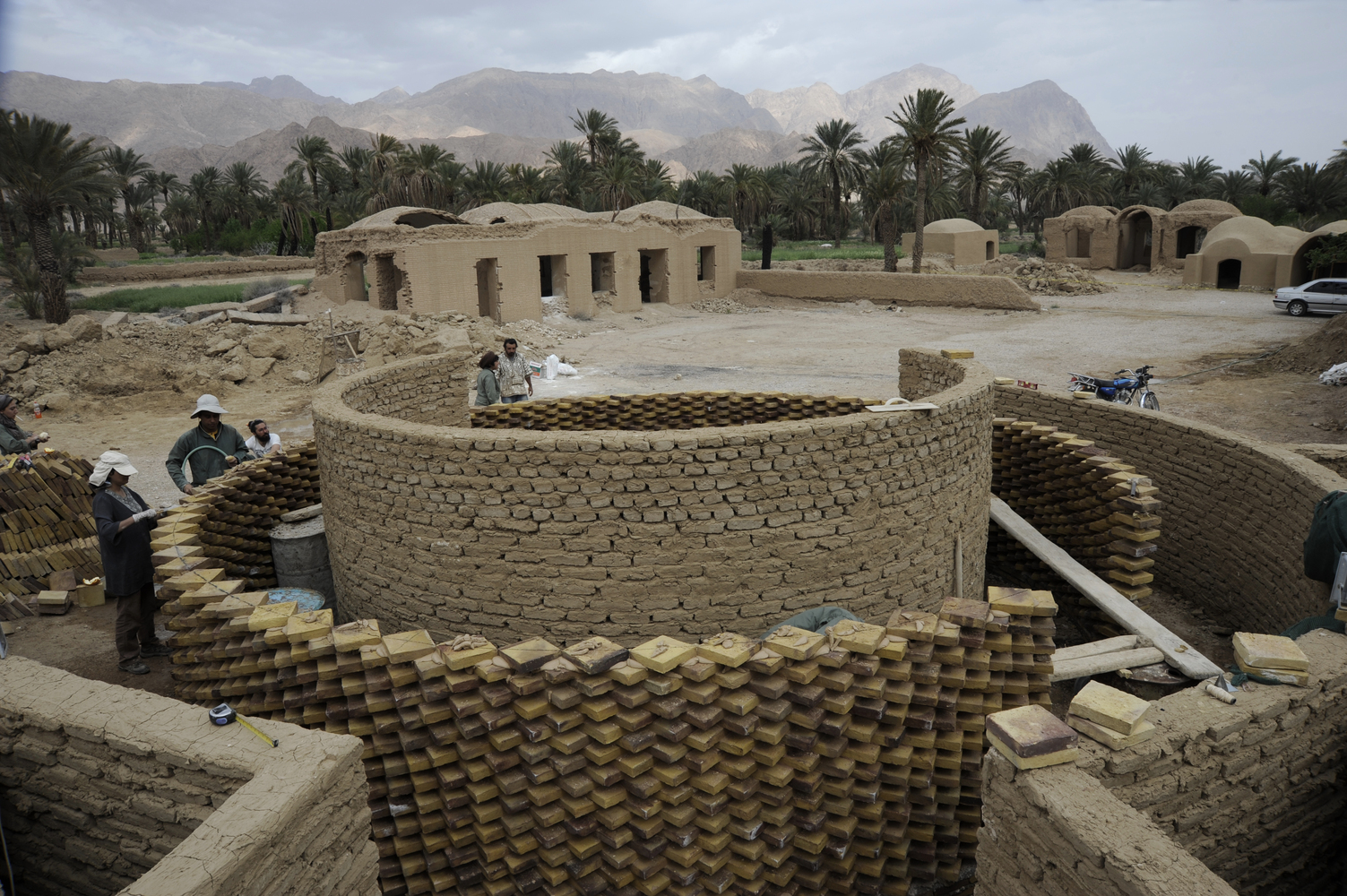
Together with selected students of the CAA, the group designed a model with clay to re-enact the process of building the structure. After understanding the patterns and modes of building, the group traveled to Esfahak and began moulding 20cm x 20cm bricks out of the found mud. As the moulds dried construction began with the original group, however eventually community members of all size, ability, and age came to the need of the designers.

Food was shared, stories were told, tea was served, and the process of building and designing turned into a community process; an intention the architects never set forth with.

The special 20cm x 20cm bricks were placed on the outside of the inner center at 45 degree rotation, reflecting the essence of the palm trees surrounding the space. A curved single person entry way leads you to the center of the structure, where the sky is framed by the circular opening.

The project inspired and engaged the locals, bringing life to an area that was surrounded by decaying structures and rubble. The group even received a “is this for us?” question from locals, with a resounding answer of “yes”. With all of the additional help and support from the community, the project took about 10 days. The Observatory in the Desert is a beautiful example of a cultural, communal, and material specific piece of architecture that was built locally by hand and engaged with active participants of all backgrounds.

Size: 69 square meters

Year: 2017

Photos: Anis Eshraghi

Architects: Amir Ali Zinati, Behnaz Motarjam, Aydin Emdadian, Sonia Begi, Bahar Mehdipour, Hamidreza Malekkhani, Ramtin Ramezani.

Advisor: Puya Khazaeli

Local colleagues: Mohsen Mehdizadeh, Mostafa Yaqoubi, Hossein Bagheri, Mehdi Hosseini

References

[1] https://www.youtube.com/watch?v=6rlO0HdpLLk Arch Daily video

[2] https://www.archdaily.com/873615/observatory-in-the-desert-contemporary-architects-association#:~:text=We%20don’t%20have%20a,even%20though%20it’s%20still%20early Arch Daily article

[3] https://en.caai.ir/about-caai/ Contemporary Architect’s Association

[4] https://esfahkmudcenter.org/?p=1885 Esfahk Mud Center

[5] https://en.wikipedia.org/wiki/Pouya_Khazaeli Pouya Khazaeli


La Luz

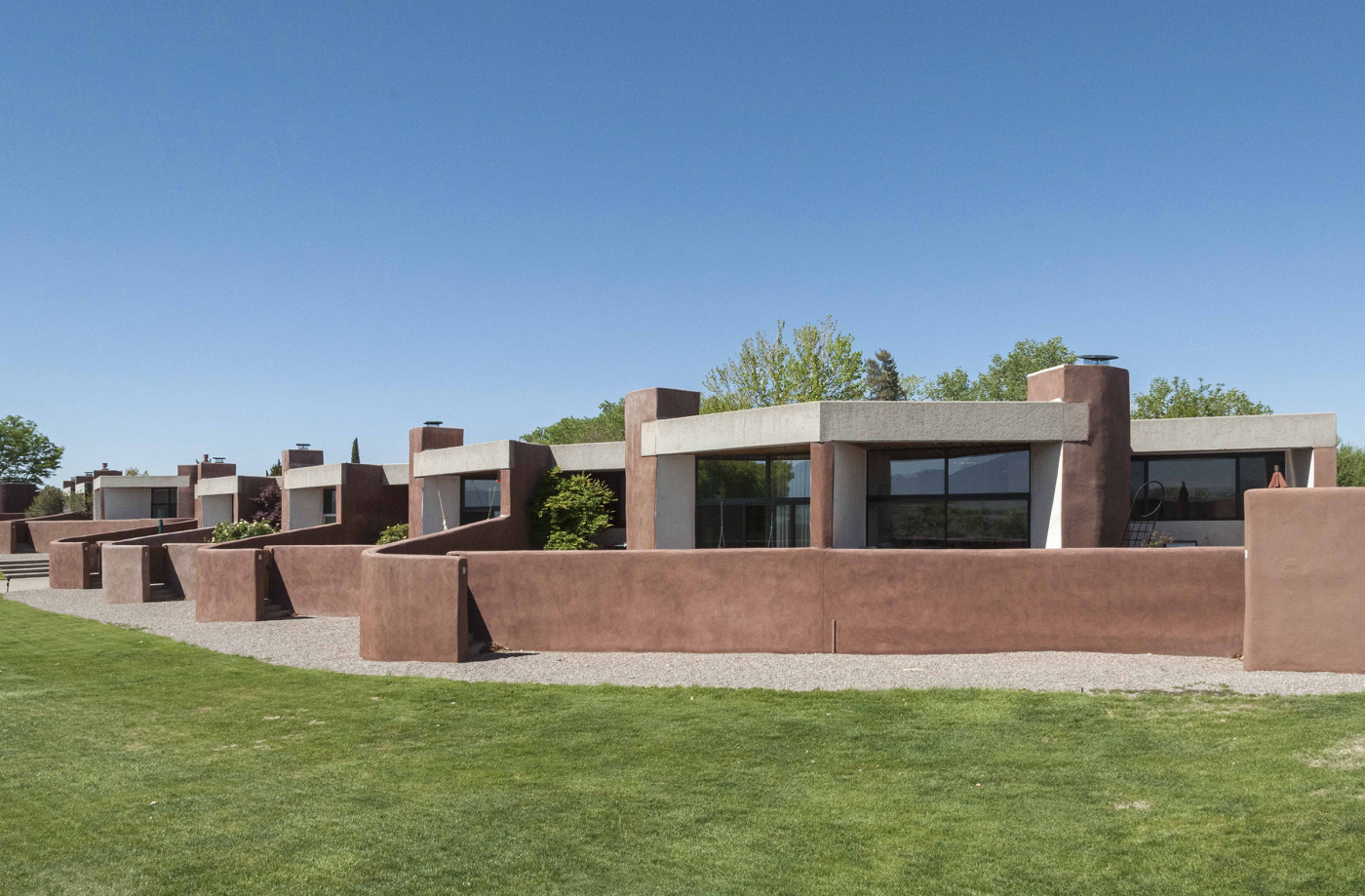
modern adobe fence in front of glass and geometric rooftop bifurcated with cylindrical column against a blue cloudy sky
Credit: Mhd Alaa Eddin Arar

La Luz, designed by Antoine Predock, is a planned townhouse community that blends modern architecture with materials that reflect the cultural heritage and traditional building practices of the southwest region. Located in Albuquerque, New Mexico, on open land between the Rio Grande and the Sandia Mountains, La Luz was conceived by Predock in 1967 and completed by 1974.

The development features 96 townhomes, ranging from 1,500 to 2,100 square feet, clustered together with 16-inch thick adobe walls. This design choice not only pays homage to traditional Southwestern architecture but also serves a functional purpose by providing excellent thermal mass for passive climate control.

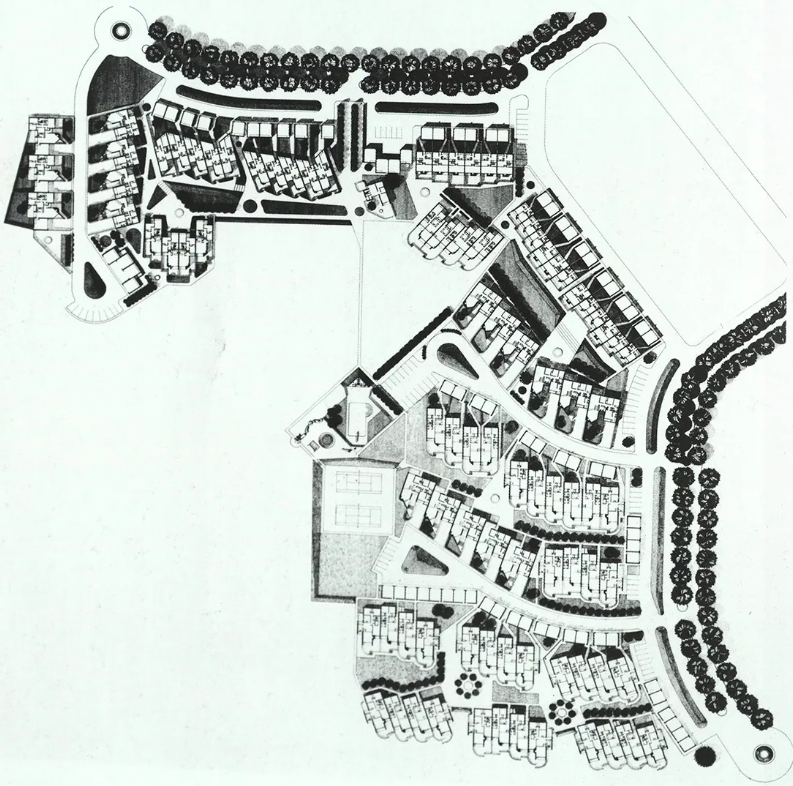
La Luz MasterPlan from aerial view in black and white that illustrates rows of townhouses, streets and community amenities like tennis courts, pool, and green spaces
Credit: Antoine Predock Architect PC

The townhouses in La Luz’s layout are oriented eastward, offering residents picturesque views of the Sandia Mountains and morning sun, while the western facade features mostly blank walls to shield against harsh afternoon sun and dust storms. Private courtyards act as solar traps in winter and provide shade in summer.

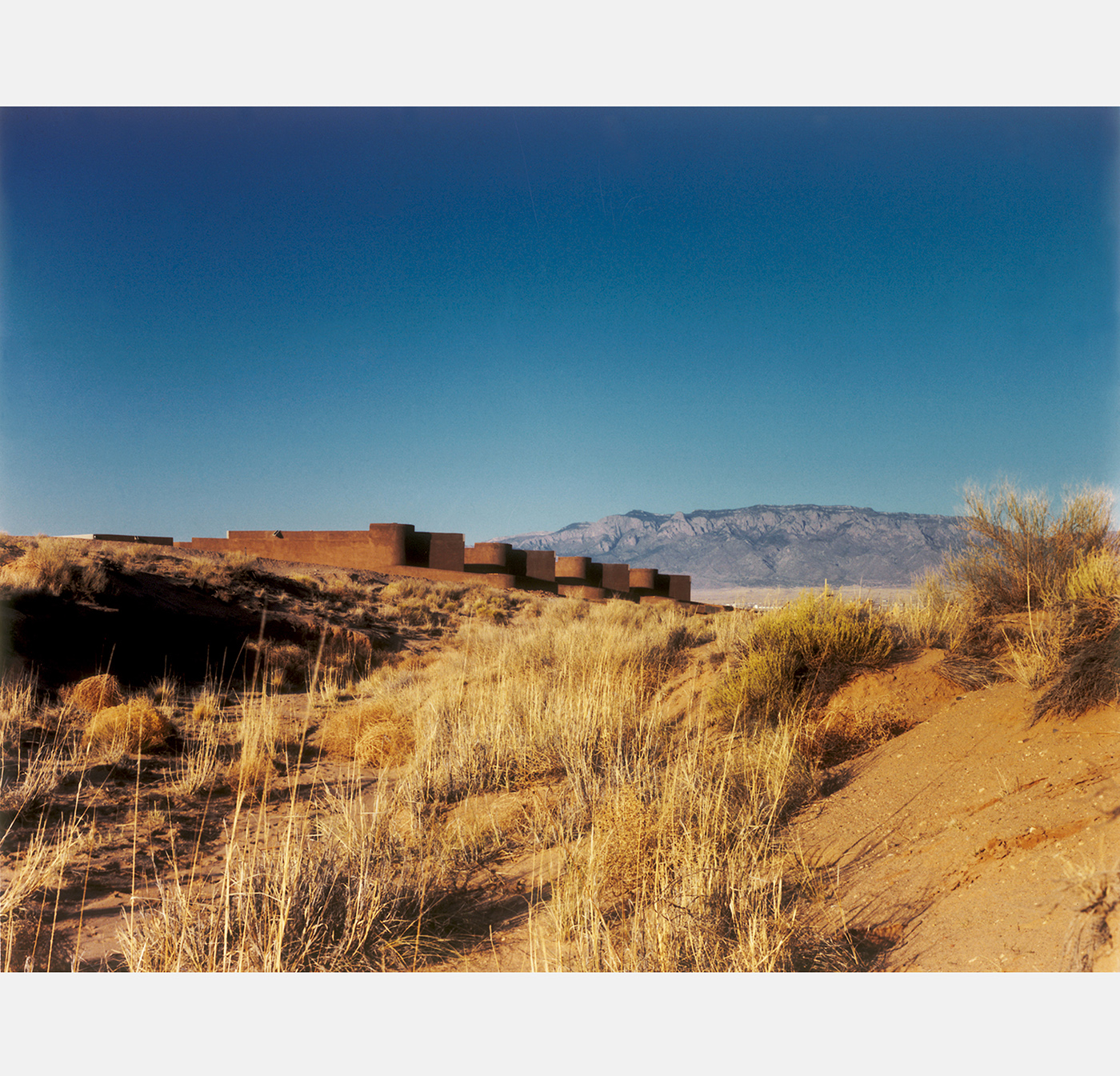
distant view of adobe townhouses in front of mountains and surrounded by desert grasses
Credit: Jerry Goffe

The site design is inspired by the architectural heritage of Native pueblos and Hispanic villages in New Mexico and is accentuated with curved walls, which soften the overall aesthetic and mirror the natural contours of the landscape.

The development contributes to a sense of community through the inclusion of shared green space, fountains, pedestrian paths, tennis courts, and a swimming pool. La Luz also preserves 40 acres of untouched land as a permanent natural preserve.

La Luz, with its adobe-inspired design, became the cornerstone that cast Predock into the national spotlight and lay the foundation for the recognition he received in the American architectural field.

Despite not being a native of New Mexico, Predock considered Albuquerque his spiritual home and the place that shaped his architectural vision.

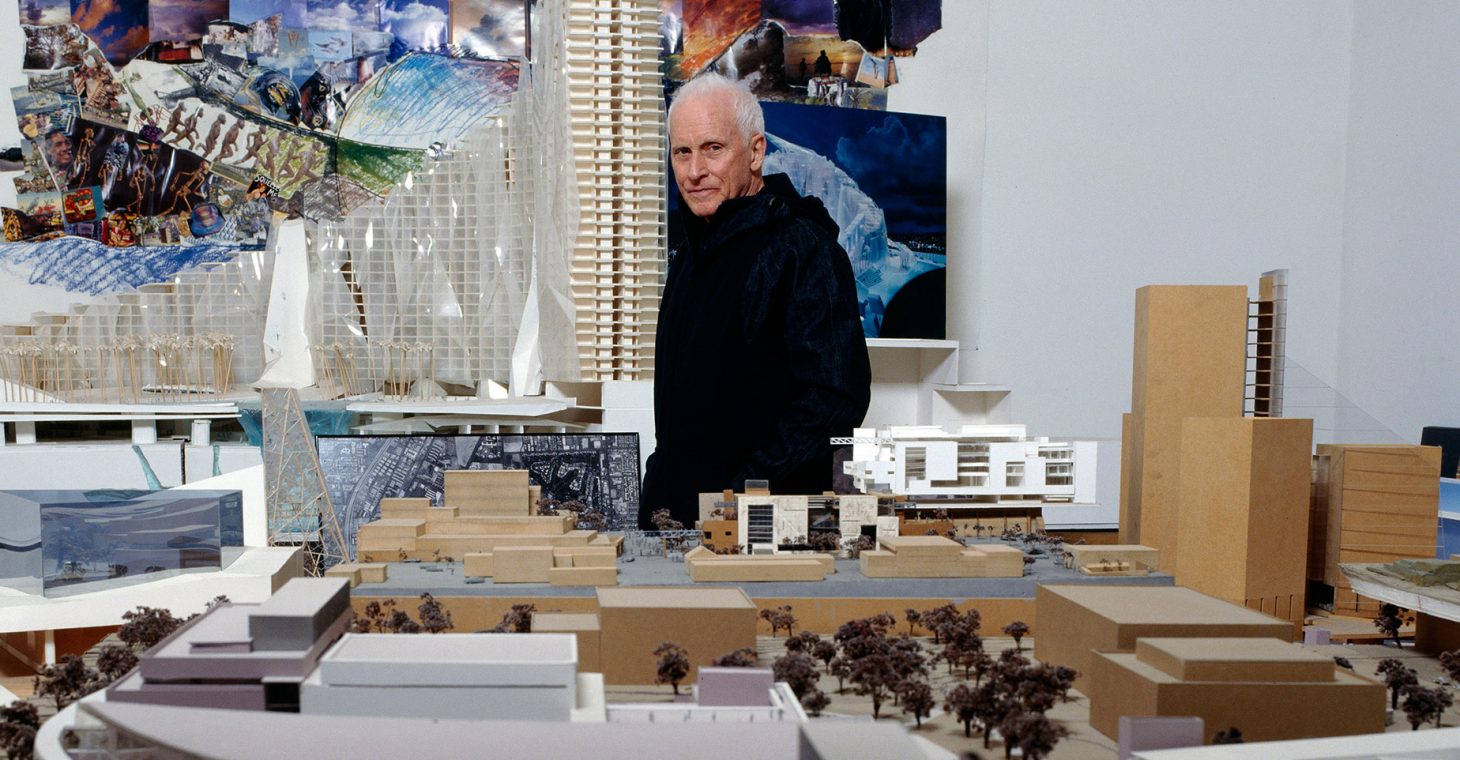
wide angle photograph of the architect, a white male with black shirt and pants surrounded by small scale building models
Credit: Antoine Predock Architect PC

Born on June 24, 1936, in Lebanon, Missouri, Predock’s architectural journey began while taking a technical drawing course taught by Professor Don Schlegel during his time as an engineering student at the University of New Mexico. This experience compelled Predock to transfer to Columbia University to pursue his B.A. in architecture, which he received in 1962.

After graduation, Predock was awarded a traveling fellowship that allowed him to explore Spain, Portugal, and other parts of Europe for two years. After apprenticing, he established his own architectural firm, La Luz was one of the firm’s early projects that highlighted his unique approach toward weaving modernism with the regional traditions of the American southwest.

CITATIONS:

[1] Predock, A. (n.d.). La Luz. Antoine Predock Architect PC. Retrieved from http://www.predock.com/LaLuz/La%20Luz.html

[2] Predock, A. (n.d.). Desert Beginnings. Antoine Predock Architect PC. Retrieved from http://www.predock.com/DesertBeginnings/desertbeginnings.html

[3] Pearson, C. A. (2024, March 4). Tribute: Antoine Predock (1936–2024). Architectural Record. Retrieved from https://www.architecturalrecord.com/articles/16768-tribute-antoine-predock-19362024

[4] Albuquerque Modernism. (n.d.). La Luz Community. University of New Mexico. Retrieved from https://albuquerquemodernism.unm.edu/posts/cs13_la_luz.html

[5] Wilson, C. (2014). La Luz Community. SAH Archipedia. Retrieved from https://sah-archipedia.org/buildings/NM-01-001-0007

[6] Lucas, C. (n.d.). Architect Antoine Predock’s La Luz Community. Chris Lucas ABQ. Retrieved from https://www.chrislucasabq.com/post/flyer-architect-antoine-predocks-la-luz-community-5-tennis-court-nw-87120

[7] Docomomo US. (2022, July 14). The Planned Community of La Luz is Listed on the National Register of Historic Places. Retrieved from https://www.docomomo-us.org/news/the-planned-community-of-la-luz-is-listed-on-the-national-register-of-historic-places

[8] AIA Los Angeles. (n.d.). Antoine Predock, FAIA. Retrieved from https://aiala.com/antoine-predock-faia/

[9] World-Architects. (2024, March 4). Antoine Predock, 1936-2024. Retrieved from https://www.world-architects.com/en/architecture-news/headlines/antoine-predock-1936-2024

[10] American Academy in Rome. (2024, March 6). In Memoriam: Antoine Predock. Retrieved from https://www.aarome.org/news/features/memoriam-antoine-predock

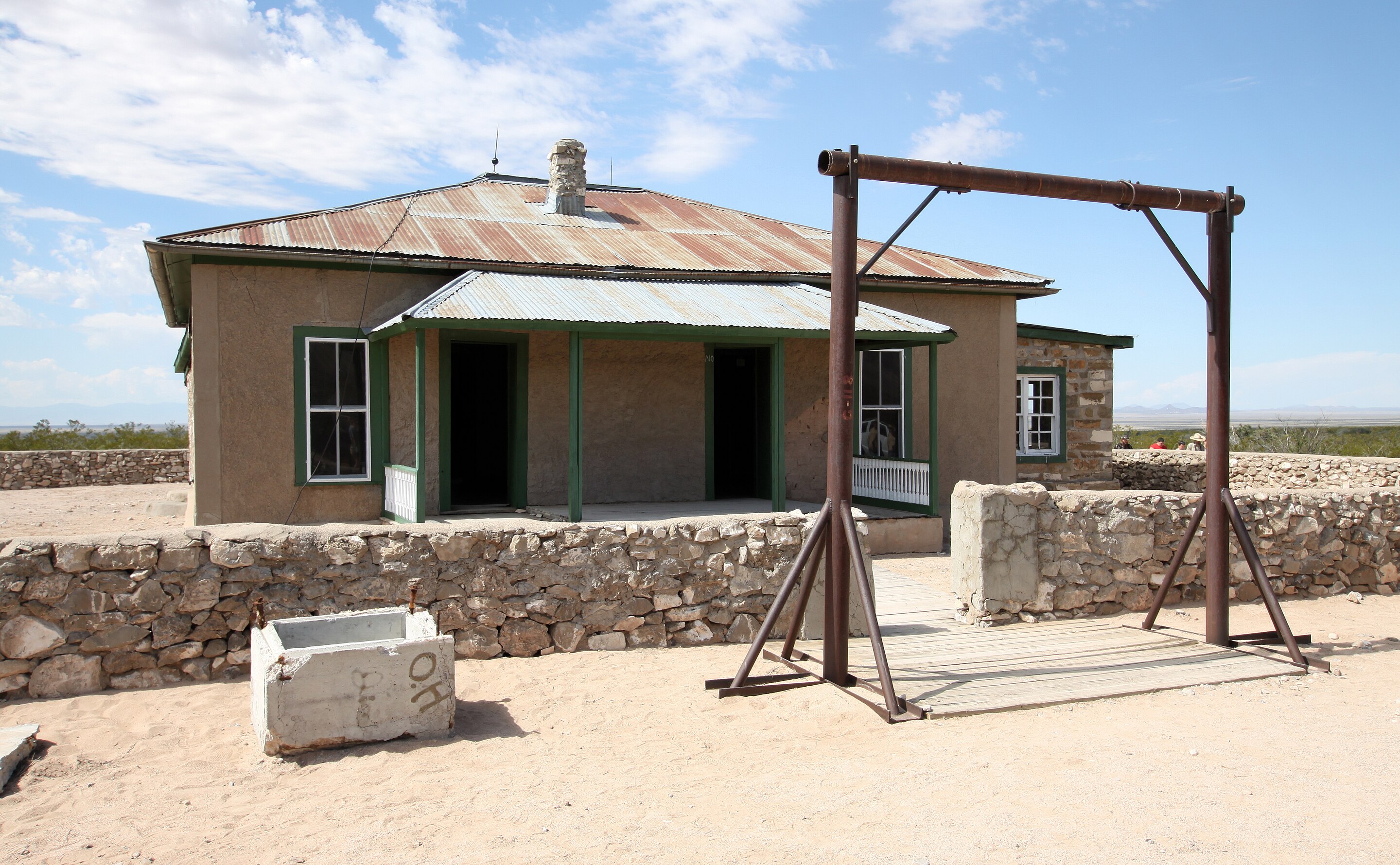
The McDonald Ranch House

McDonald-Schmidt Ranch House. This file is licensed under the Creative Commons Attribution-Share Alike 2.0 Generic license.

The McDonald Ranch House in the Oscura Mountains of Socorro County, New Mexico, was the location of assembly of the world’s first nuclear weapon. The active components of the Trinity test “gadget”, a plutonium Fat Man-type bomb similar to that later dropped on Nagasaki, Japan, were assembled there on July 13, 1945. The completed bomb was winched up the test tower the following day and detonated on July 16, 1945, as the Trinity nuclear test.

The George McDonald Ranch House sits within an 85-by-85-foot (26 by 26 m) low stone wall. The house was built in 1913 by Franz Schmidt and is built of adobe, which was plastered and painted. The plutonium hemispheres for the pit of the Trinity nuclear test “gadget” (bomb) were delivered to the McDonald Ranch House on July 11, 1945.  Text via Wikipedia.


Mud is not the Villain

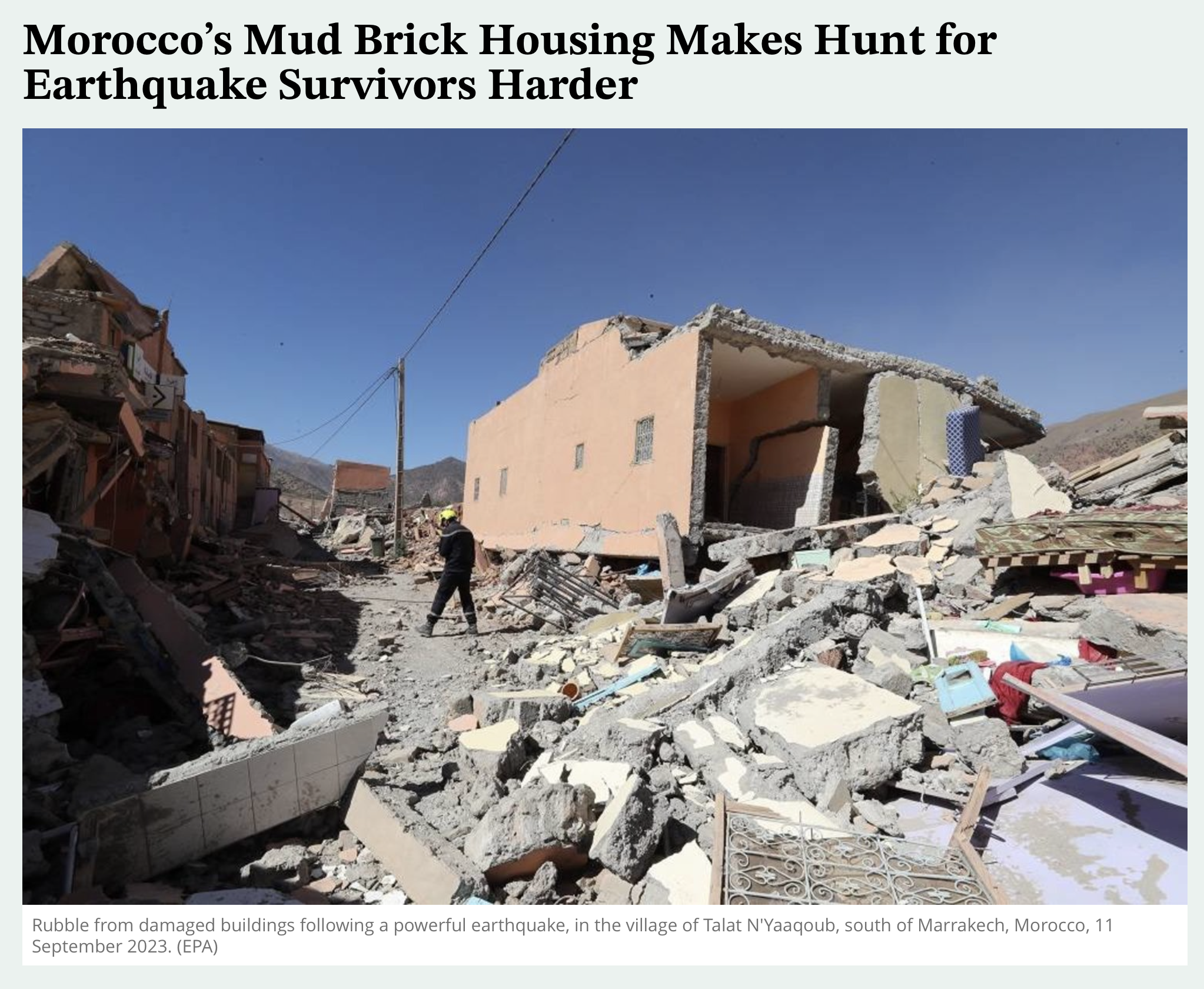
Reinforced concrete building damaged in Morocco earthquake

Morocco recently experienced the most devastating earthquake that the country has had in the last 60 years. To date, more than 2,600 people have died and news outlets are quick to point out that the cause of death isn’t the earthquake, but the buildings made of earth. While I am aware of the thousands of mud brick and rammed earth buildings that define the villages in the Atlas Mountains where the disaster took place, I note that the photos of the devastation often show buildings made of reinforced concrete or concrete masonry units. The tendency to villainize earthen architecture traditions is a common practice. The headline of one article reads, “Morocco’s Mud Brick Housing Makes Hunt for Earthquake Survivors Harder” and yet the cover image is clearly of a reinforced concrete building. As I scroll through articles about the earthquake, I do see many earthen buildings that have been damaged, but I also see a large number of buildings constructed of industrially produced materials. In the 1995 earthquake in Kobe, Japan, three times the number of people died, and over 100,000 buildings were destroyed in a city that was largely constructed of concrete and steel. Kobe was a magnitude 6.9 earthquake similar to Morocco’s 6.8. The 6.9 Loma Prieta earthquake in the San Francisco Bay Area caused an estimated $14 billion in damage to buildings, bridges, and highways with the majority of deaths happening under reinforced concrete structures like the Cyprus Street Viaduct.

The New York Times writes, “Mud brick buildings common to the region — some of which date back to before Morocco’s colonization by the French — were reduced to a collapsed sand castle.” France colonized Morocco in 1912, making many of the buildings older than 111 years old It should be pointed out that the seismic activity of these regions is high, and earthen building traditions have survived in seismic zones for thousands of years. The oldest buildings in every seismic zone are constructed of earth, including those found in the San Francisco Bay Area. A visit to downtown Sonoma, the Missions, the Petaluma Adobe, and countless other mud brick buildings demonstrate the longevity of earthen architecture in earthquake-prone regions. A visit to Santiago, Chile, a city with a history of earthquakes, will also demonstrate how earthen architecture has survived in many urban and rural environments while adapting to a ground that shakes.

Yes, buildings made of mud brick and rammed earth did collapse causing many deaths. However, reinforced concrete and concrete masonry units did as well — there simply happens to be more earthen buildings in that region, just as there are more reinforced concrete buildings in Kobe, Japan. And despite the reality that our continued quest to combat the forces of mother nature, we continue to find that she wins. But perhaps she is not the villain, nor is architecture made of earth. According to Bloomberg, man-made climate-related disasters due to climate change account are linked to approximately 5 million deaths per year and the concrete industry is responsible for about 8% of planet-warming carbon dioxide emissions. Earthquakes account for approximately 60,000 of those deaths, however, few of those are related to the collapse of earthen buildings. Some of those deaths are related to the collapse of buildings made with other materials, landslides, and tsunamis. Some earthquakes are a product of fracking and mining.

I do not believe that earth architecture is the villain in the tragedy in Morocco. Rather, it is the cultural perception of the building material, and the prejudices against those that live in them, within a capitalist society. Earth is an inherently ecological material, possesses excellent thermal mass properties, requires little embodied energy, and is recyclable—earth buildings can return to Earth. It should be noted that most of the recent Pritzker Prize winner Francis Kere’s buildings are constructed of mud, and as I wrote about in my book, Earth Architecture, a number of universities including the Pontificia Universidad Católica del Perú, the University of Kassel, Germany, and the University of Technology, Sydney are advancing the technology of creating earthquake-resistant earth buildings. Let us look to solving the 5 million deaths per year due to climate change, and improve the technologies of earthen construction as humans have continued to do for the past 10,000 years of civilization before we eradicate large percentages of the population due to industrialized building practices that have not proven to safely house the planet, unlike our planetary traditions of earthen architecture.