Traditional Ukrainian Building Techniques: Mazanka

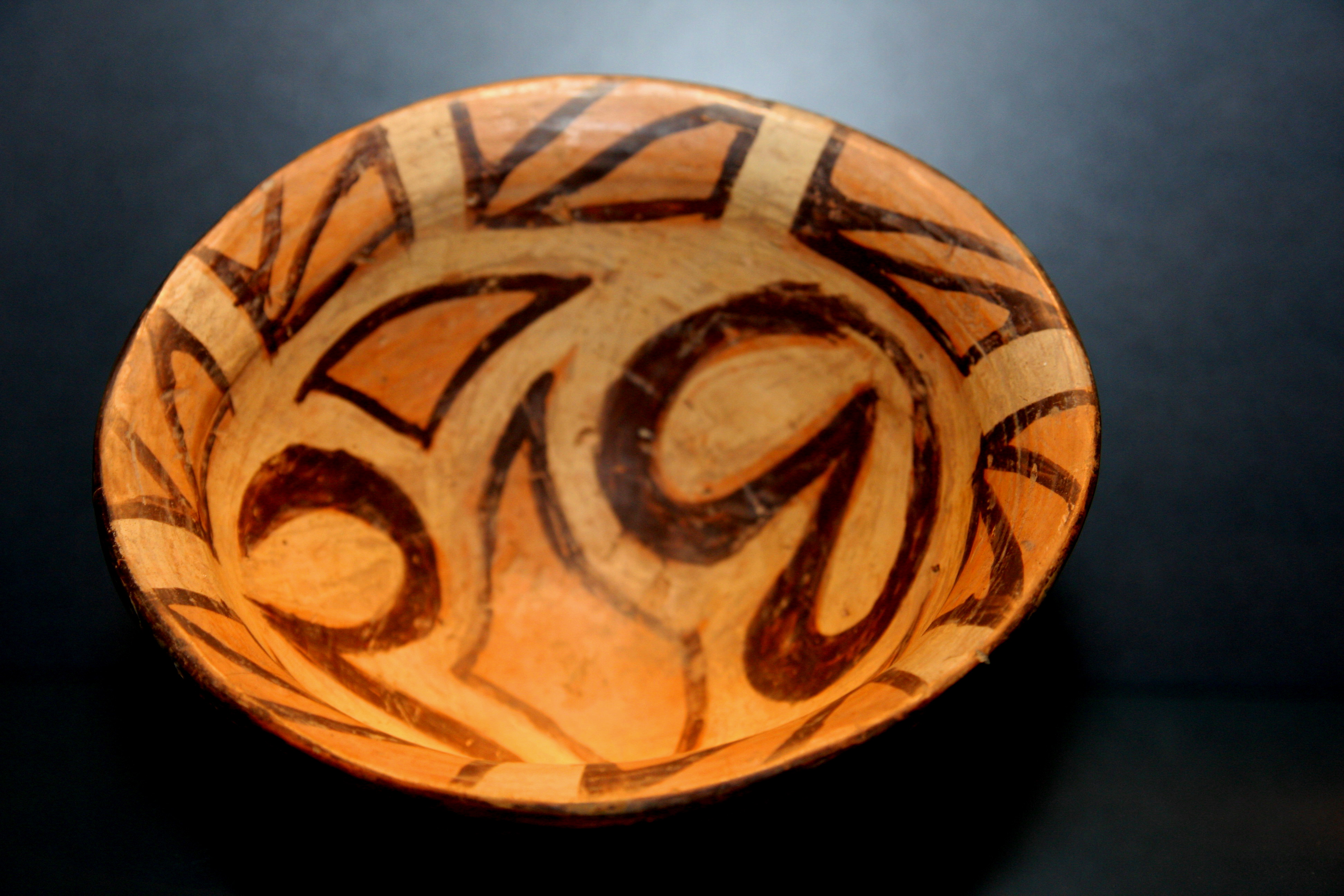
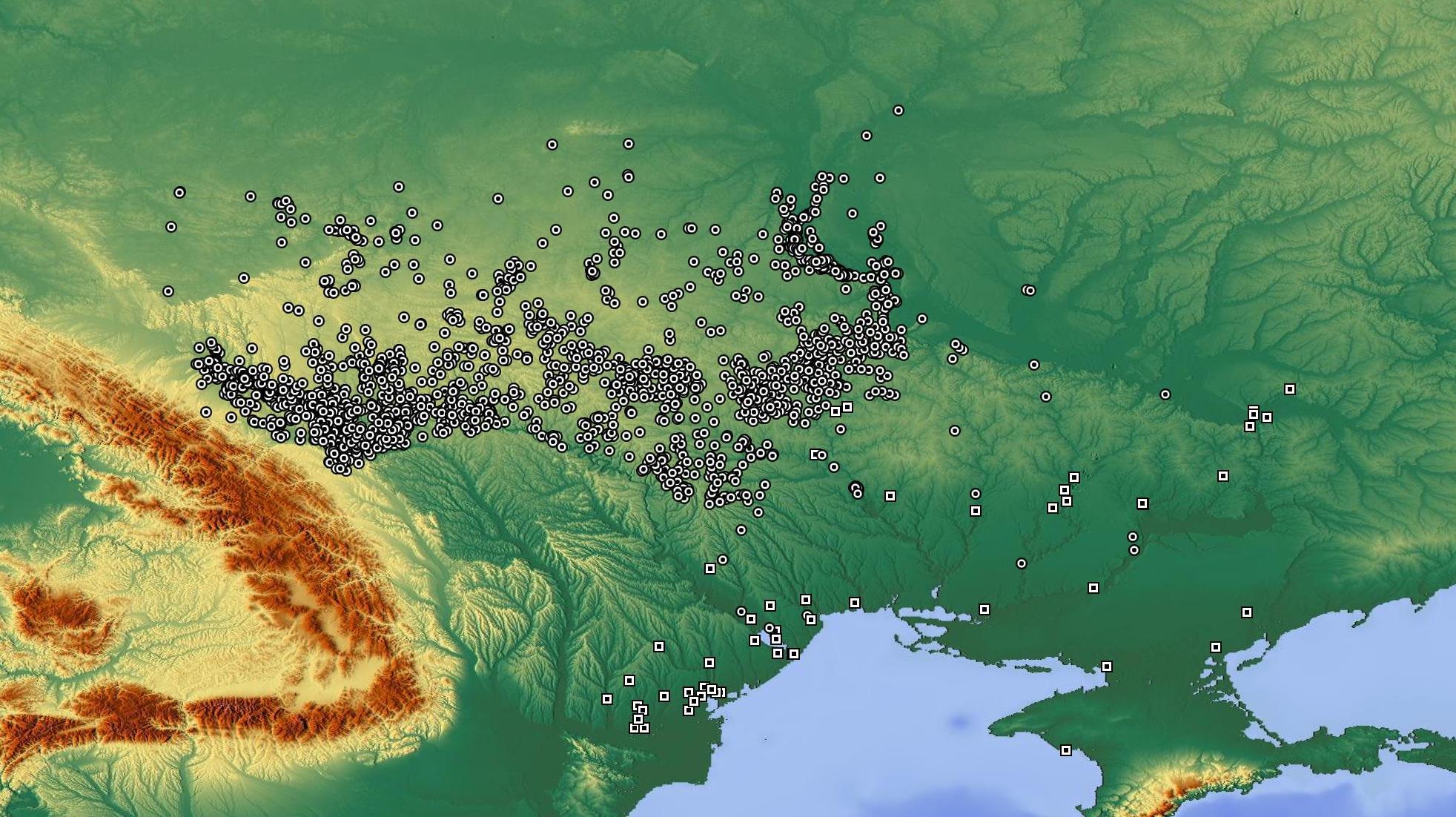
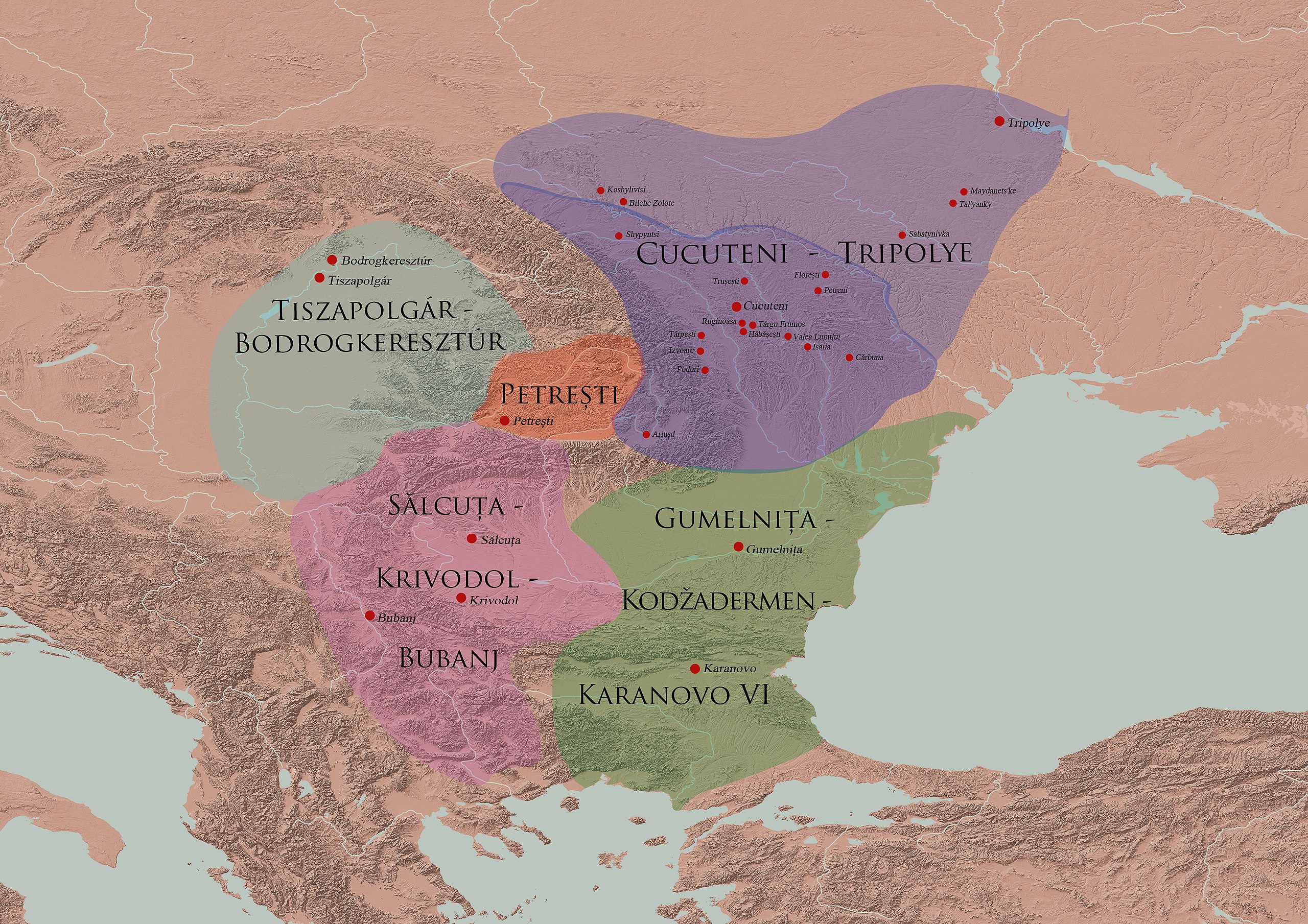
For centuries, Ukrainians have utilized the earth to create diverse and resilient dwellings. While wood played a role in certain regions, earthen construction techniques were widespread, particularly in the steppe and forest-steppe zones where wood was scarce. One of the most common methods was wattle and daub, employed as far back as the Neolithic Trypillian culture (5500-2750 BC). This involved creating a woven lattice of wood (“wattle”) and then applying a mud or clay mixture (“daub”) to form the walls. This technique, while simple, provided sturdy and well-insulated structures.  While the actual structures haven’t survived, the archaeological evidence provides insights into their building techniques. Museums like the Museum of Folk Architecture and Way of Life of Central Dnieper Ukraine in Pereiaslav preserve examples of traditional building techniques, including earthen structures. The museum is part of Pereiaslav National Historical and Ethnographic Reserve. It was created in the 1960s and is the first open-air museum in Ukraine. The skansen (open-air) area on the picturesque Tatar Mount is divided into several sections: a pre-Soviet Ukrainian village of the Middle Cis-Dnipro Region, crafts and trades of a reformed Ukrainian village, windmills, and the earliest period section. Its total area of 25 hectares contains about 300 items, 122 of which are folk architecture monuments from the 17th to 19th centuries. They include 20 households with dwelling houses and outbuildings, presenting over 20,000 artifacts, such as works of folk craftsmen, lobar tools, household items, archaeological materials, documents, and photos.

Links:

Neolithic Trypillian cultureMuseums like the Museum of Folk Architecture and Way of Life of Central Dnieper Ukraine in Pereiaslav, Pyana Hata restaurant, Ukrainian hata Wiki, Ukrainian hata, Mazanka, Museum of Folk Architecture and Folkways of Ukraine
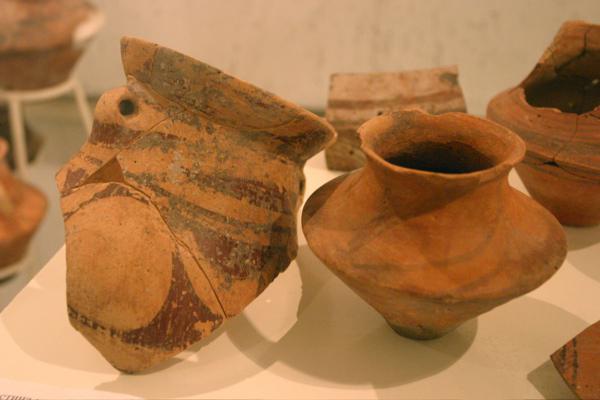
Neolithic Trypillan settlements, Southeastern Europe1914
Ukrainian traditional houses were generally built facing south to maximize sunlight for warmth. This often resulted in houses being positioned at various angles to the street, especially in hilly areas with complex terrain, creating a charmingly haphazard village layout. In flatter regions, houses were more likely to be aligned with the street.
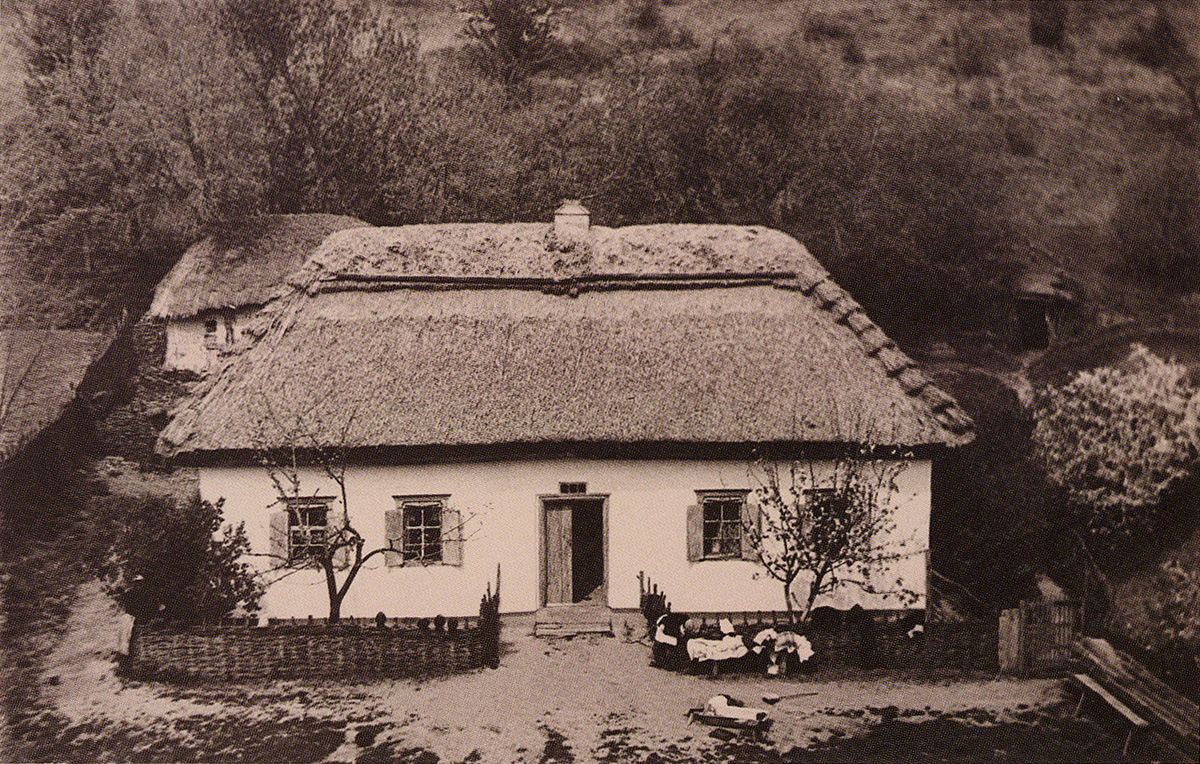
19th century

1929

In rural areas, the tradition of earthen construction continued to flourish, shaping vernacular architecture. Homes, outbuildings, and even churches featured cob walls made from a mix of clay, sand, and straw. This readily available material created thick, insulating walls that were well-suited to the Ukrainian climate.

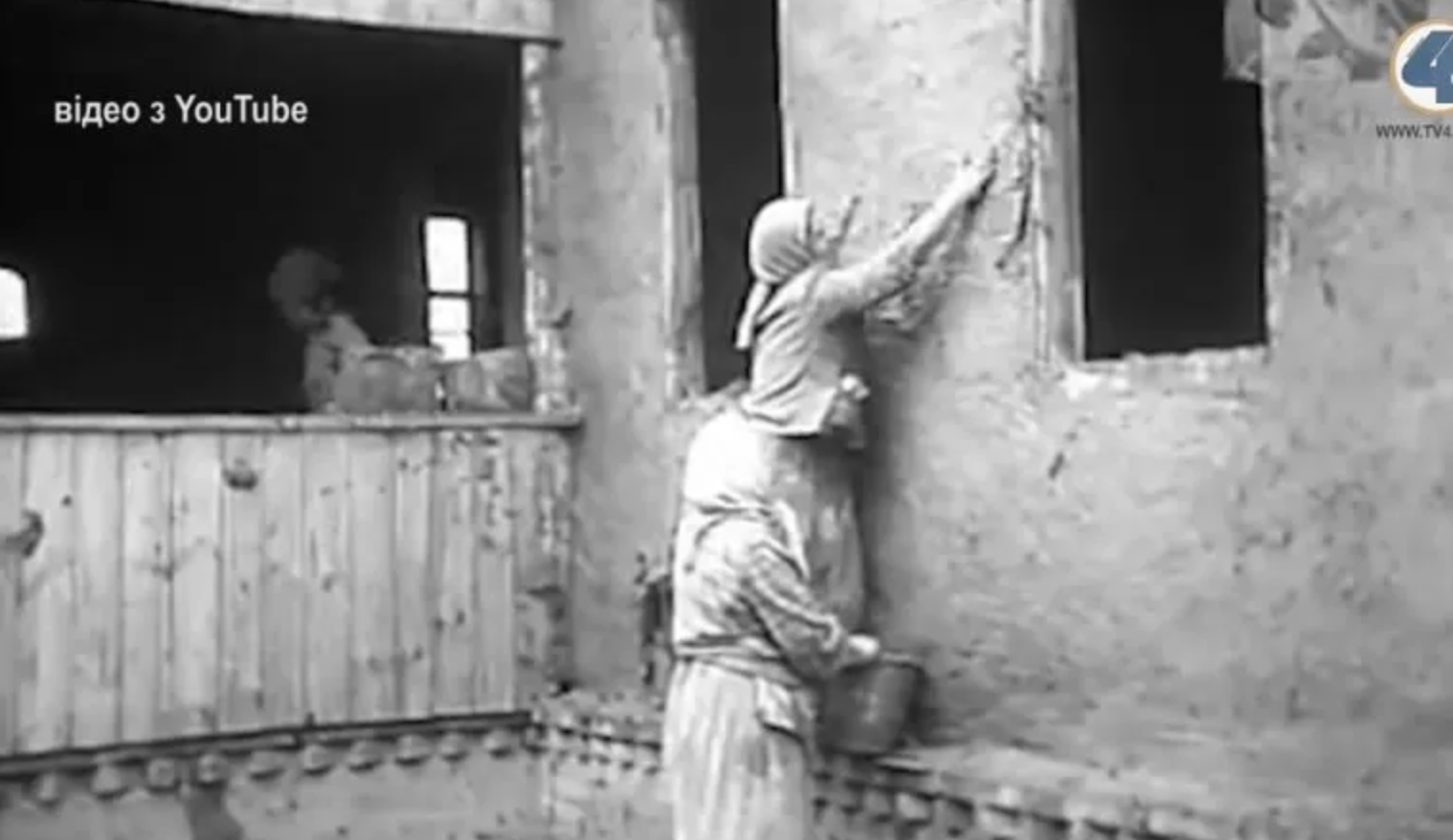
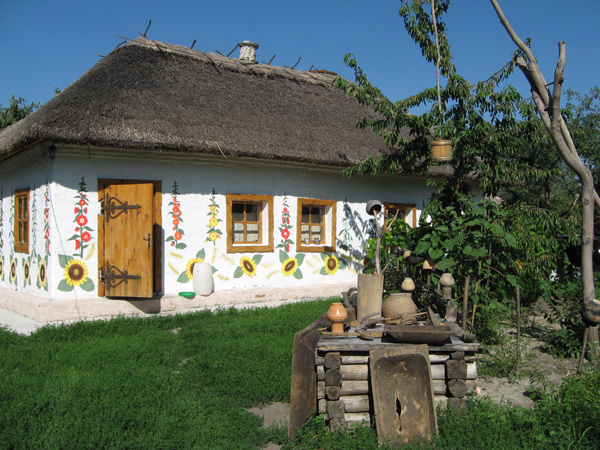
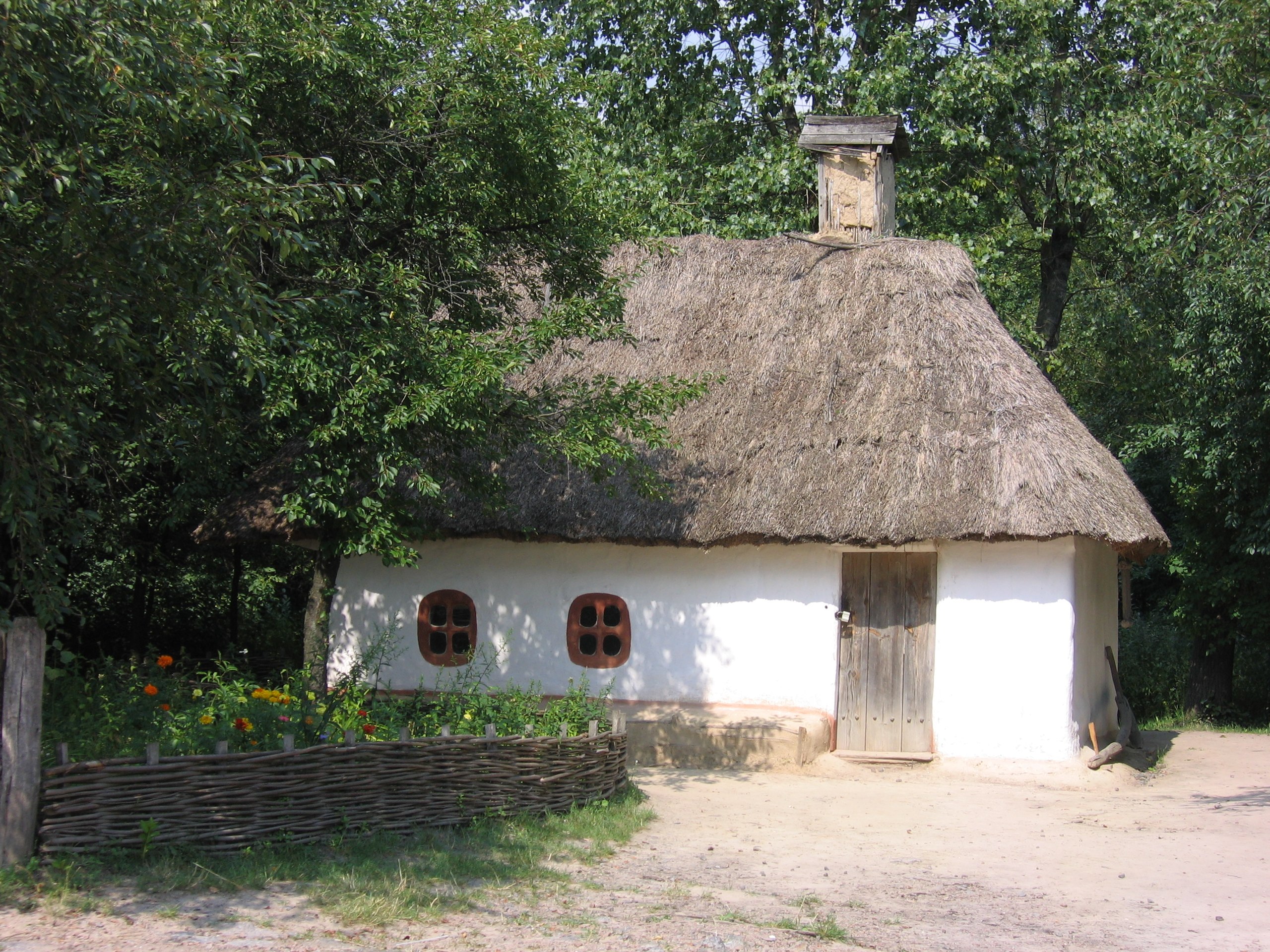
Another prominent technique was the construction of mazanka houses. This type of house got the name mazanka from the word mazaty  (Ukrainian: мазати; to smear, to grease, to plaster with clay mortar). These structures usually utilized a wooden frame filled with clay mixed with straw or reeds, brushwood, or woven willow branches. The walls were then plastered with a clay mixture and whitewashed, creating a distinctive and practical dwelling.  The choice of technique often depended on the availability of local materials. They dominated areas with limited wood, clay, and straw, while regions with more forests might incorporate more timber framing. This adaptability is a hallmark of Ukrainian earthen building traditions, reflecting a harmonious/sustainable relationship between builders and their environment.
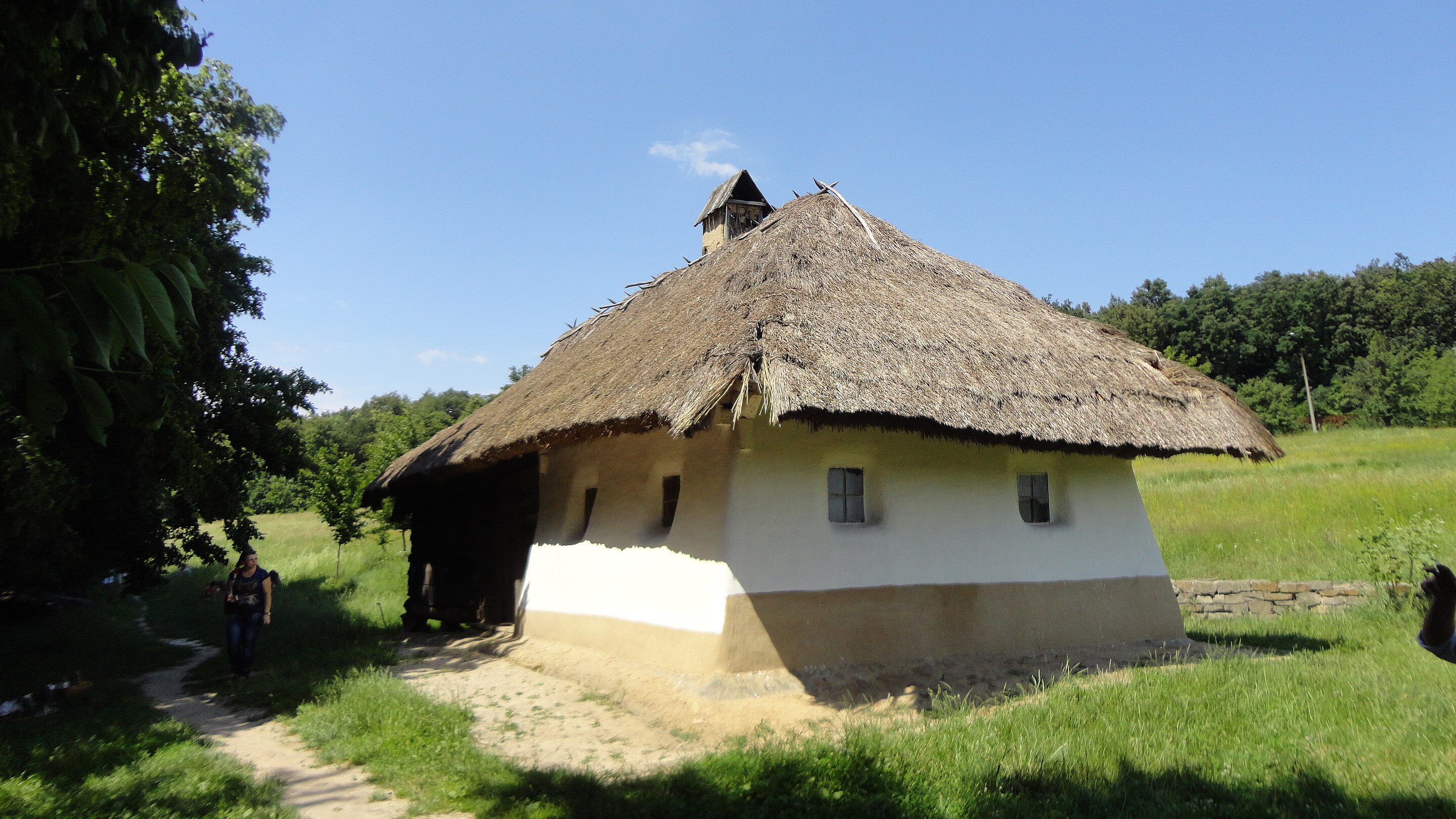


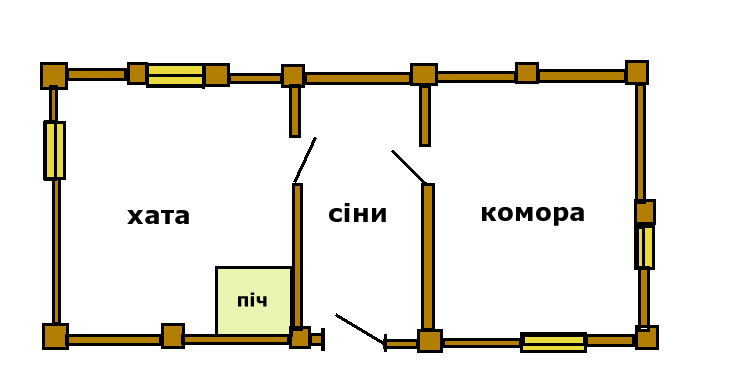
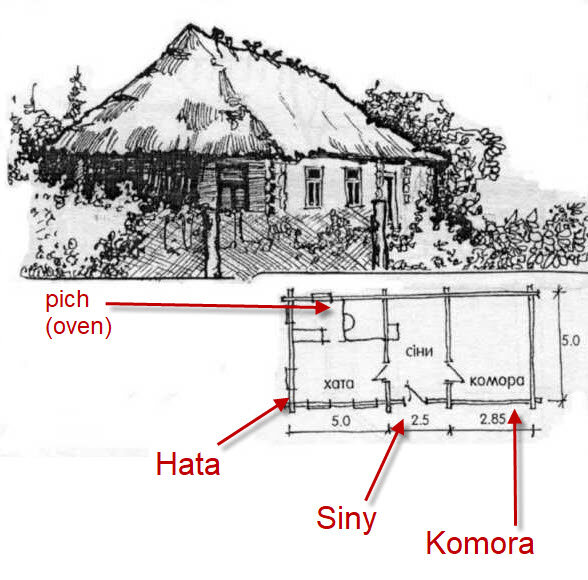
Ukrainian San Antonio Українське Сан Антоніо Homestead Батьківська ХатаFrom left to right: 1st room is a house (with a clay oven), inner porch (siny), and outbuilding (food storage, household items, or even an animal stall).


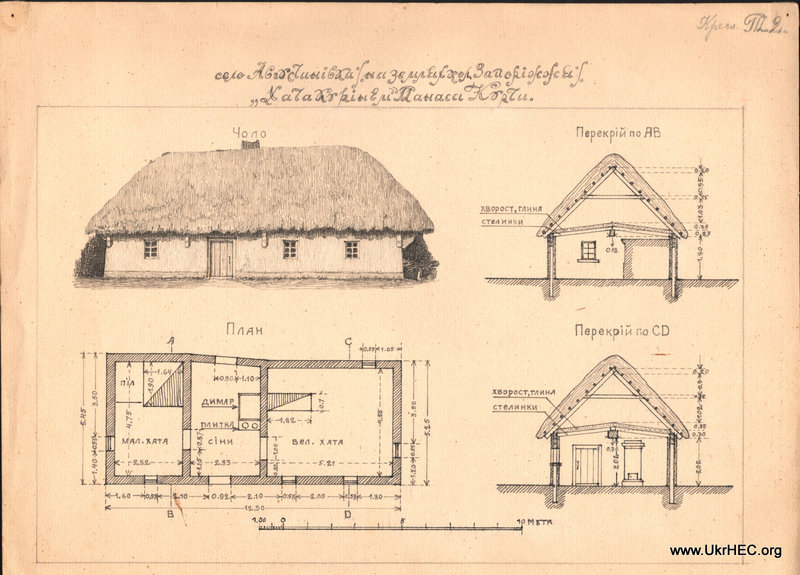
The architectural appearance of the folk dwelling – “khata” – and its internal organization in its main features are common throughout Ukraine.  Khata is a rectangular, somewhat elongated building in plan, covered with a hipped roof; the ratio of the width of the building to the length ranges from 1:1.25 to 1:2.25.

The living space itself approaches a square – the most economical rectangular shape of a room, in which the perimeter of the walls and the cooling of the room are the smallest. A large entrance hall and a pantry attached to the living space lengthen the plan. If the hut is built for two independent living spaces with an entrance hall between them, then the building is stretched along the main facade and acquires an elongated shape.
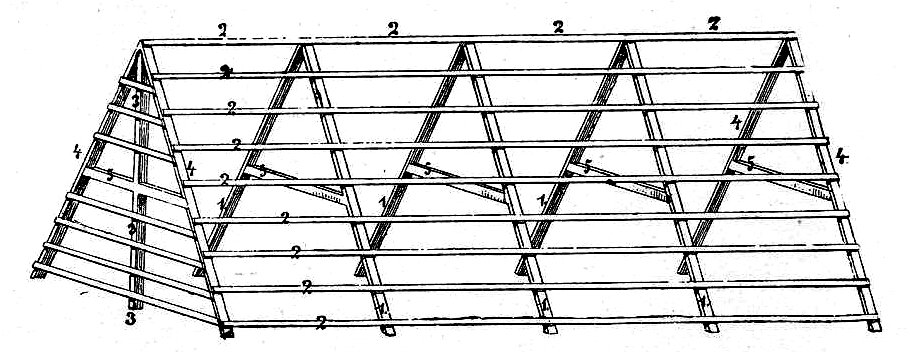


The most typical roof design in Ukraine was a hipped roof with four sides and sloping ends supported by rafters. These rafters were either attached to the top of the log walls or to longitudinal beams laid on top of the walls. In the Polissya region, a gable roof (two-sided) was also common, constructed in a few different ways: with a log covering, using supports shaped like chairs, or with posts supporting a main beam and the entire roof.

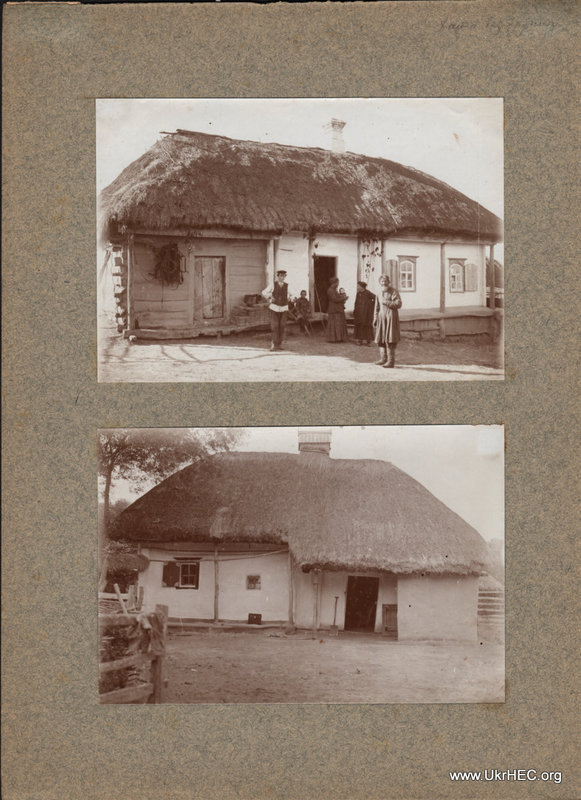
Roofs were typically covered with straw, either bound in sheaves or spread loosely. In forested and mountainous areas, the log structure of the house was left exposed, showcasing the craftsmanship of the interlocking logs. In the steppe and forest-steppe zones, houses were usually whitewashed inside and out, regardless of the building material, creating a striking contrast against the surrounding greenery. Colorful accents around windows, doors, and the base added a cheerful touch.
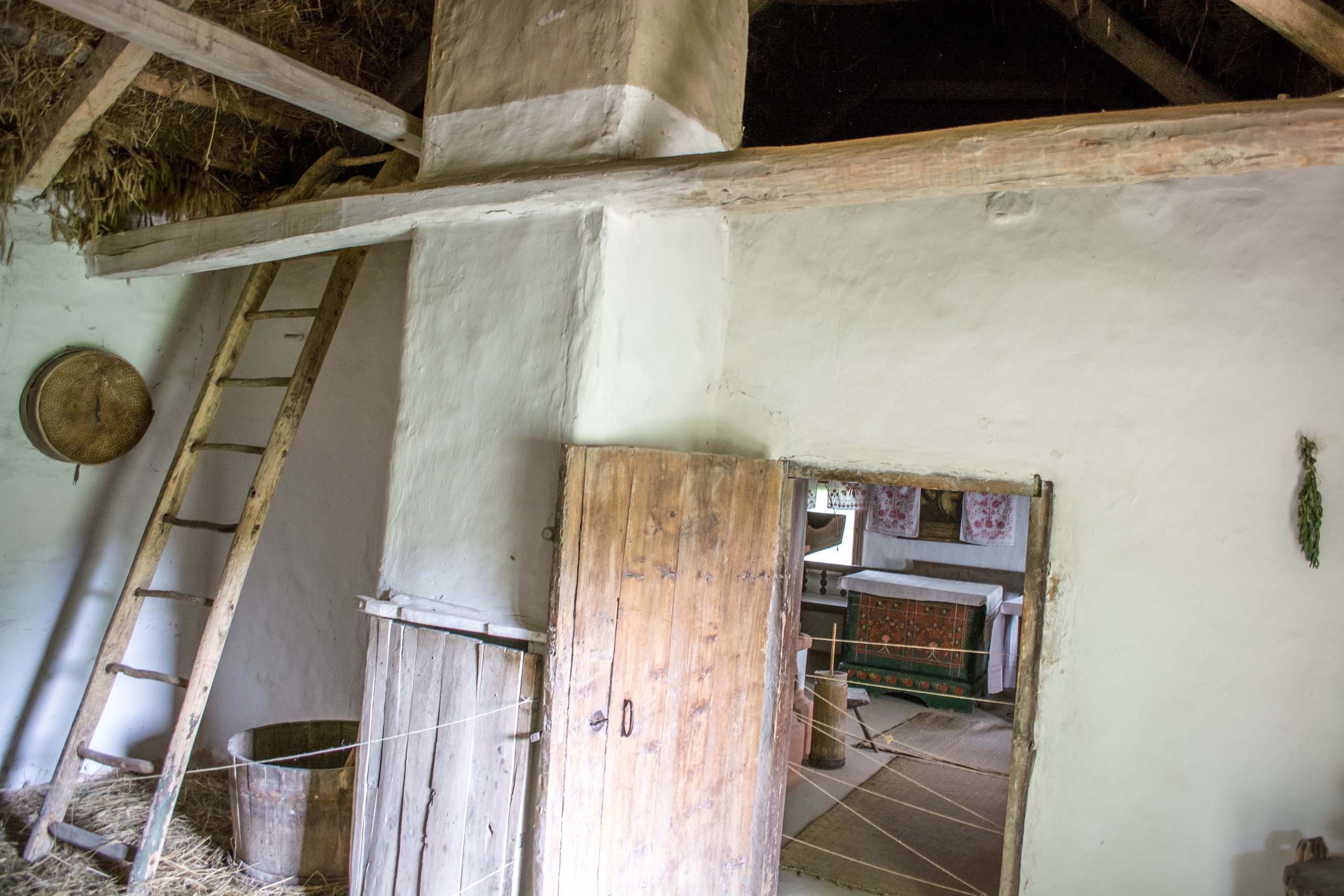


The simplest Ukrainian hut had two rooms: a large entrance hall used for storage and a warm living area. The stove dominated the living space, serving as a cooking area, storage space, drying rack, and even a bed! Kitchenware was kept near the entrance, while the sleeping area was located at the back, away from the windows.


The floor was made of earth in the early periods and later also had a special clay base. Only in some regions of Ukraine was the floor made of wood.


These time-tested techniques, passed down through generations, not only provided shelter but also shaped the unique character of Ukrainian villages. The whitewashed walls of mazanka houses, nestled among gardens and fields, created a picturesque landscape that continues to define the rural Ukrainian identity. Though modern materials have become more prevalent, the legacy of earthen construction remains an important part of Ukraine’s architectural heritage.

Here, you can check out a contemporary documentary film about the vernacular architecture of Ukraine filmed during the war, where multimedia platform Ukraïner and film studio Craft Story have teamed up for a special five-part documentary series entitled ‘STRIKHA’ (meaning ‘the roof’ in Ukrainian). Based on a long-term expedition throughout all regions of war-torn Ukraine (except those occupied by Russia), the series portrays the country’s authentic and vernacular architectural ‘treasures,’ particularly those hidden in distant villages, away from the main road.

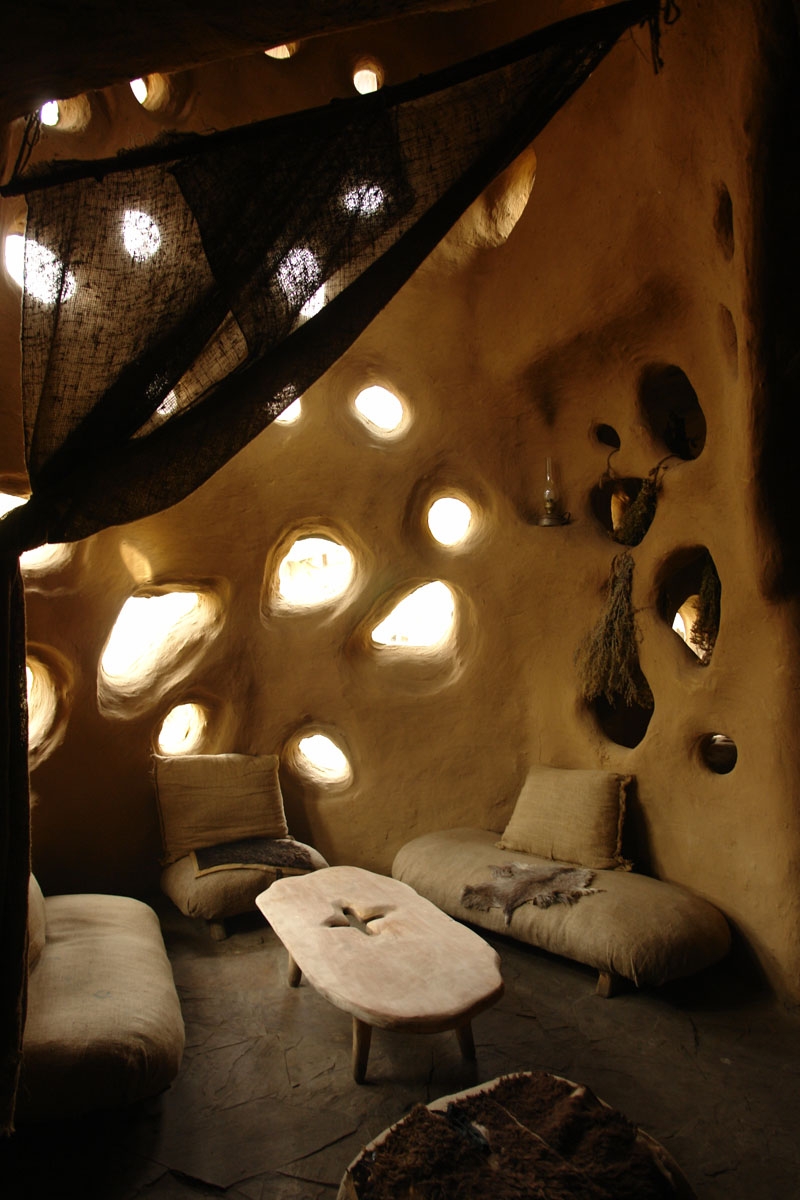
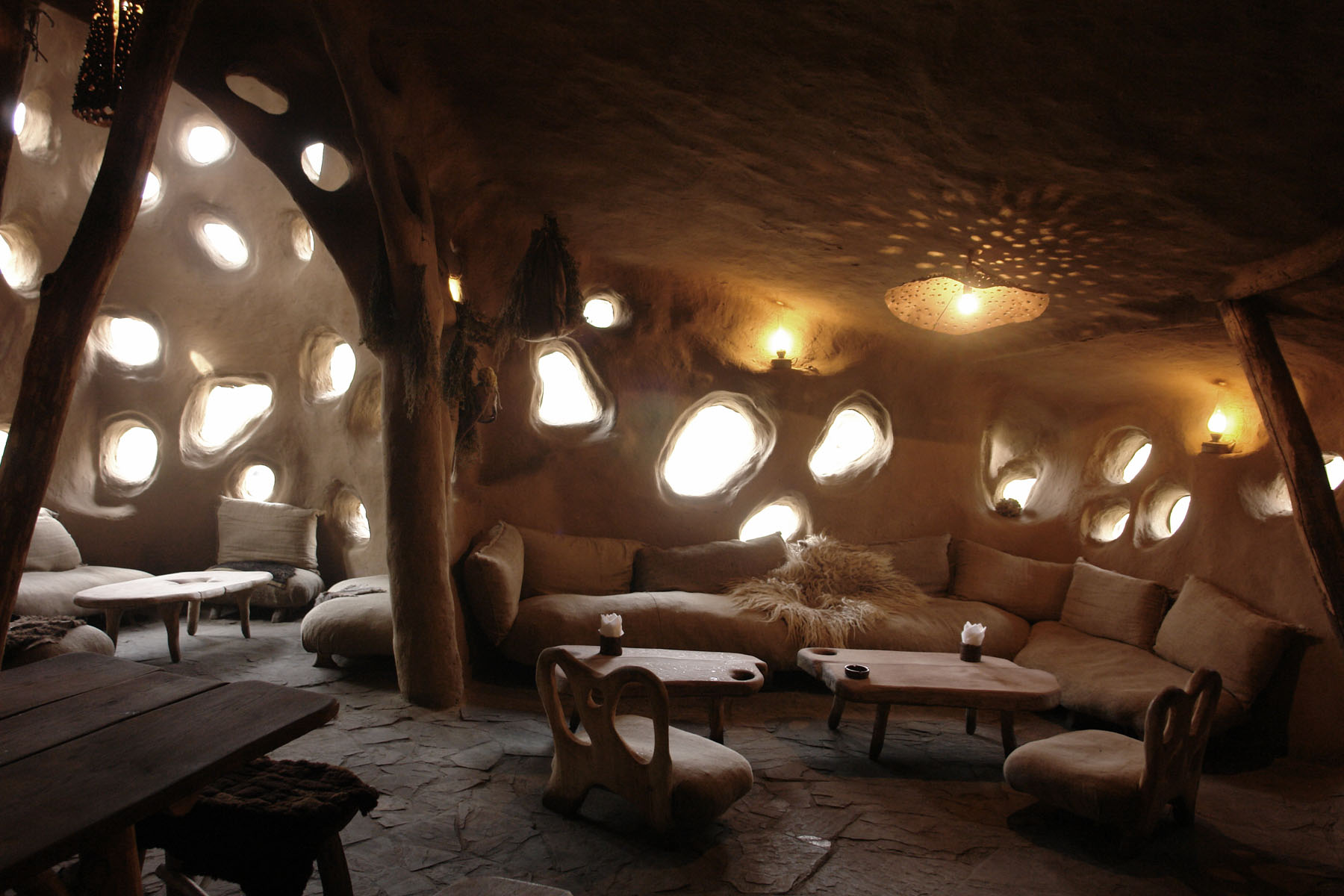
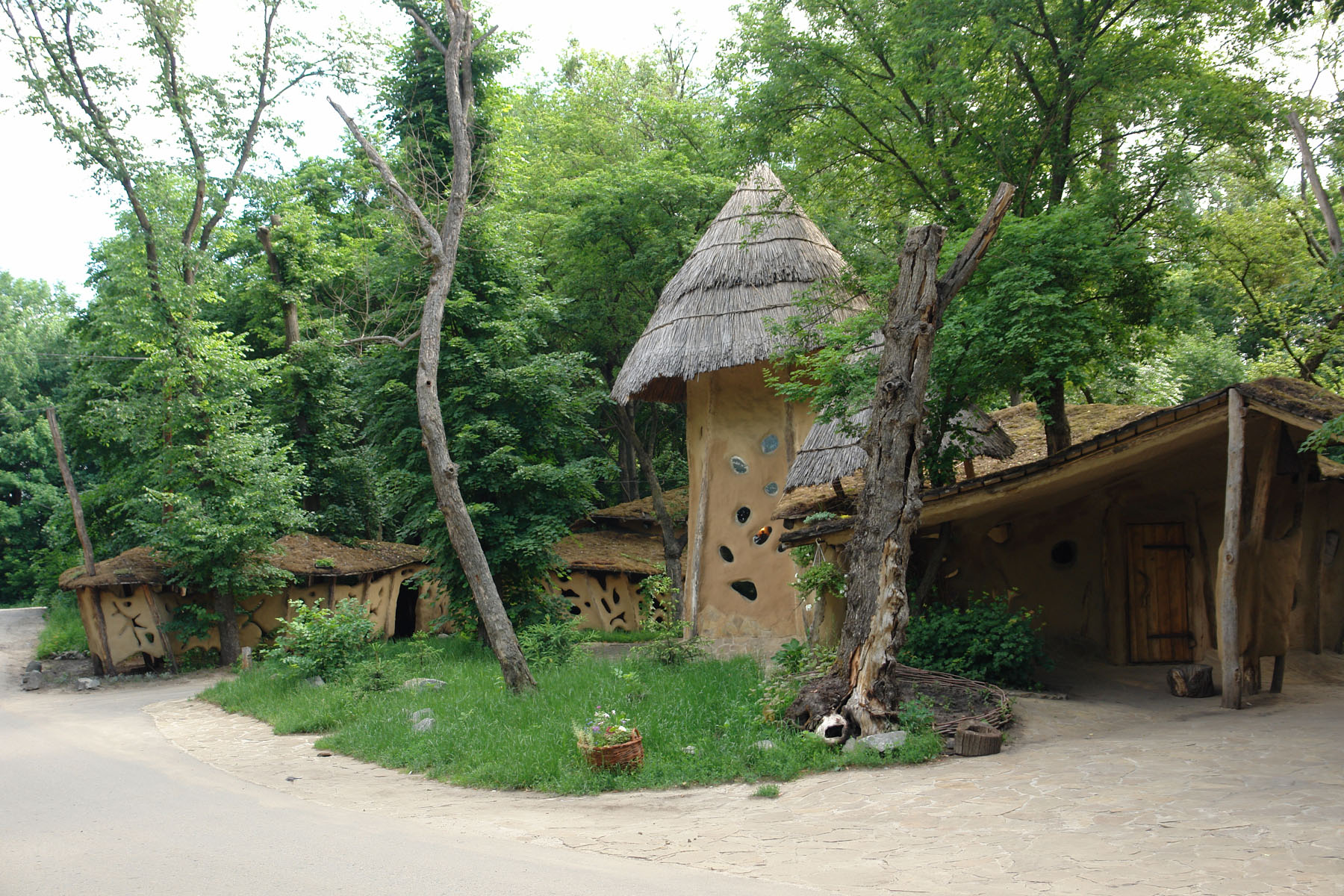
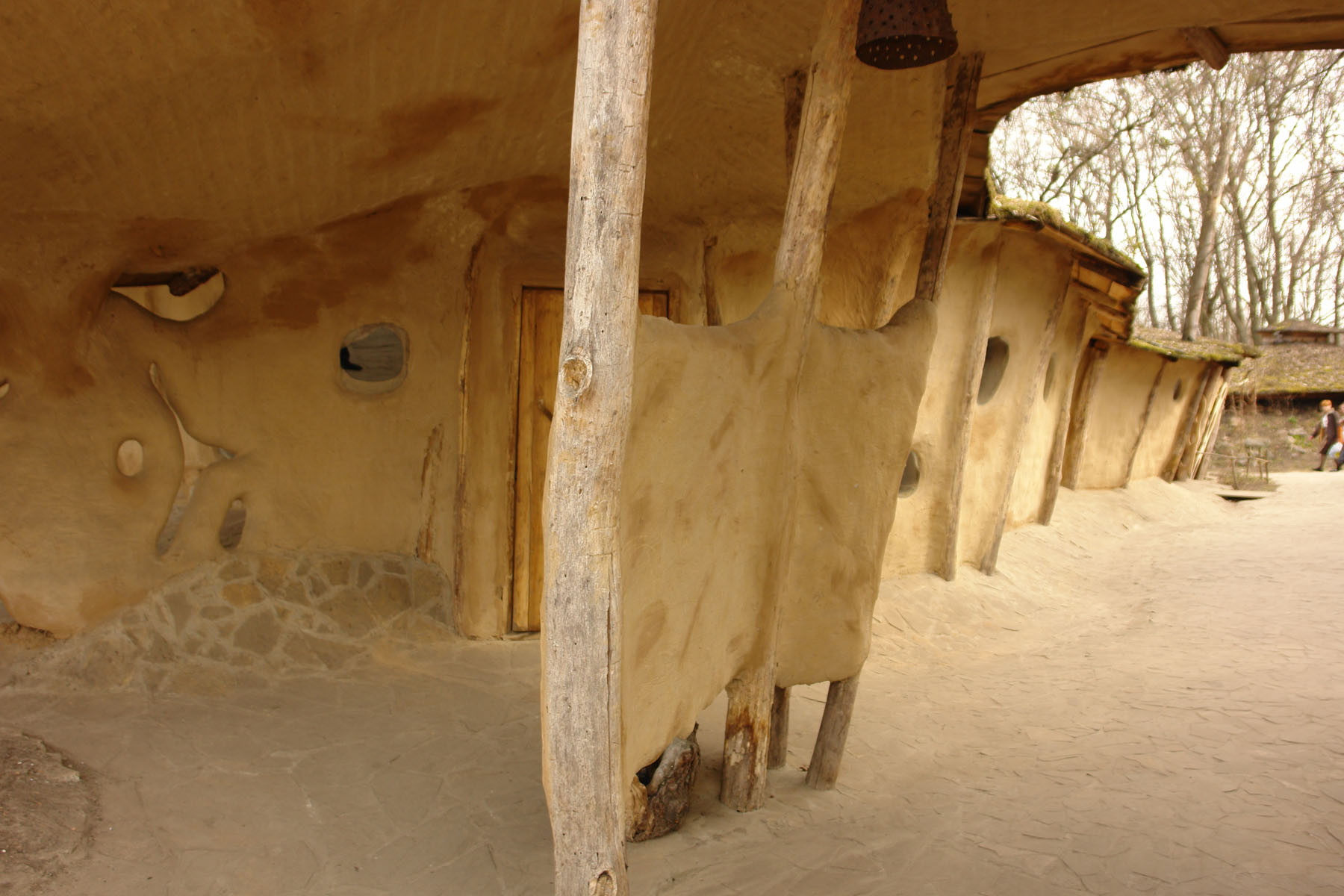
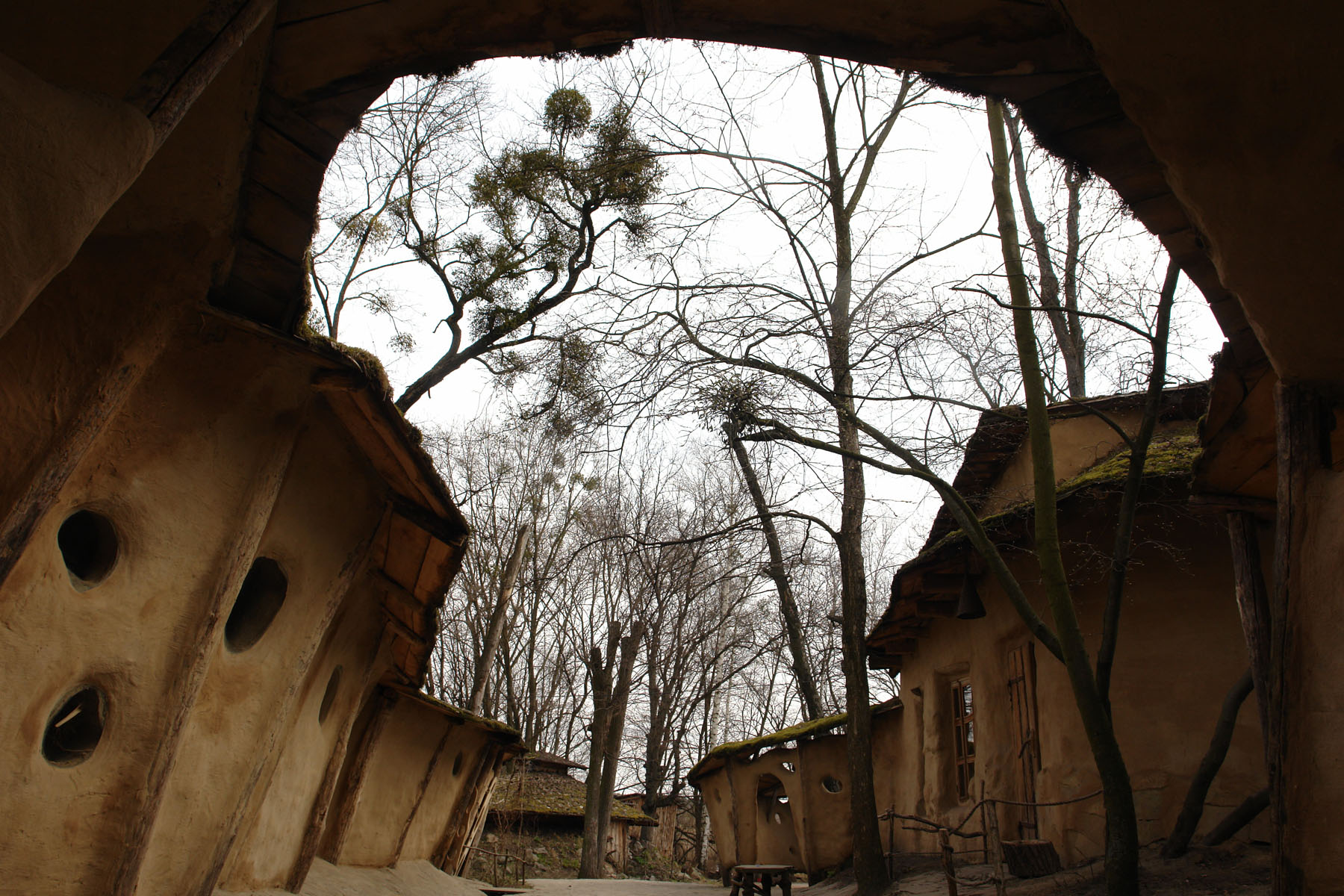
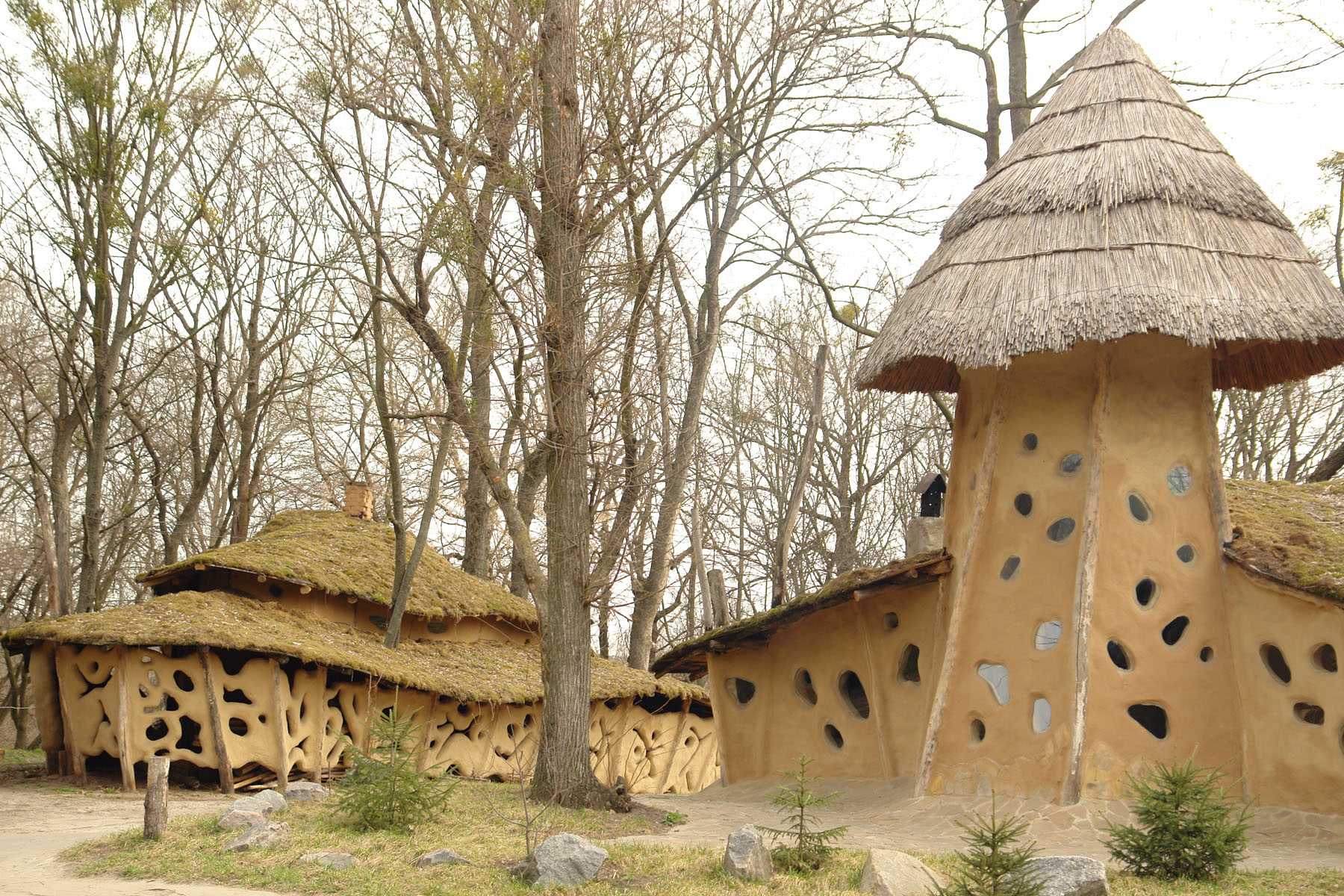
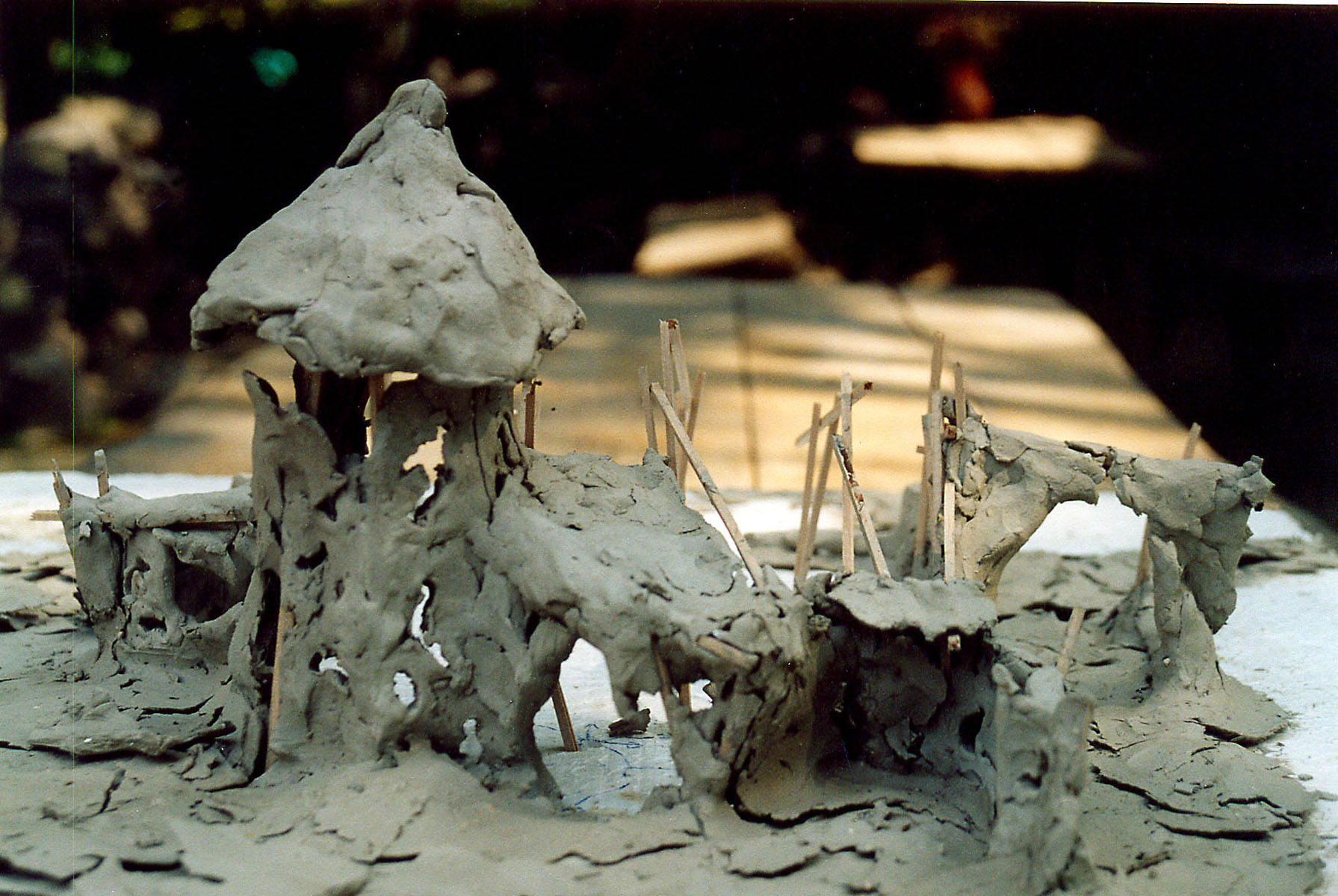
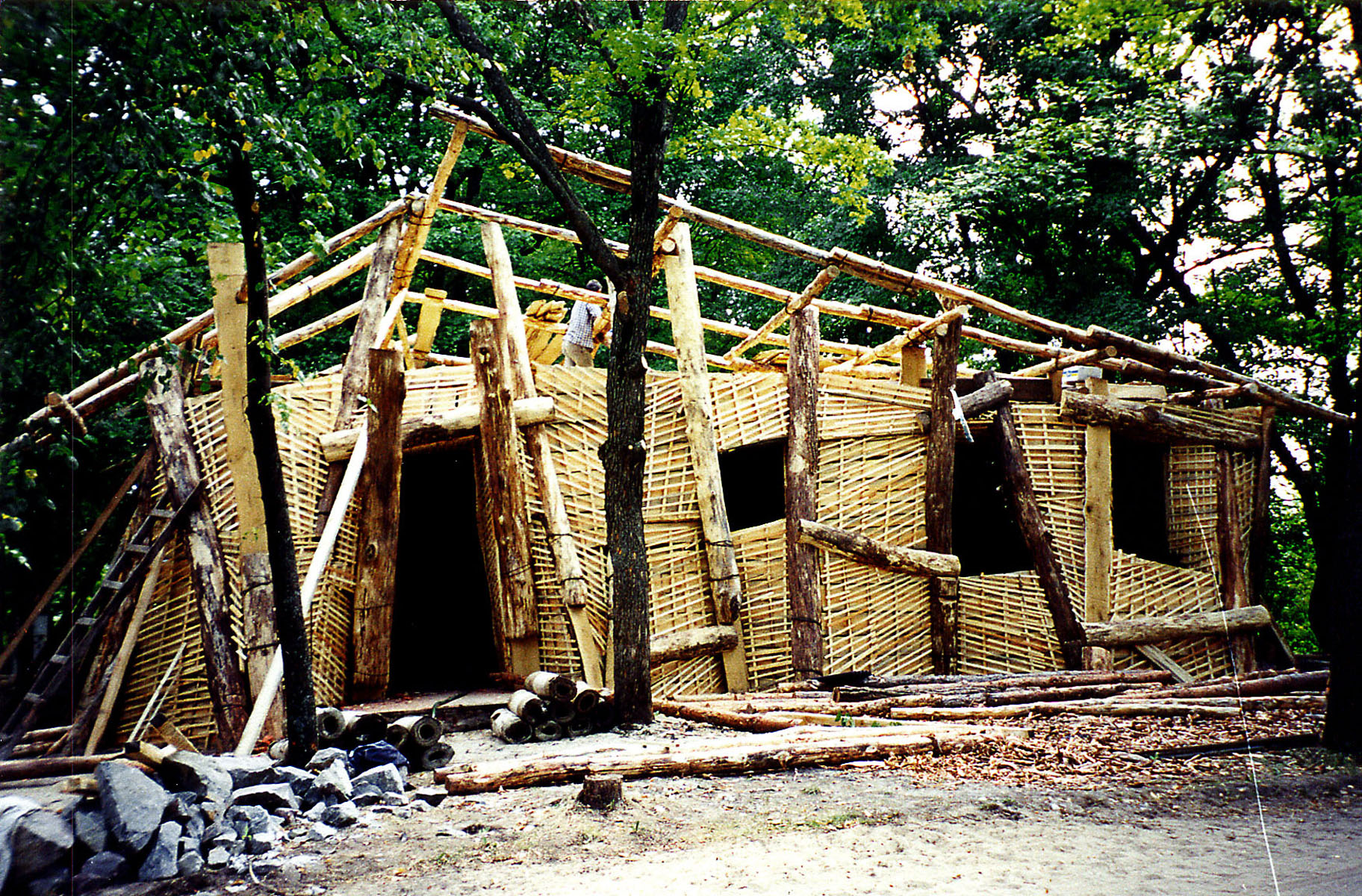
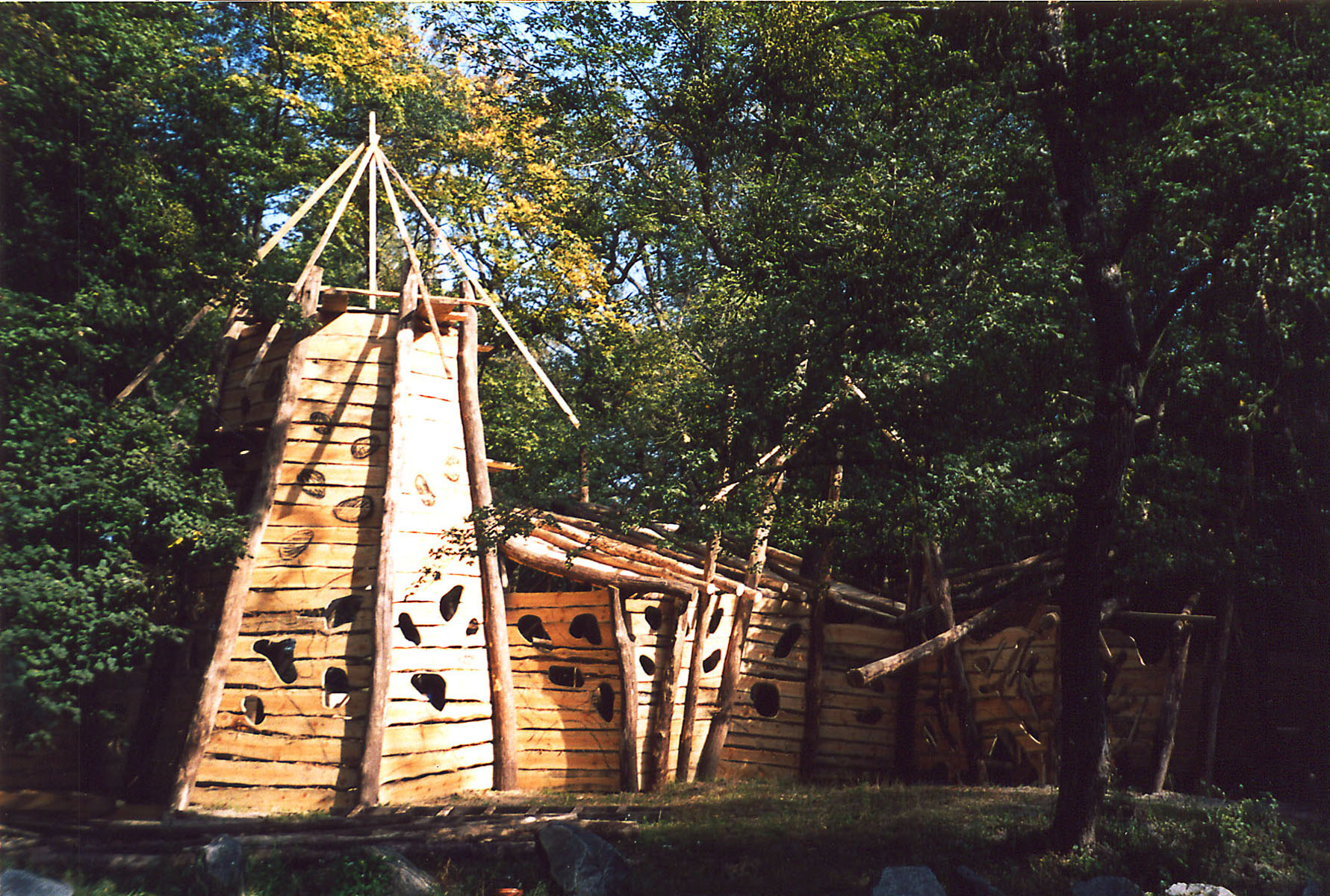
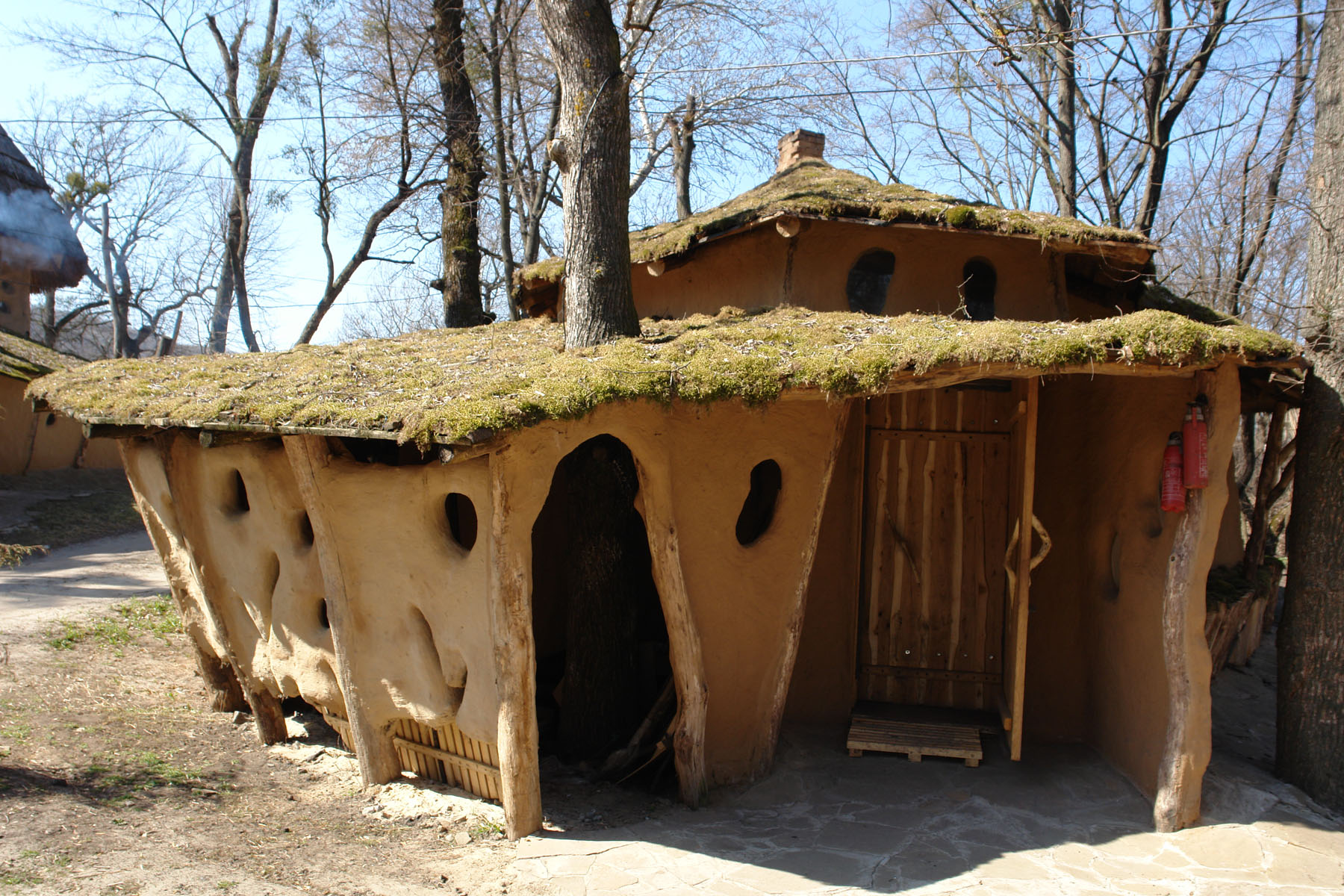
Here’s an example of a contemporary take on Ukrainian earthen building utilizing the wattle, daub, and cobb techniques. The Ukrainian architecture firm of architect Yuriy Ryntovt built the restaurant Pyana Hata in Kharkiv in 1999 (literal translation: “drunk house,” but now you know that khata/hata means not just a house but an earthen plus wooden structure) that may playfully resemble an ancient Neolithic Trypillian culture aesthetics.  The building area is 350 m2, and the site area is 0.4 hectares.  

Yuriy Ryntovt is born in 1966. Head of the creative workshop Ryntovt Design (Kharkov), specializing in architectural design, furniture, and interior design. Co-founder and artistic director of the theater and concert club “RODDom.” 


IAAC: Open Thesis Fabrication

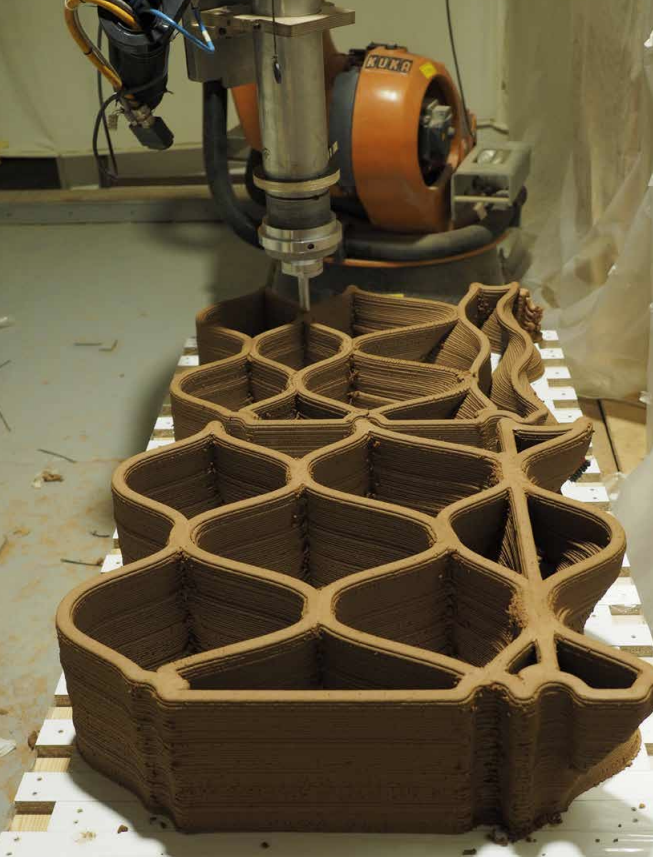
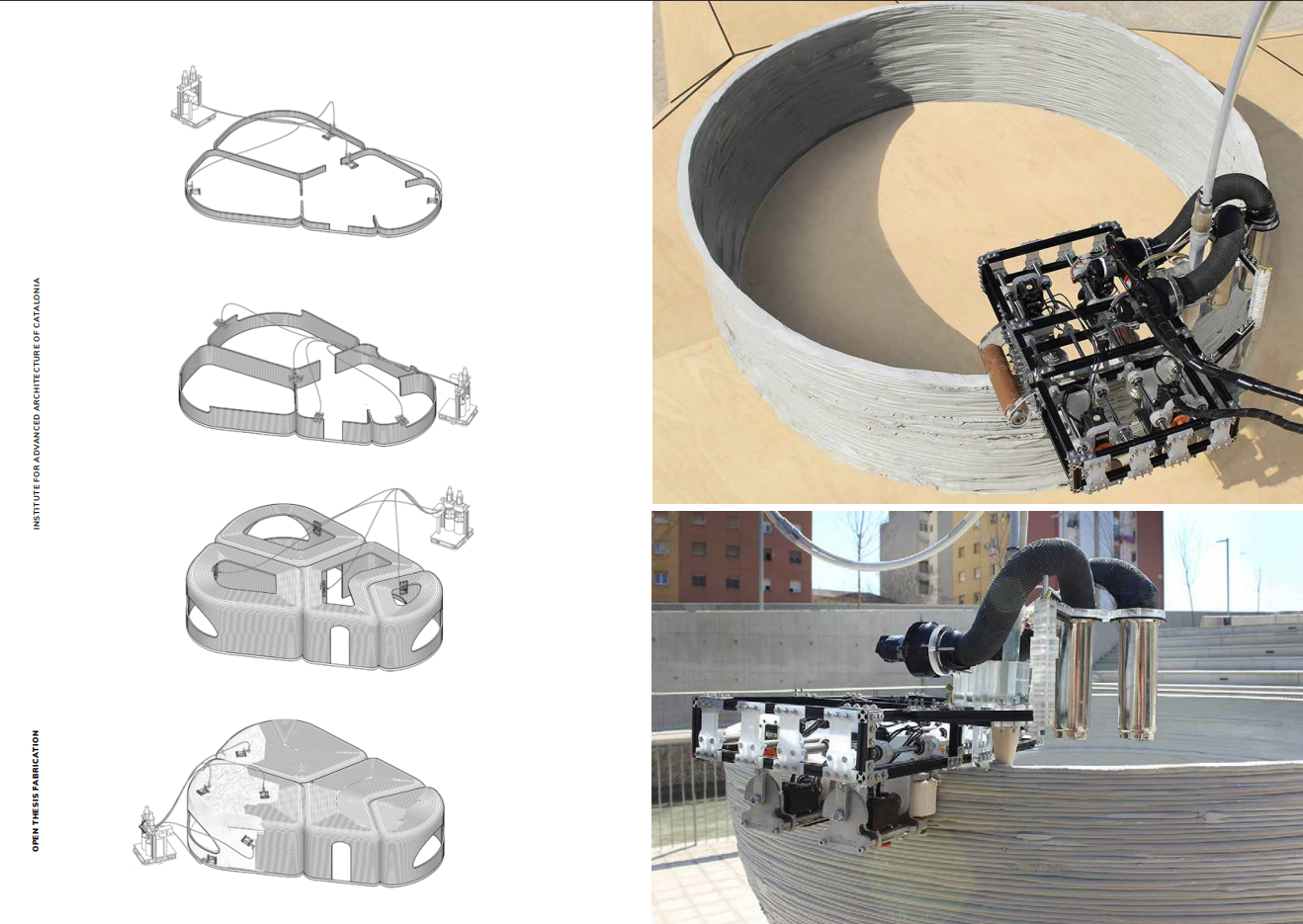
image of 3d printing robot making curvy cellular forms out of clay
Image Source: OTF Booklet

Open Thesis Fabrication is a six-month applied research program for postgraduates at the Institute for advanced architecture of Catalonia.

The program focus is on combining additive manufacturing with construction technology to create sustainable architecture with key areas of research in robotic manufacturing, material research, and performance-based design.

The program works with non-governmental organizations to develop designs for use in African humanitarian contexts and is comprised of architects, engineers, designers, and professionals with previous knowledge of digital fabrication and computational design.

It’s learning objectives are for program participants to:

  • Gain experience in large-scale 3D printing
  • Develop skills in digital fabrication, computational design, and material research
  • Learn to provide architectural solutions considering various aspects of construction

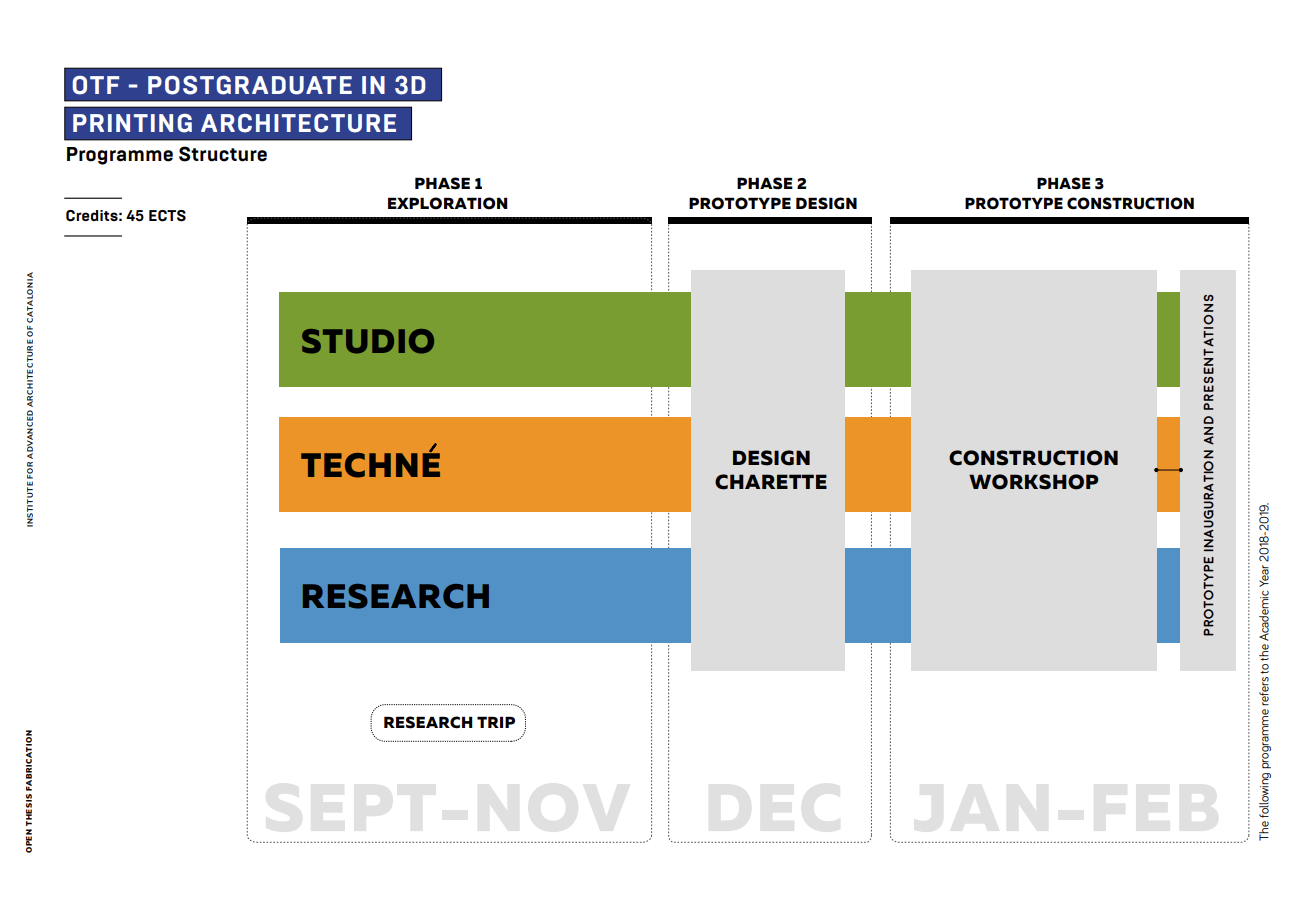
This is achieved through the implementation of three phases, Exploration, Prototype Design Charettes, and Prototype Construction.

chart that displays the phases of implementation and timeline
Image Source: OTF Booklet

Examples of projects that have been completed include:

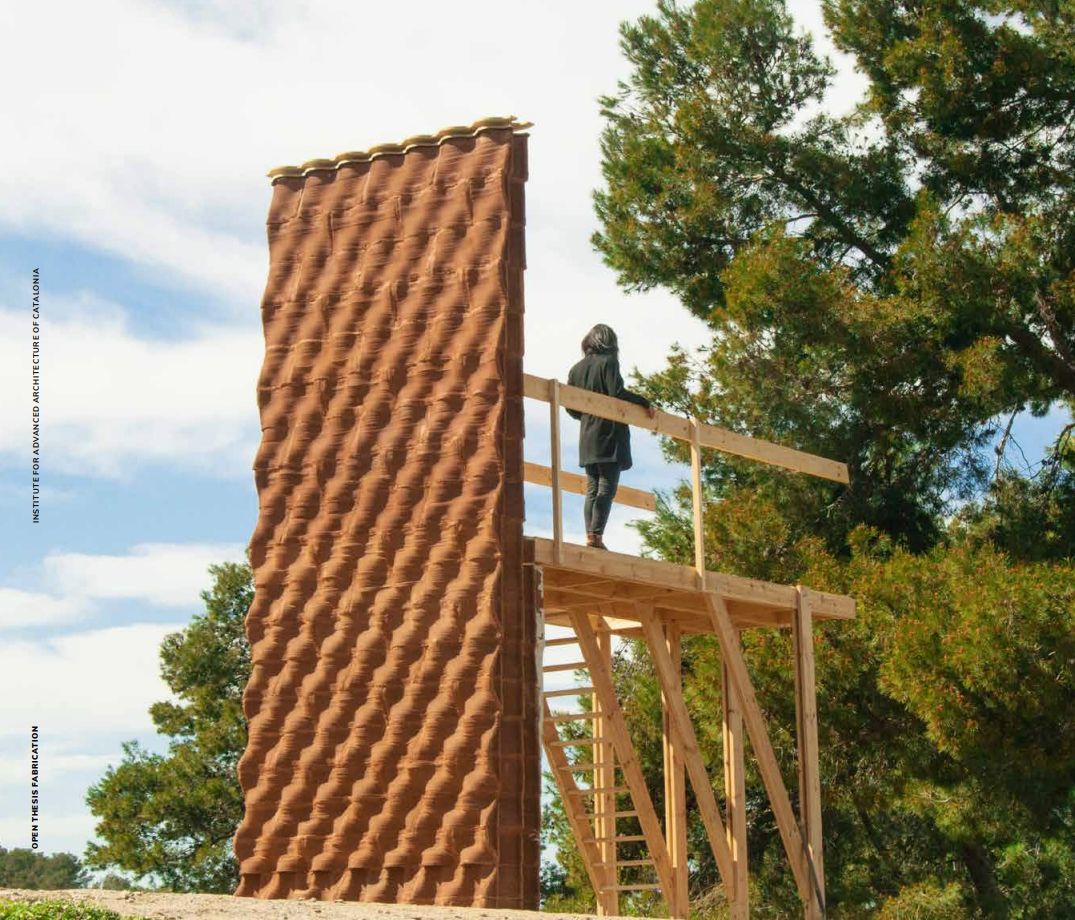
  • Digital Adobe – A 2-meter wide and 5-meter-high printed clay wall [2017-2018]
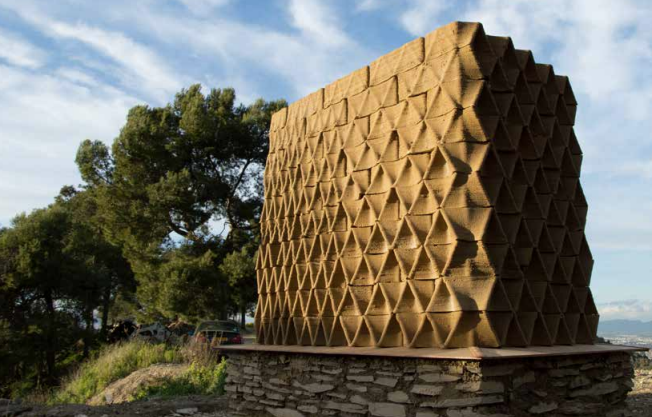
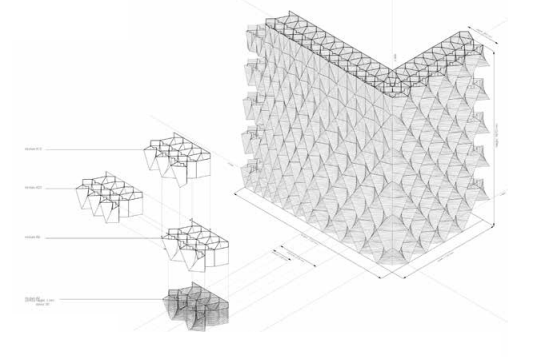
  • Terraperforma – A façade design of parametrically constructed modules optimized for solar radiation, wind behavior, and structural 3D printing [2016-2017]
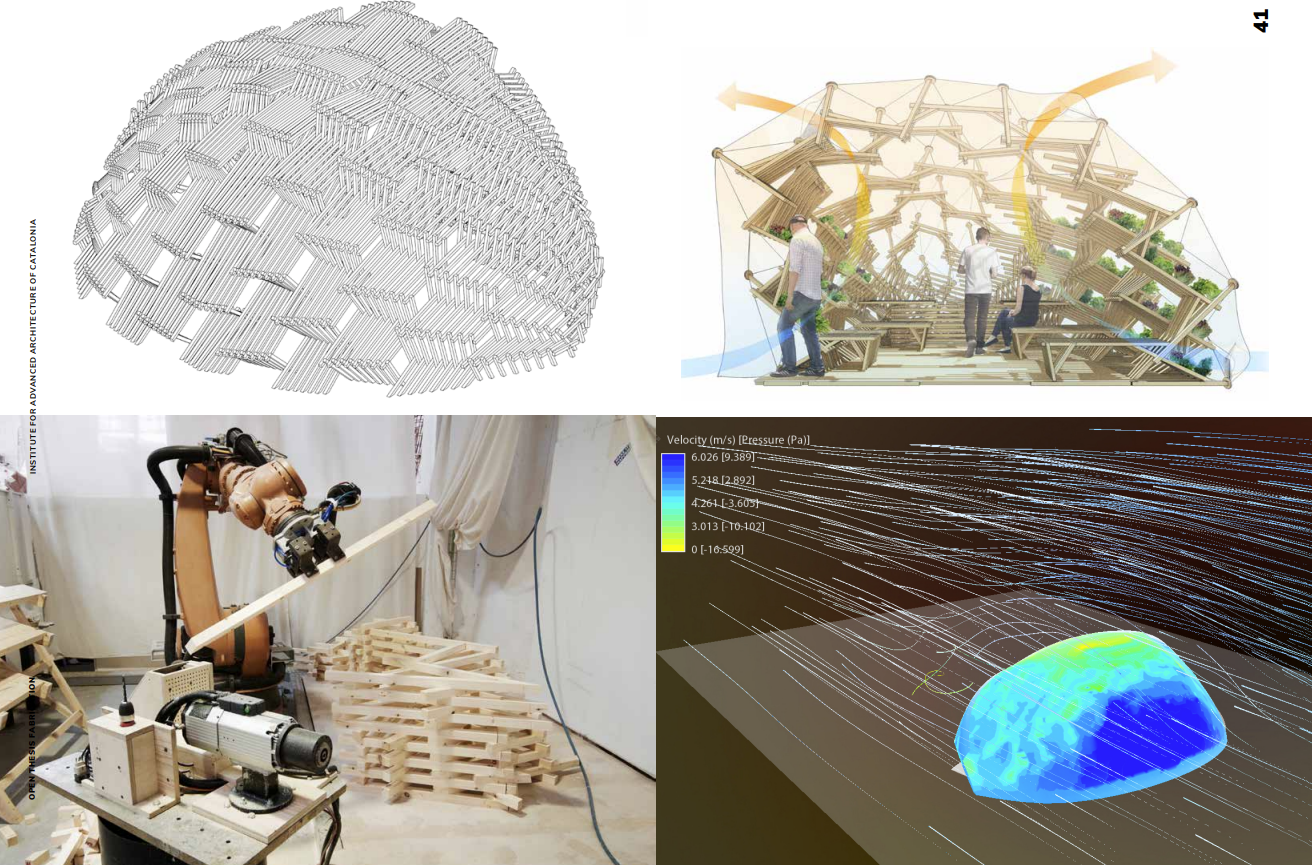
  • Digital Urban Orchard – A wooden pavilion made with digital and robotic fabrication divided into a wooden structure, aquaponic system, and silicon skin designed to capture the ideal solar radiation for winter and summer.
  • Minibuilders – a family of small-scale construction robots that are capable of constructing objects larger than itself in order to address the limitation found in additive manufacturing that often constrains the proportions of fabricated objects to the size of the machine.
Image Source: OTF Booklet


Image Source: OTF Booklet
schematic and images of mini robots being used to produce clay structures larger than the size of the machine
Image Source: OTF Booklet

For more information regarding tuition fees, how to apply, grading systems, etc., be sure to check out IAAC OTF resource guide: https://iaac.net/wp-content/uploads/2019/07/OTF_Booklet_2019-22-07-2.pdf


Impact Printing: Gramazio Kohler Research

Location:  ETH Zurich
Year:  2021-2024
​Research: Gramazio Kohler Research


Source: https://gramaziokohler.arch.ethz.ch/web/e/forschung/451.html

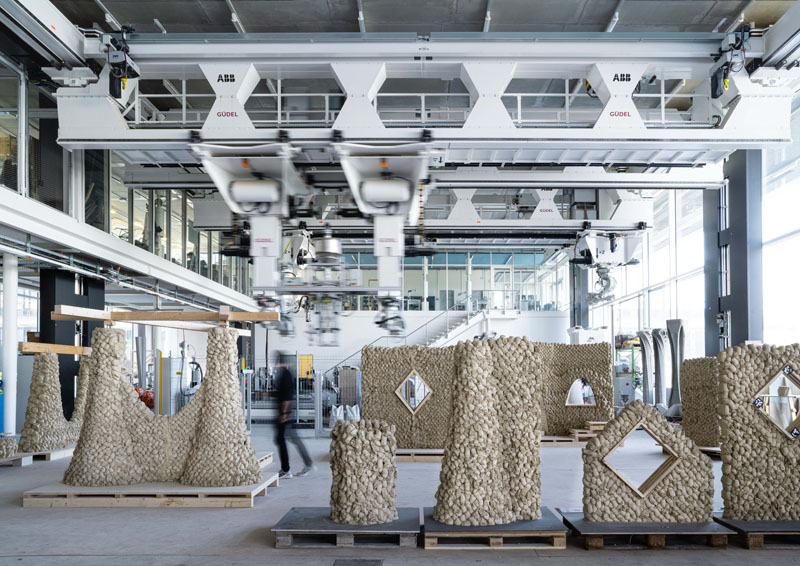
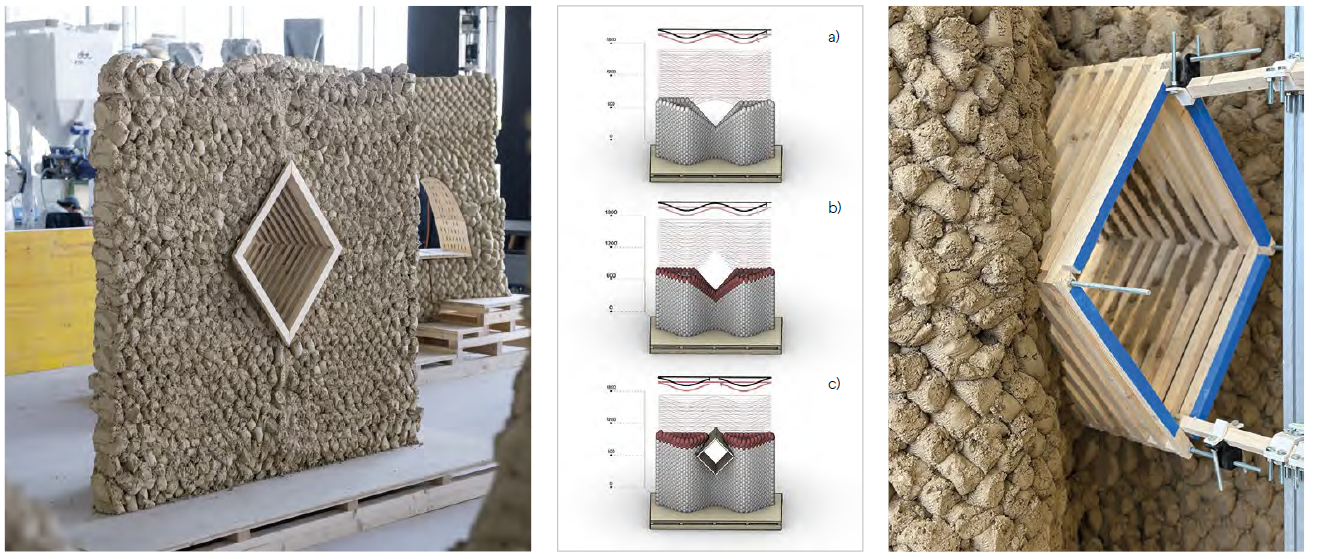
Impact printing is an innovative robotic construction method that creates full-scale, freeform structures using a custom earth-based material. Unlike traditional layer-based 3D printing, it employs high-velocity deposition, allowing for interlayer bonding at speeds of up to 10 meters per second. The environmentally friendly material consists mainly of locally sourced secondary materials with minimal mineral admixtures.

Currently, prototypes are being developed at ETH Zurich’s Robotic Fabrication Laboratory, with plans to integrate this technology into the HEAP autonomous excavator. The research also focuses on developing a digital design and construction strategy, utilizing advanced computational design and sensing methods. This work aims to enhance sustainable, mobile robotic construction, leading to groundbreaking techniques in the design and manufacturing of earthen structures.

Video


Source: https://www.research-collection.ethz.ch/handle/20.500.11850/668921

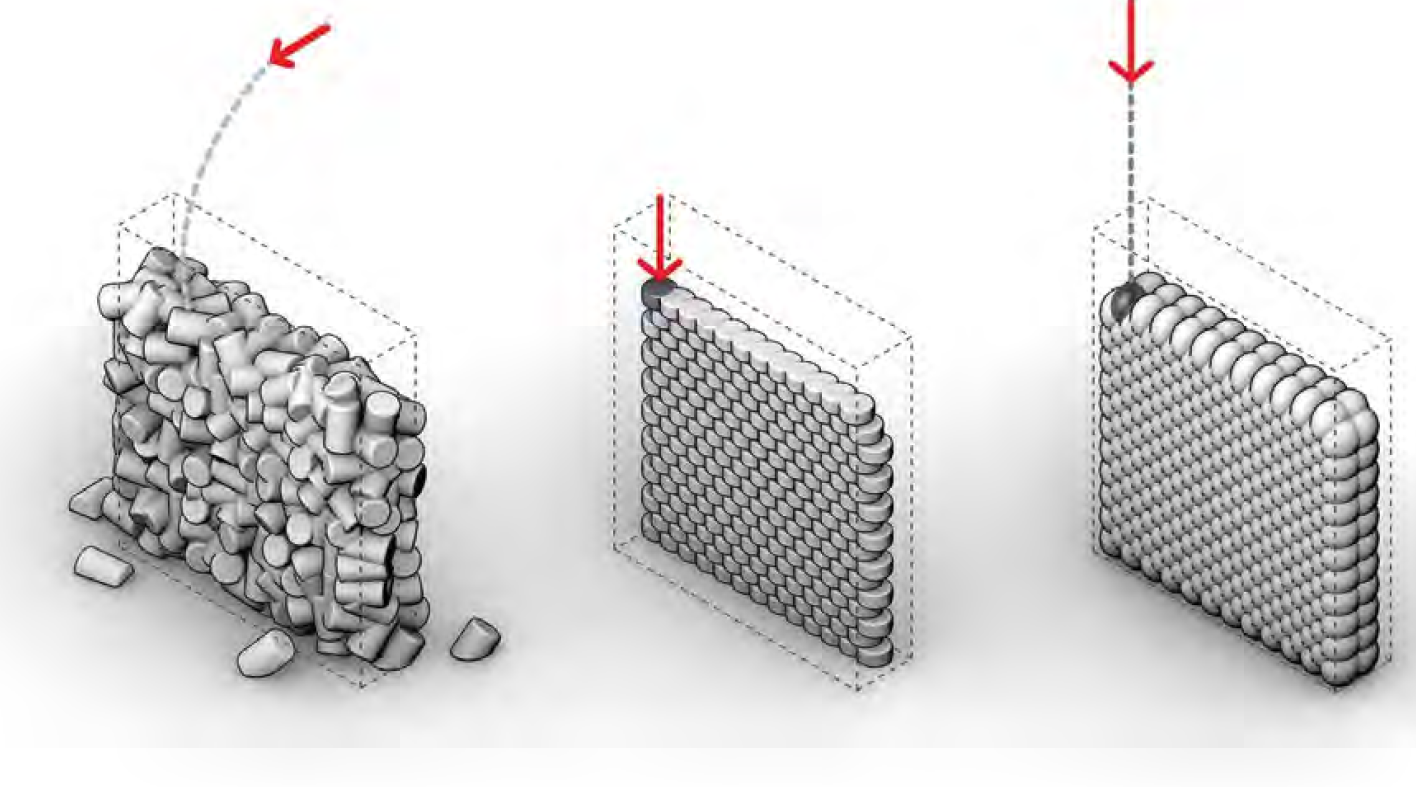
The diagram displays different concepts of earth material fabrication methods.

Left: ‘throwing’ technique used during Remote Material Deposition in 2014, Middle:‘pressing’ technique used during Clay Rotunda in 2021,  Right: ‘shooting’ technique currently investigated during Impact Printed Structures.

Source: https://www.research-collection.ethz.ch/handle/20.500.11850/668921

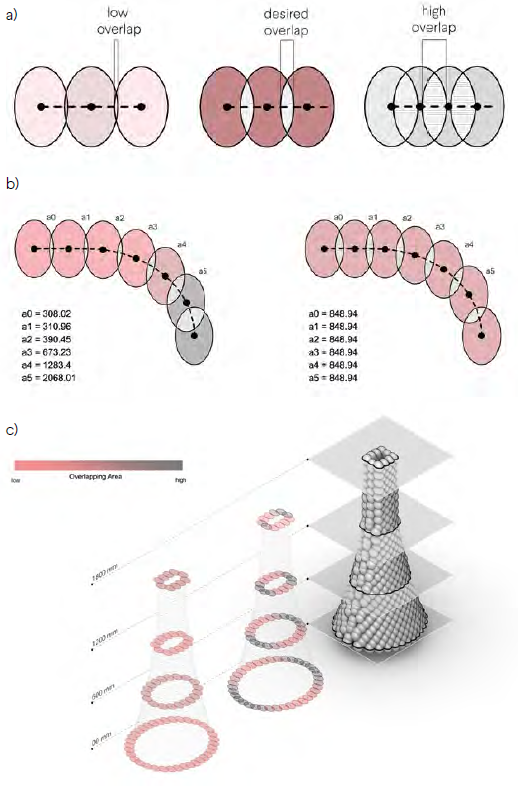
The diagram above illustrates the ideal overlap between each deposited component.

Source: https://www.research-collection.ethz.ch/handle/20.500.11850/668921

The photo above shows the process of printing a wall with a window embedded.

Déchelette Architecture: Quatre Cheminées


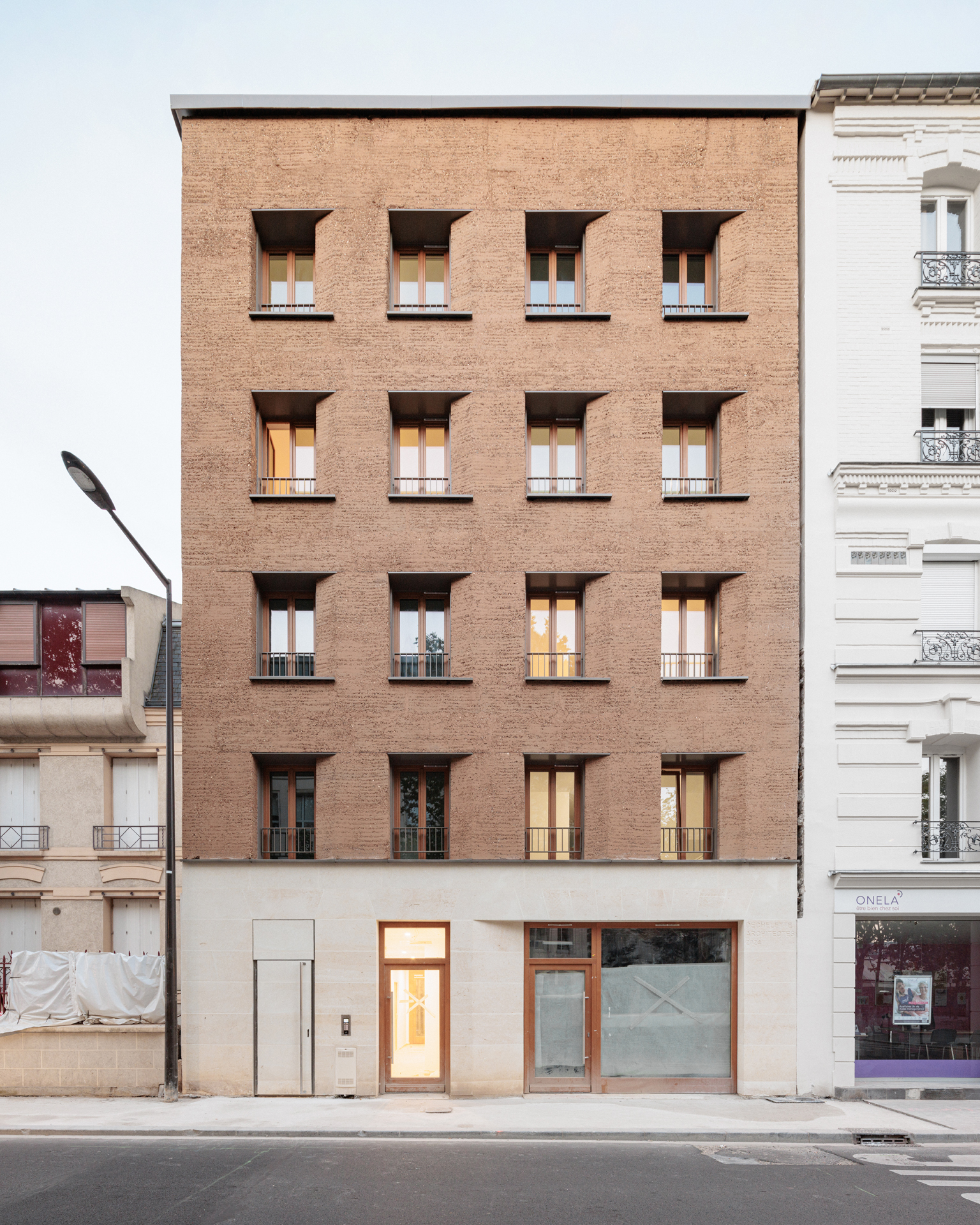
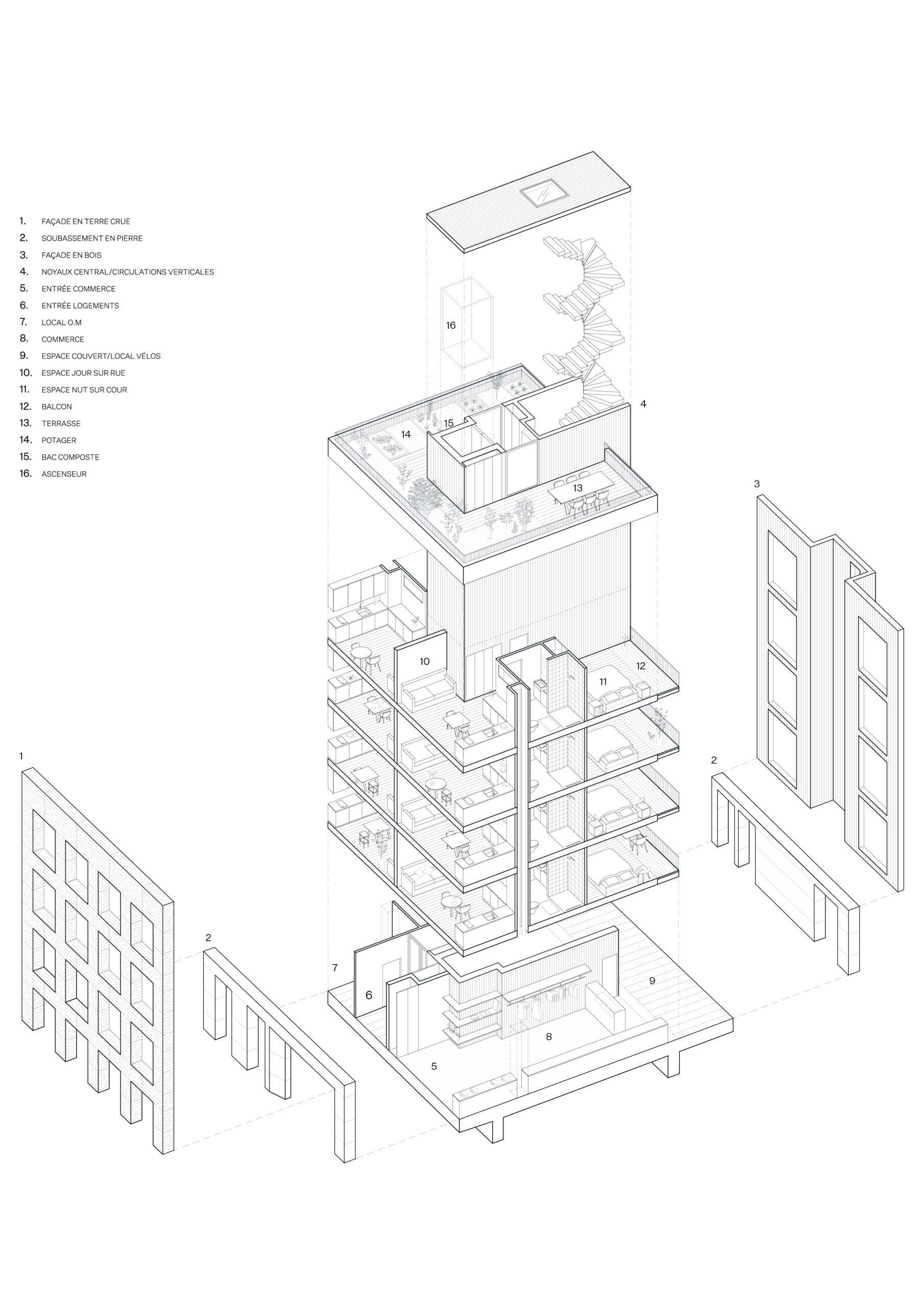
The project located in Boulogne-Billancourt in the Parisian suburbs, involves a building with eight social housing units, a caretaker’s lodge, and a shop on the ground floor, with a raw earth facade on the street side, a stone base and a wooden facade on the garden side. It is driven by a desire for restraint in design and the use of natural, bio-sourced, and local materials without ever losing sight of comfort for the occupants.


The building rises on five levels including a ground floor, four floors of housing and a green roof. It is structured around a central circulation core including an elevator and a staircase serving all levels. The search for optimization, transversality and independence of spaces guided our design.

The façade at street level is made of raw earth blocks, thus following the precepts of the “cradle to cradle” concept based on two principles: zero pollution and 100% reusability. The rammed earth used in the project comes from local sources, specifically from the excavation of the Greater Paris metro. This reduces carbon emissions from transportation and follows the circular economy principle.


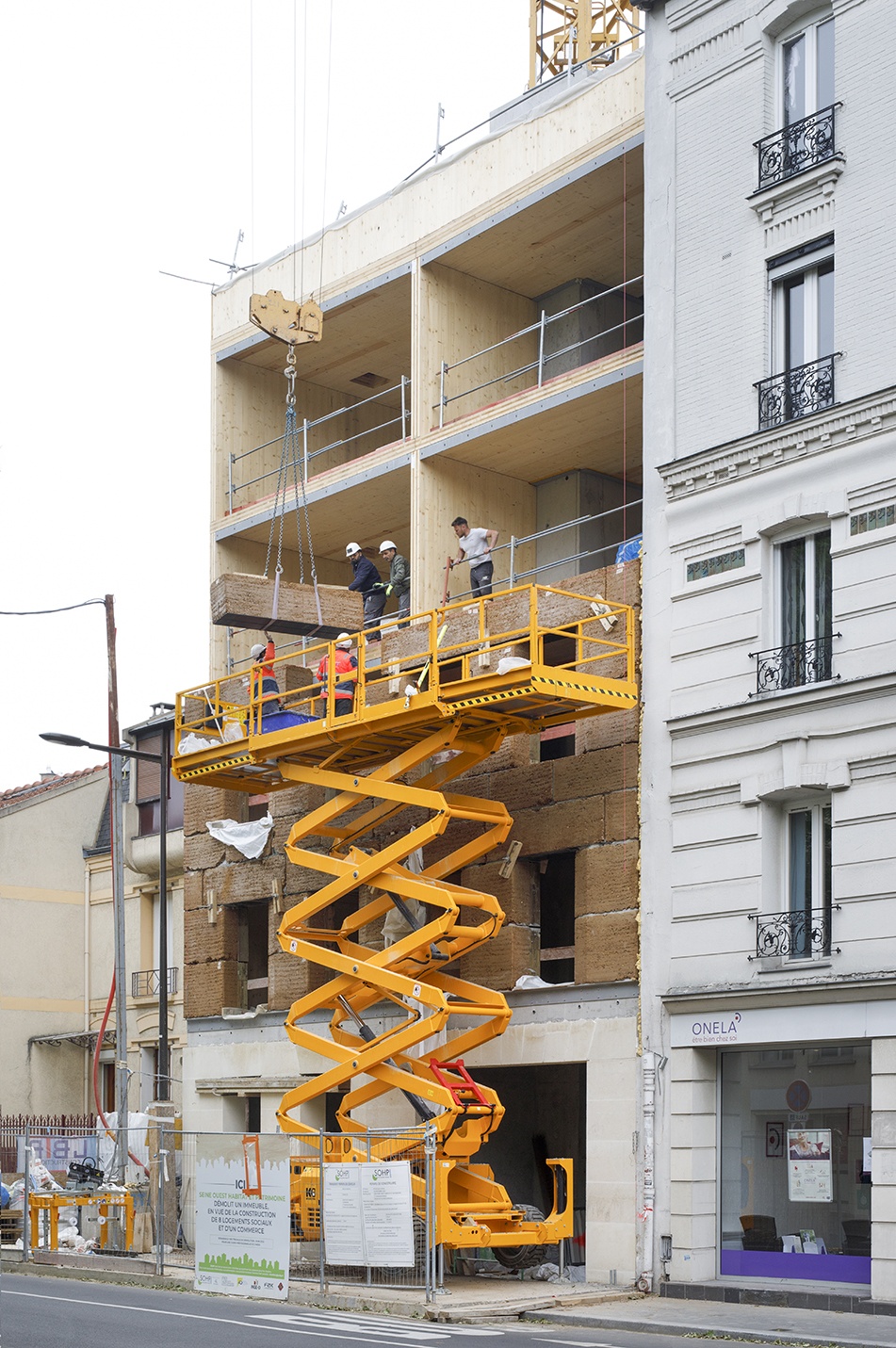
Rammed earth bricks are prefabricated , differing from the traditional on-site method. This technique speeds up construction and ensures consistency and quality control, and  offers flexible installation in complex urban settings. Rammed earth bricks are placed on a stone base ensures both structural integrity and environmental sustainability.

Location: Boulogne-Billancourt, France

Completion: 2023

Project Area: 350 m2

Budget: €1,700,000 excluding VAT

Architect(s): Déchelette Architecture

REFERENCES

https://www.dechelette-architecture.com/quatre-cheminees/

https://europe40under40.com/project/17-rue-des-4-cheminees-2023-emmanuelle-dechelette-boulogne-billancourt-france/

https://www.boulognebillancourt.com/information-transversale/actualites/le-plus-haut-batiment-en-beton-de-chanvre-a-ete-construit-rue-de-bellevue-2996

https://www.facebook.com/dechelettearchitecture/?locale=ms_MY


Nandi House, Fino Lozano/Moro Taller de Arquitectura

Nandi House / Fino Lozano + Moro Taller de Arquitectura - Image 1 of 25
Photograph by Rafael Palacios Macias

Located in the town of San Jose de Garcia in Michoacan, Mexico, Casa Nandi is a collaborative project between architect Fino Lozano and the firm Moro Taller de Arquitectura. This two-story residence is designed to blend with its natural environment while offering views of the landscape. The home employs rammed-earth construction techniques combined with concrete elements such as casting, creating a balance between traditional and modern building methods. The design aims to respect the local context while providing a functional and aesthetic living space.

Architects: Fino Lozano, Moro Taller de Arquitectura

Area: 1345 ft²

Year Built: 2022

City/State: San Jose De Garcia, Michoacan

Country: Mexico

By making the most of its orientation to create a bright, intimate space, the residence also emphasizes the simplicity of its surroundings. Its natural ventilation which is derived from its forms, creates moments of release within the home that allow for contemplation of not just the environment but of self-embracing elements of harmony and tranquility for the inhabitants.

Nandi House / Fino Lozano + Moro Taller de Arquitectura - Image 20 of 25
Ground Floor Plan Courtesy of Fino Lozano and Moro Taller de Arquitectura
Nandi House / Fino Lozano + Moro Taller de Arquitectura - Image 23 of 25
Section Render Courtesy of Fino Lozano and Moro Taller de Arquitectura

Constructed upon pine wood beams, the building also features handcrafted mud bricks supporting a concrete slab that indeed displays the underlying natural elements for an effortlessly elegant yet raw appearance. As previously indicated, the walls that make up the house are a combination of modern concrete techniques and traditional rammed earth, providing a juxtaposition that emphasizes how timeless architectural building practices can be. This combination offers acoustic and thermal insulation in addition to structural support.

Nandi House / Fino Lozano + Moro Taller de Arquitectura - Image 17 of 25
Photograph by Rafael Palacios Macias
Nandi House / Fino Lozano + Moro Taller de Arquitectura - Exterior Photography
Photograph by Rafael Palacios Macias

Every material used in the home is on display, allowing each texture and color to contribute to a visual experience that authentically reflects the surrounding landscape. Rammed earth construction is popular in conveying the essence of Mexican architecture and Casa Nandi is a great example due to its rosy pink walls of local mud, creating a seamless connection between the home and its environment. “Casa Nandi, in that spirit, stands out yet settles in the place it belongs to” (Zohra Kahn).

Nandi House / Fino Lozano + Moro Taller de Arquitectura - Interior Photography, Kitchen, Beam, Facade
Photograph by Rafael Palacios Macias

References:

Caballero, Pilar. “Nandi House / Fino Lozano + Moro Taller de Arquitectura.” ArchDaily, ArchDaily, 7 June 2024, www.archdaily.com/1017433/nandi-house-fino-lozano-plus-moro-taller-de-arquitectura?ad_medium=gallery.

Khan, Zohra. “Casa Nandi in Its Muted Rammed Earth and Concrete Form Stands out yet Settles In.” STIRworld, STIRworld.com, 15 July 2024, www.stirworld.com/see-features-casa-nandi-in-its-muted-rammed-earth-and-concrete-form-stands-out-yet-settles-in.

The Kiln Tower for the Brickworks Museum

Boltshauser Architekten, founded by Roger Boltshauser in 1996, is a Zurich-based firm known for its focus on materiality, craftsmanship, and sustainable practices. Roger Boltshauser, a graduate of the Swiss Federal Institute of Technology (ETH Zurich), blends natural materials like brick and clay with modernist and vernacular traditions. His architecture reflects an environmental sensitivity, using low-impact materials to create buildings that are deeply connected to their natural surroundings.

© Kuster Frey, Zurich

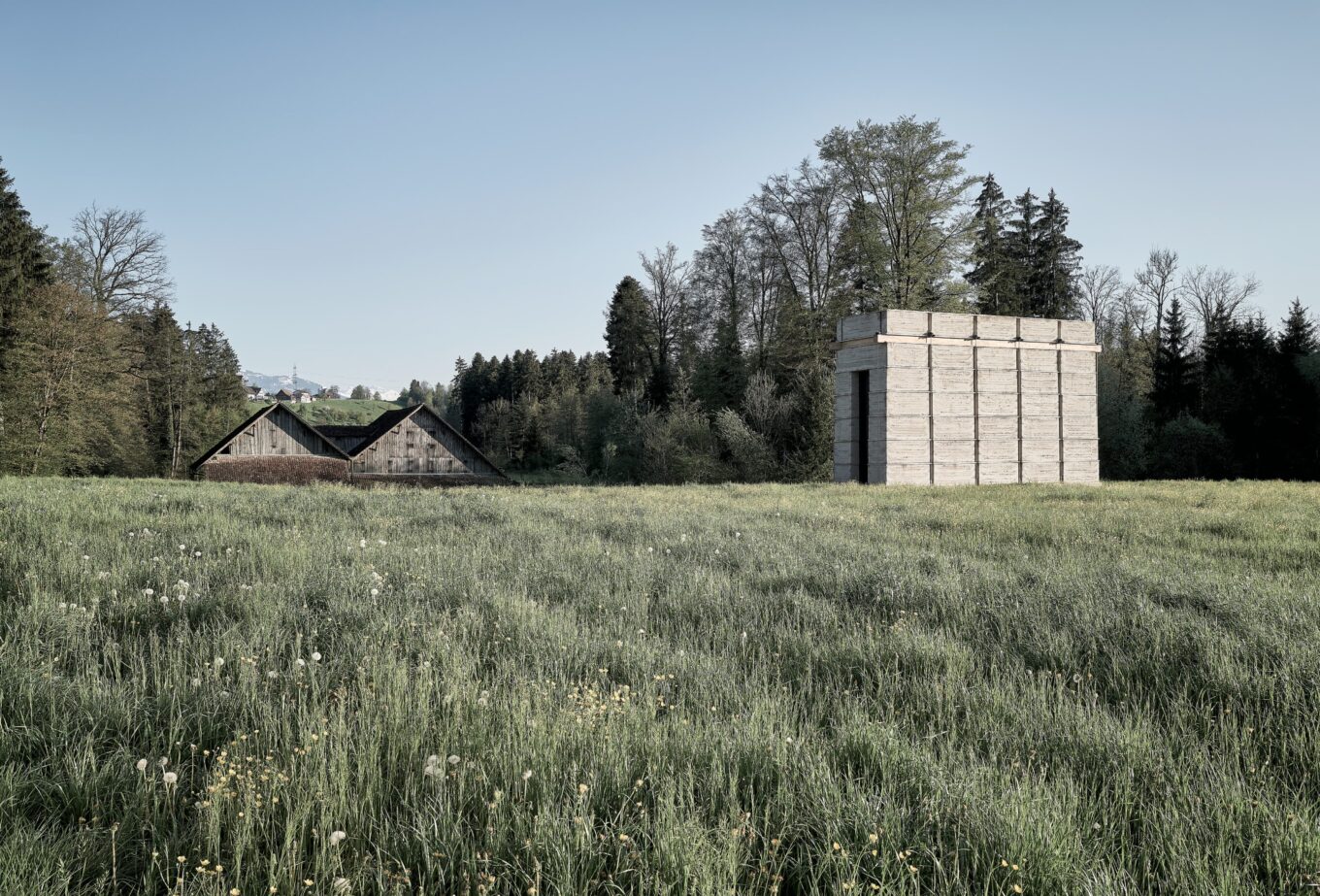
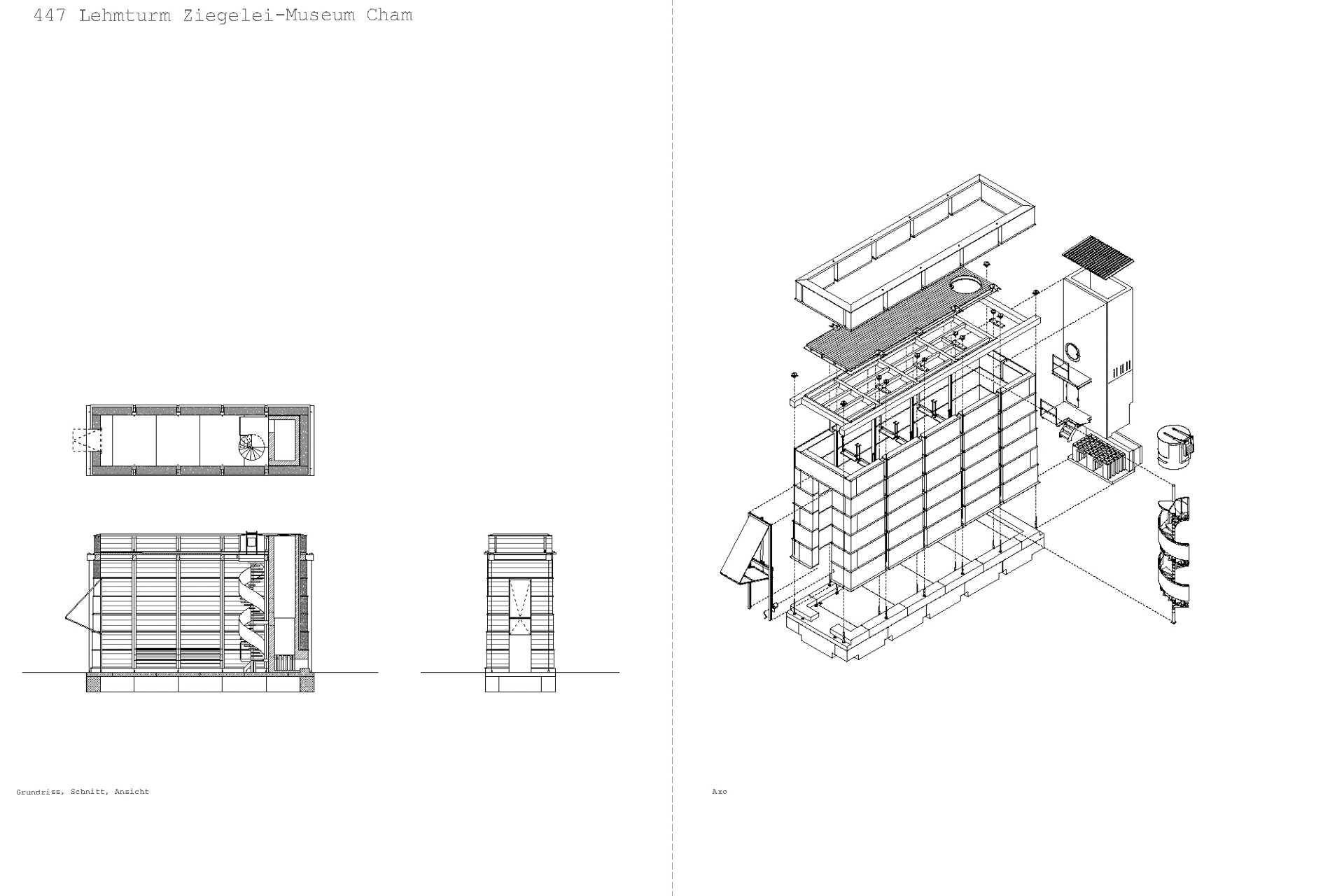
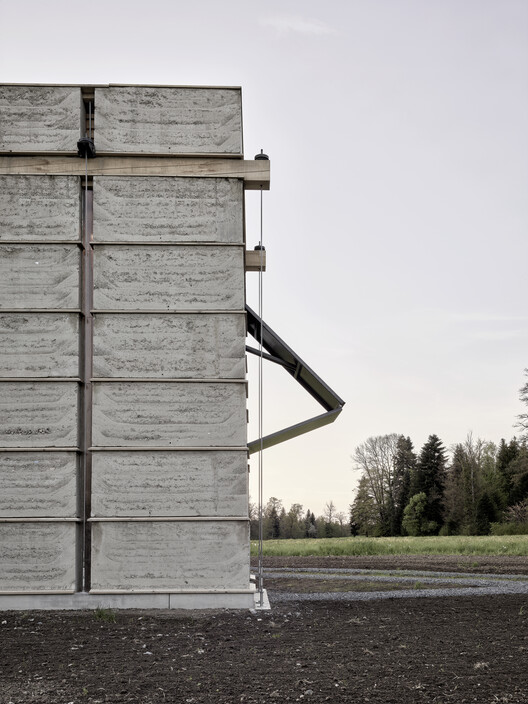
The Tower for the Brickworks Museum in Cham, Switzerland, is a striking vertical addition to a museum dedicated to the region’s brickmaking heritage. The brickworks, which operates the museum, is the last surviving handmade brickworks in German-speaking Switzerland. The site includes a kiln, a drying shed, a clay pit biotope, residential buildings, and a museum, all tied to the region’s industrial past. The tower, which was completed in 2017, stands approximately 10 meters high, 13 meters deep, and 4 meters wide. Its tapered form and black steel entrance portal evoke a sense of transcendence, reminiscent of the ancient nuraghi of Sardinia or Oman’s tower tombs.

This unconventional structure won the prestigious Detail Award in 2022. It functions as an exhibition space, a working kiln, and an observation point, allowing visitors to experience the historical and material richness of the site while offering panoramic views from its rooftop platform. More than just an architectural addition, the tower is also an experimental exhibit, showcasing the innovative potential of rammed earth construction.

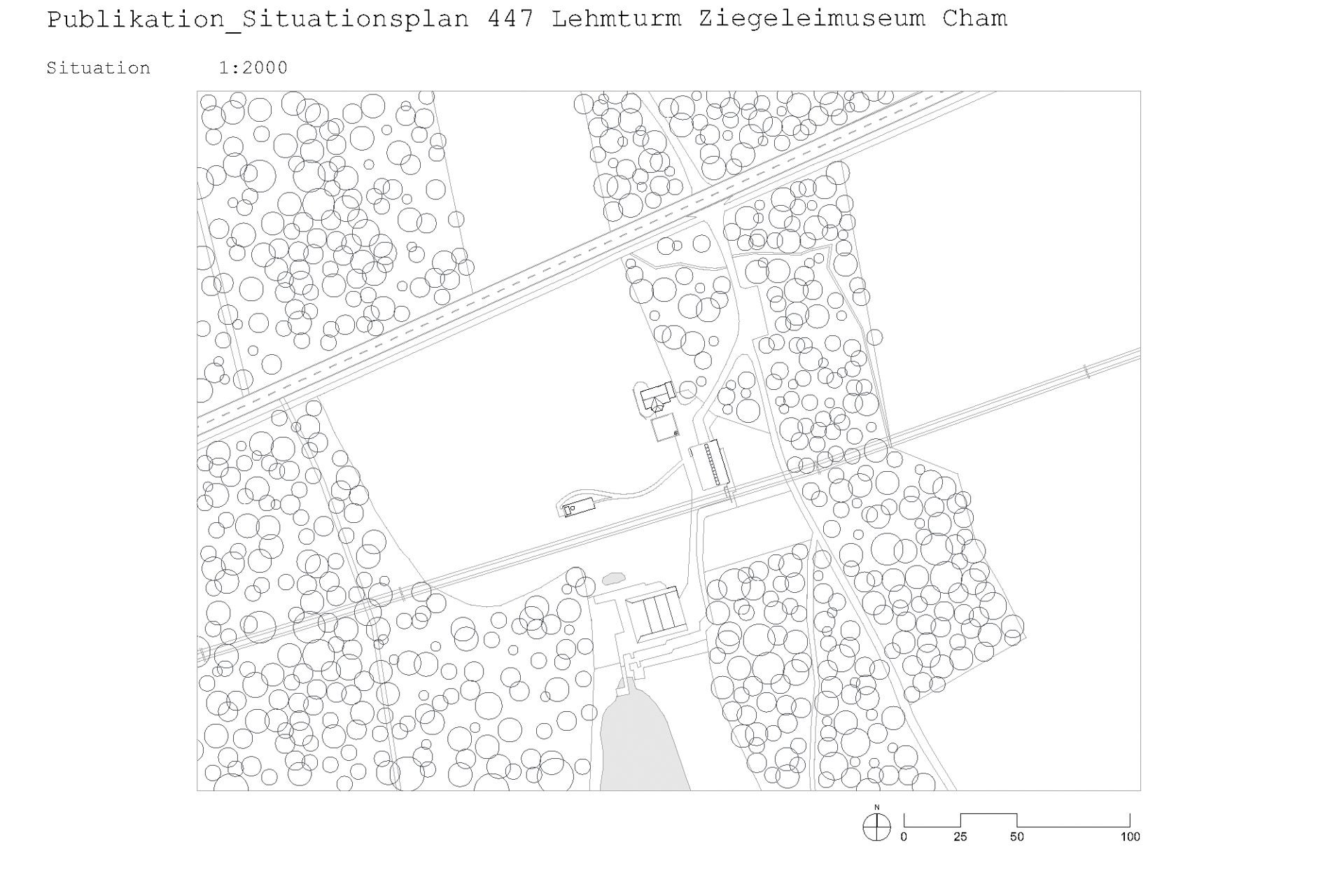
Situation plan – Graphic © Boltshauser Architekten


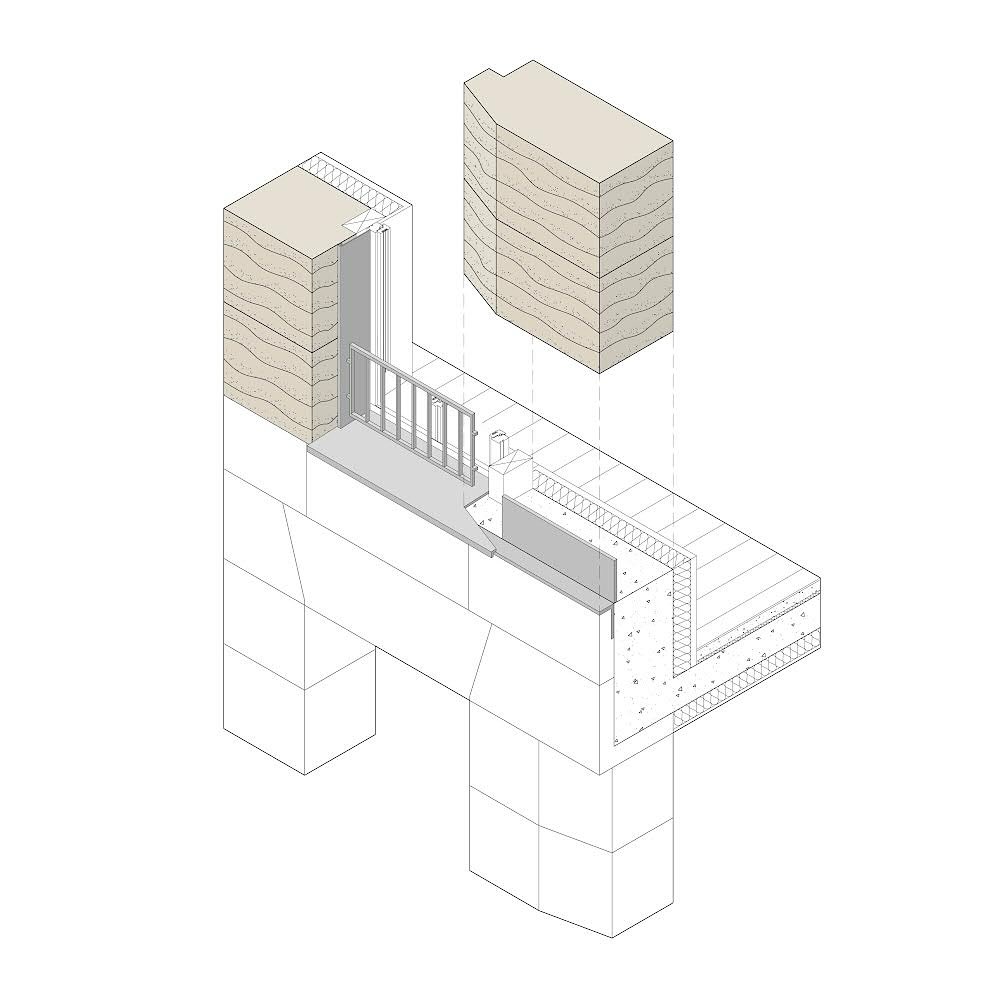
Floor plan, section, view, axonometry – Graphic © Boltshauser Architekten

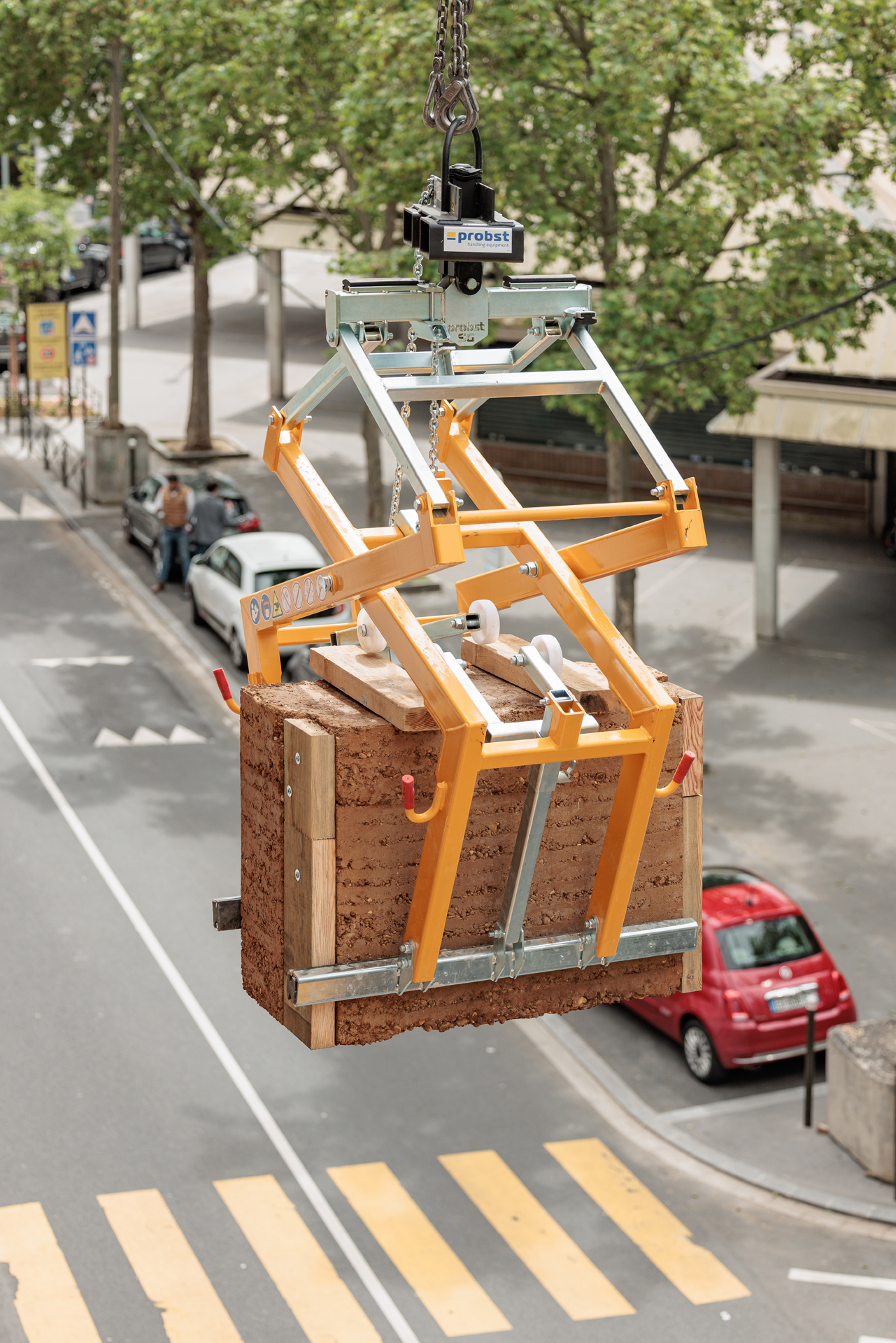
The tower’s uniqueness lies in its method of construction using rammed earth, an ancient technique that has seen a revival in sustainable architecture. Designed in collaboration with students from the Technical University of Munich and ETH Zurich, under the expert guidance of Roger Boltshauser, the project also served as a hands-on self-build educational opportunity. The earthen modules were made of a mixture of fat clay and demolition rubble, as preparing loam on-site would have been too time-consuming.

One of the key innovations of this structure is its use of prestressed earth. Prefabricated rammed earth blocks were compressed on-site and stacked, each resting on a wooden plate that facilitated transport and construction. The integration of these base plates into the wall structure, along with grooves for tension cables, added strength and stability to the building. A weatherboard on each plate protects the earth from erosion and showcases the joinery principles. The use of horizontal supports made of trass lime mortar further reinforces the structure against erosion.

Prestressing earthen walls is a challenging process due to material creep and shrinkage, which can loosen the tension over time. To mitigate this, the blocks used in Cham were dried for a year, and additional steel springs in the tendons maintained constant pressure. Measurements indicate that the stability and hardness of the rammed earth increase under this pressure. The steel tendons, aside from their structural role, also add a visual rhythm to the compact tower, turning the technical necessity into an aesthetic element.

© Kuster Frey, Zurich

The tower is a testament to sustainable building practices. Its use of rammed earth—a material that can be recycled or reused—ties the building into the circular economy. The structure was built with the understanding that it would be dismantled after ten years. When this occurs, the rammed earth blocks can be easily reused, closing the loop in material usage and reducing waste. Compared to traditional concrete or brick construction, this method can result in a 40% reduction in embodied energy.

Moreover, the tower’s design aligns with the broader goals of reducing energy-intensive materials like concrete. In Switzerland, over 60 million tons of clay and earth are excavated annually, most of which is discarded in landfills. By using this resource in construction, the project makes a significant contribution to more sustainable building methods.

© Kuster Frey, Zurich

The Tower for the Brickworks Museum exemplifies Boltshauser Architekten’s commitment to materiality, sustainability, and craft. More than just a structure, it is an experiment in how traditional building techniques like rammed earth can be adapted for modern, sustainable architecture. The tower honors the industrial heritage of the brickworks while also embracing innovative methods, such as prestressed earthen construction, to meet modern engineering challenges.

Its combination of robust materiality and minimalist form inspires reflection on the connection between craft, place, and design. The structure also demonstrates how architecture can be part of a circular economy, with its materials poised to be recycled after its decade-long lifespan. Boltshauser’s work here stands as a reminder that thoughtful, context-driven architecture can not only tell a story through materials but also push the boundaries of what is possible in sustainable building practices.

References:

Boltshauser Architekten. (2022, March 18). Kiln Tower for the Brickworks Museum • Boltshauser Architekten AG. Boltshauser Architekten AG. https://boltshauser.info/en/projekt/ofenturm-fuer-das-ziegelei-museum/

Caballero, P. (2024, July 2). Kiln Tower for the Brickworks Museum / Boltshauser Architekten. ArchDaily. https://www.archdaily.com/972419/kiln-tower-for-the-brickworks-museum-boltshauser-architekten

Kiln Tower for the Brickworks Museum | Boltshauser Architekten | Archello. (n.d.). Archello. https://archello.com/project/kiln-tower-for-the-brickworks-museum

Walter, E. (2022, November 18). Kiln Tower in Cham. Detail. https://www.detail.de/de_en/ofenturm-in-cham?srsltid=AfmBOorkvFZgToXvWDRFMWlyDg4O5_SNjfN_gjXvs0bh4DE-C3lRFW5m

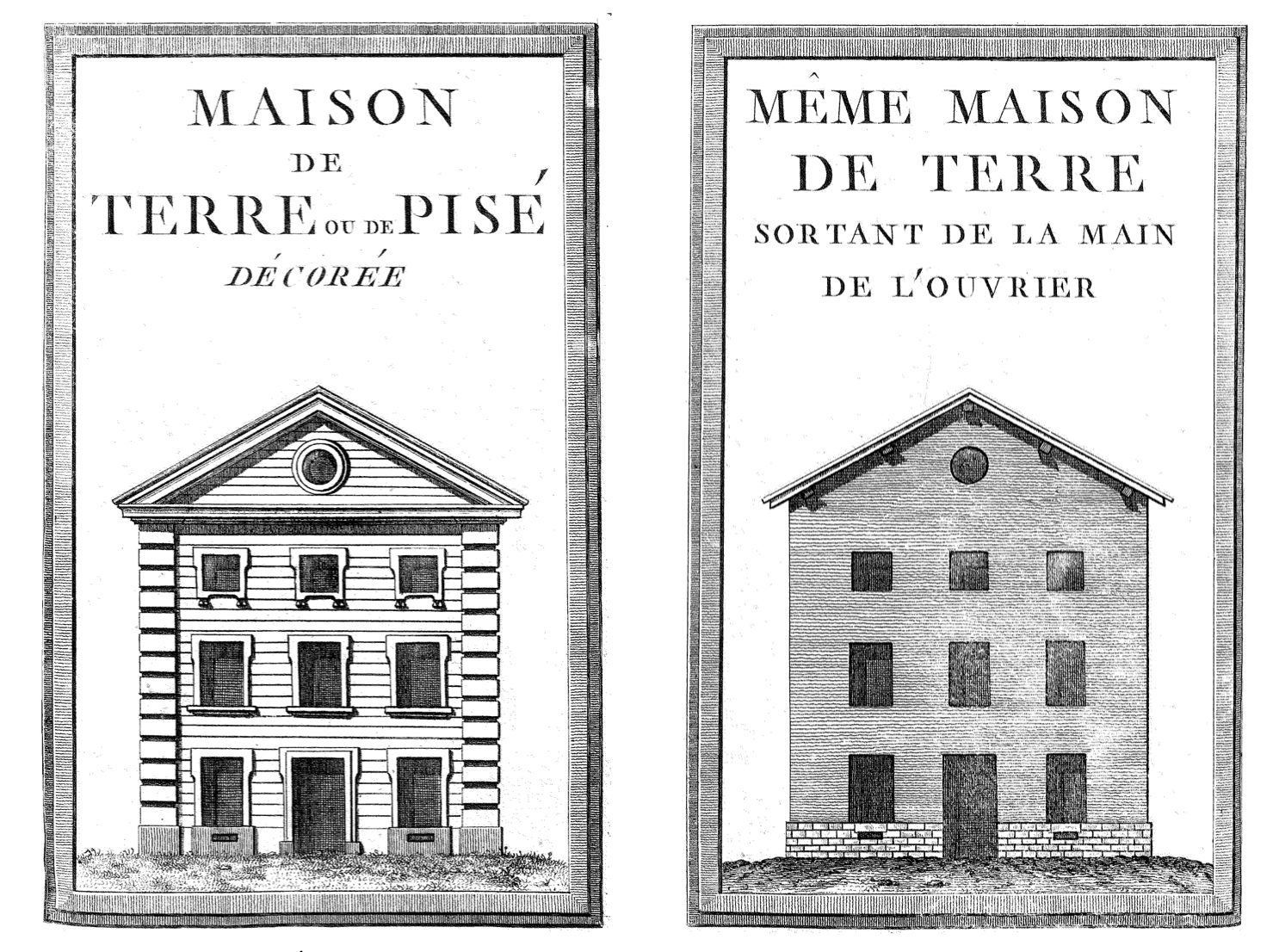
FRANÇOIS COINTERAUX: THE ARCHITECT OF THE ‘AGRICULTURAL PROLETARIAT’

Frontispieces to Cointeraux’s École d’architecture rurale (second edition, 1793). Façade of a ‘house of a decorated rammed earth house’ and the ‘same house made from the hands of a worker’.

FRANÇOIS COINTERAUX: THE ARCHITECT OF THE ‘AGRICULTURAL PROLETARIAT’ is an essay by Anja Segmüller who writes on the history of the French Architect Francois Cointeraux who is known for his focused attention on “the possibilities of ‘pisé’ (rammed earth) as a construction technique and to teaching the agricultural working class how to construct their own cost-effective, fire-resistant, and ‘dignified’ dwellings, founding several educational institutions”.

Read the essay at Drawing Matter.

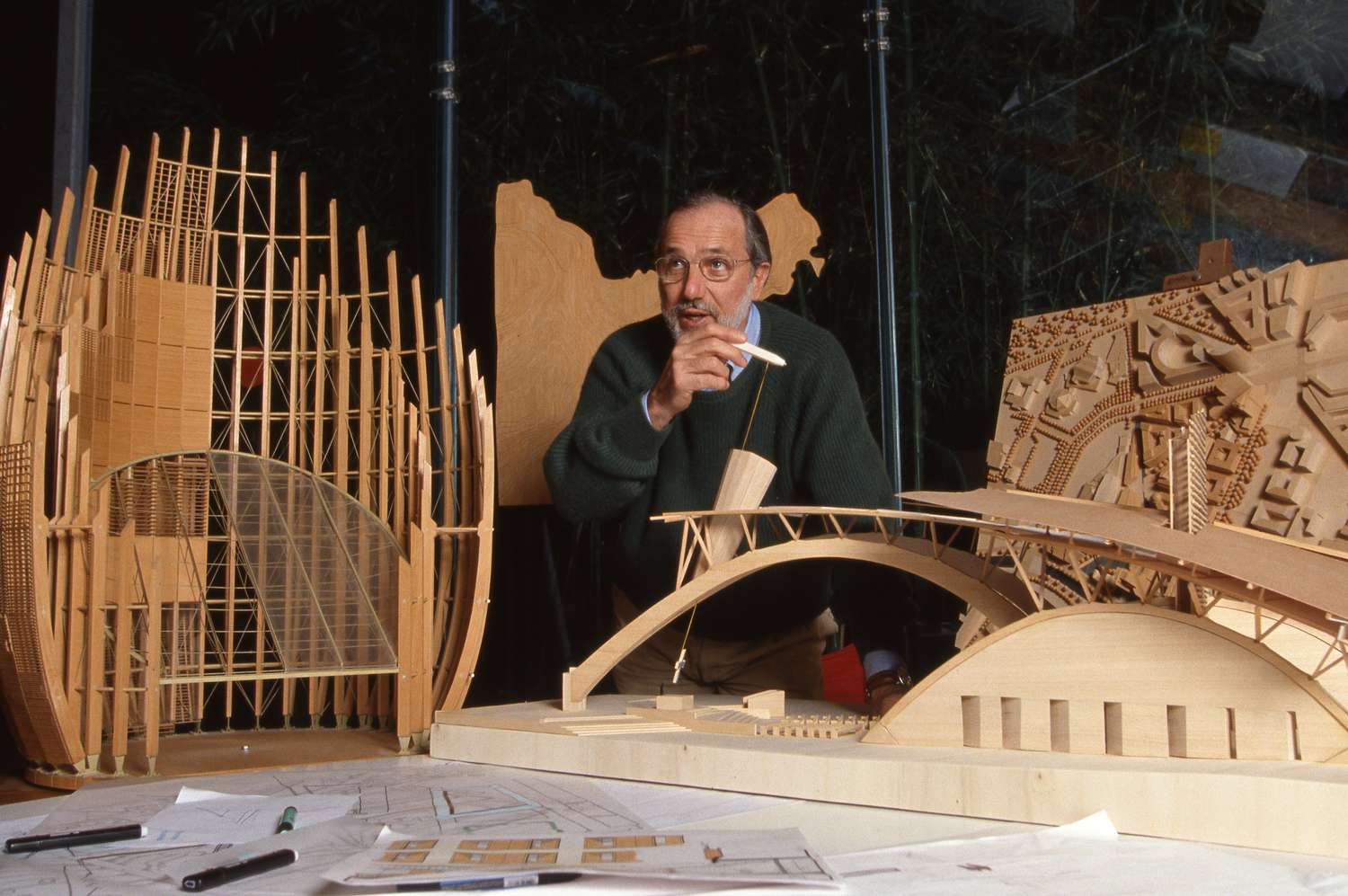
Renzo Piano’s Emergency Children Surgery Center in Entebbe, Uganda

Renzo Piano is an Italian architect that has received numerous awards and nominations for his work, mostly qualified as “high-tech architecture”, a type of modern architecture that dares to innovate and defy norms. (1) His most famous design is the Centre Pompidou of Paris in which he works with high tech and sustainability through an emphasis on structural and technological elements. (1)

Vittoriano Rastelli / Corbis via Getty Images

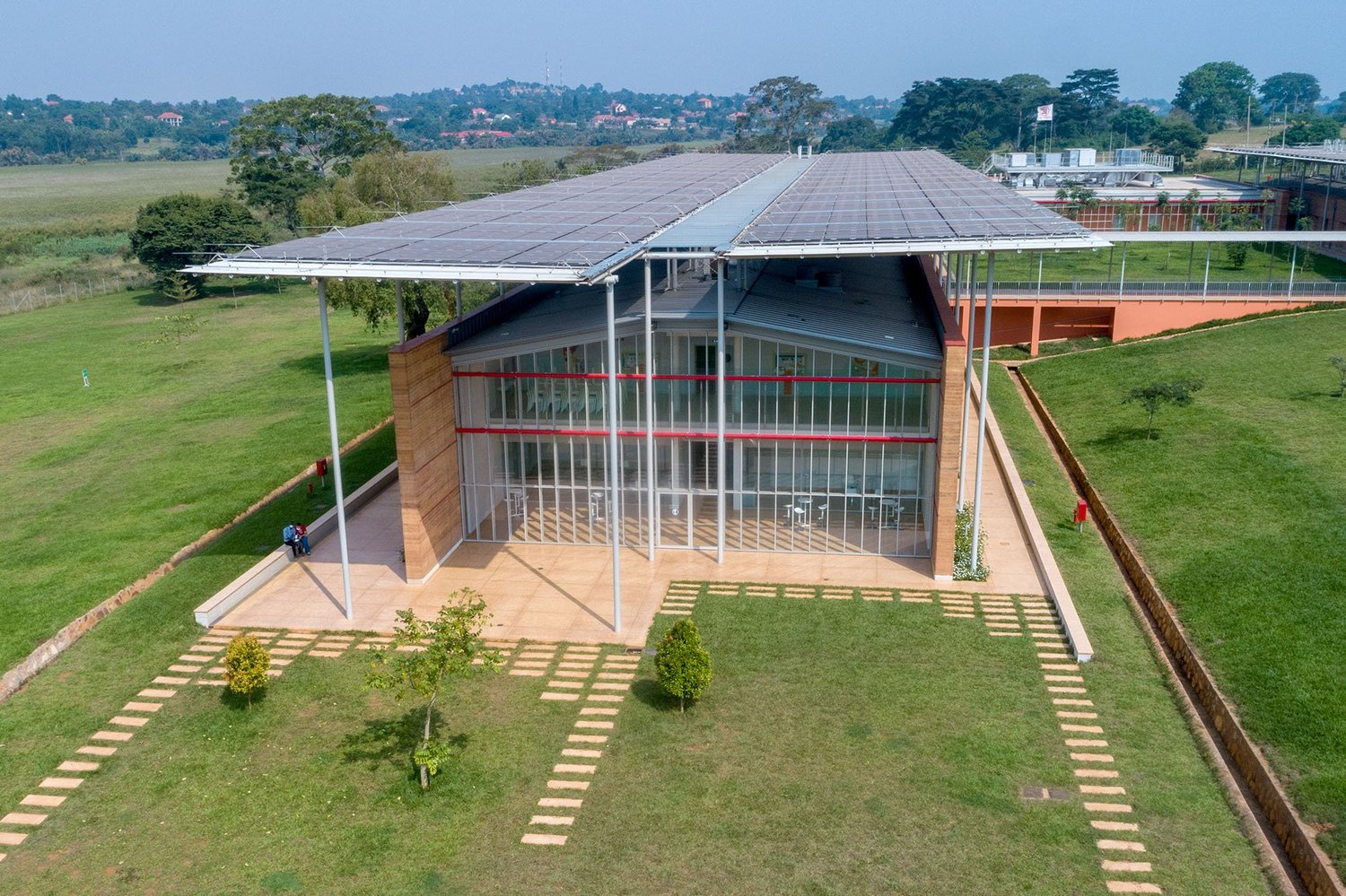
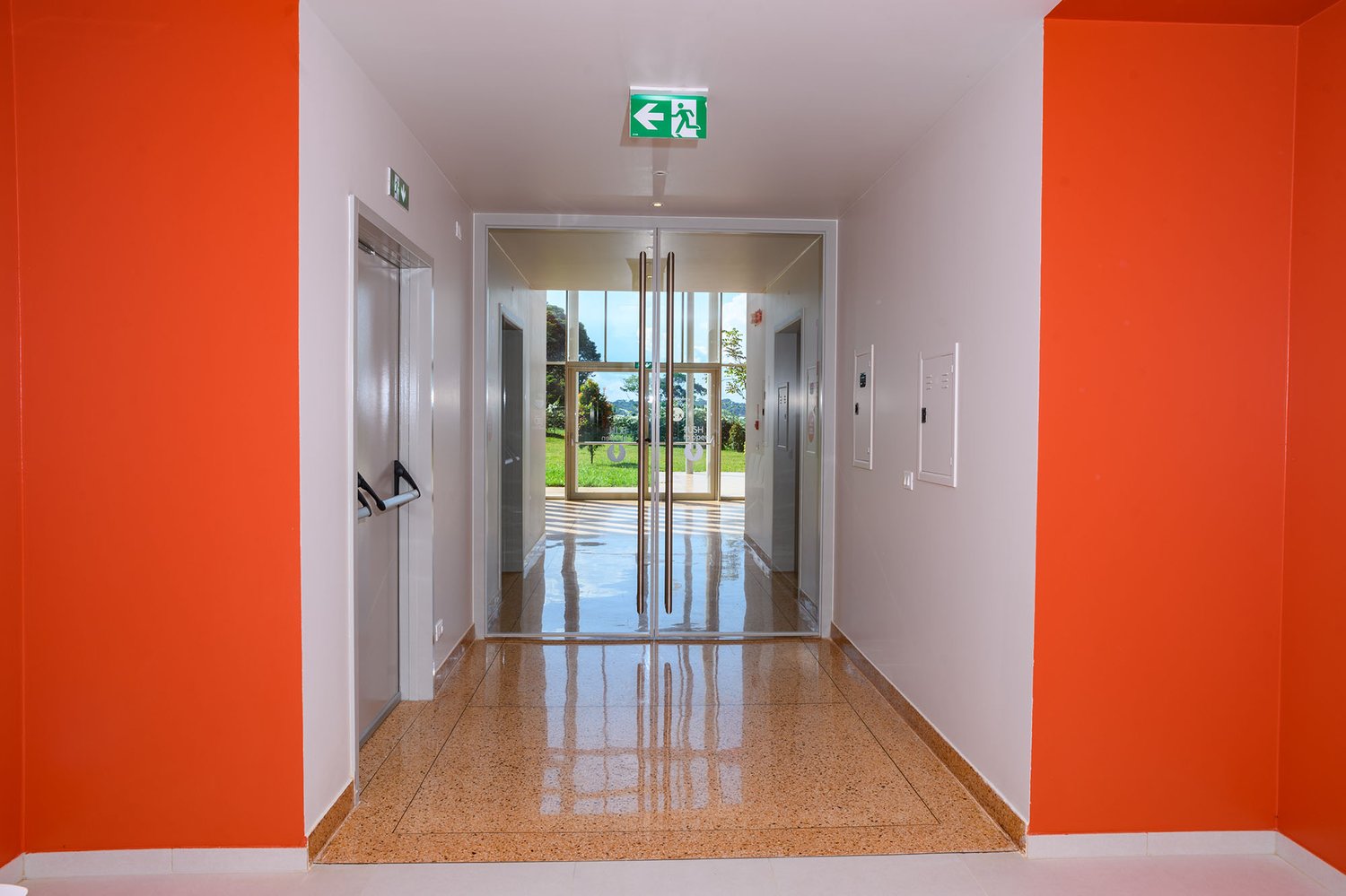
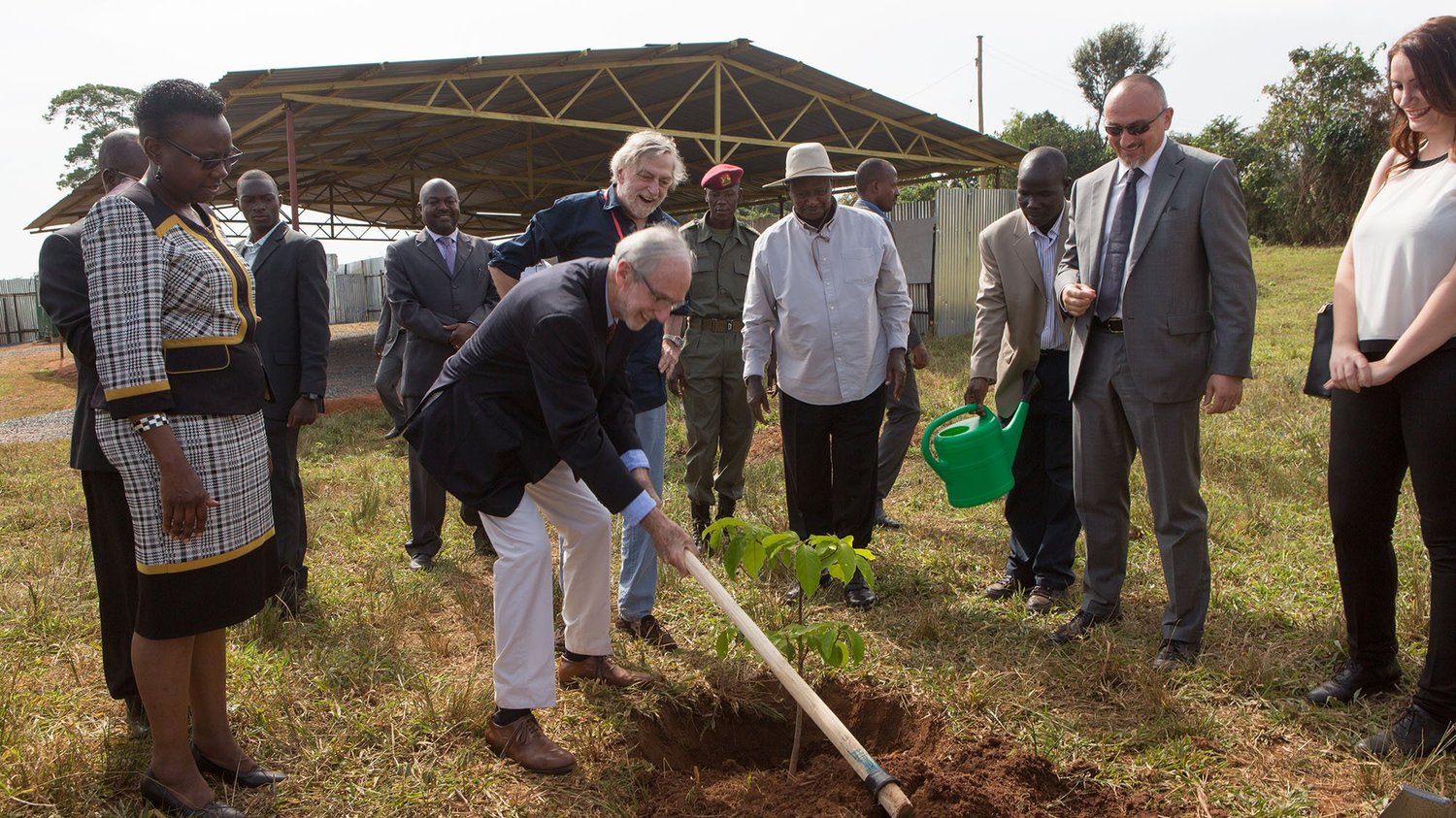
Renzo Piano’s involvement in creating an Emergency children’s surgery center out of raw earth in Uganda continues that legacy of surpassing the norm. In this project, Piano contributed with EMERGENCY, a non-profit dedicated to offering complimentary, high-quality medical services to those in need (2). Such a partnership between visionary Renzo Piano and EMERGENCY therefore pushed for a project that guaranteed quality of biomedical devices, quality of building and a quality of life for those in the center(3).

Images courtesy of Renzo Piano Building Workshop & Studio TAMassociati, Milan Ingegneria

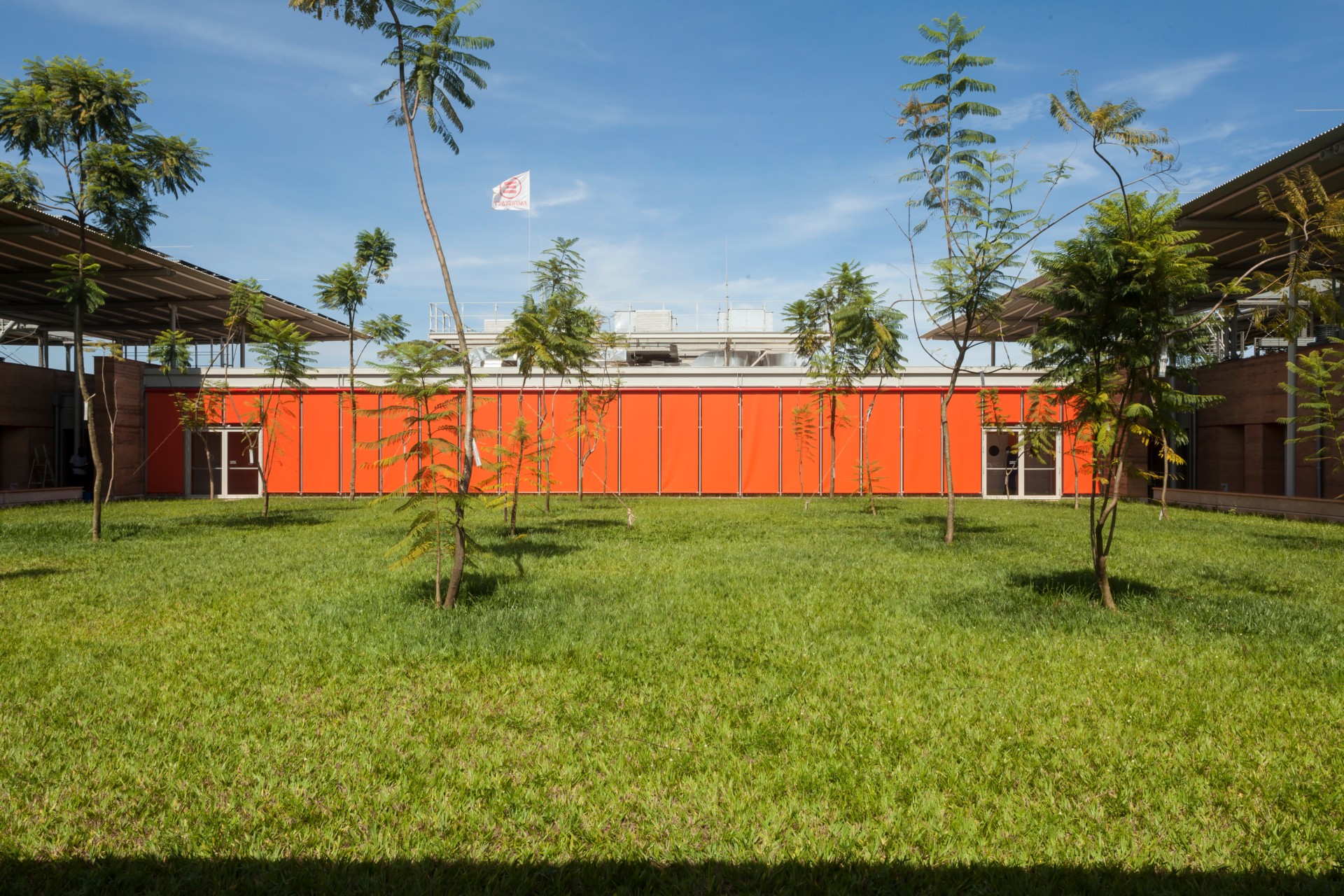
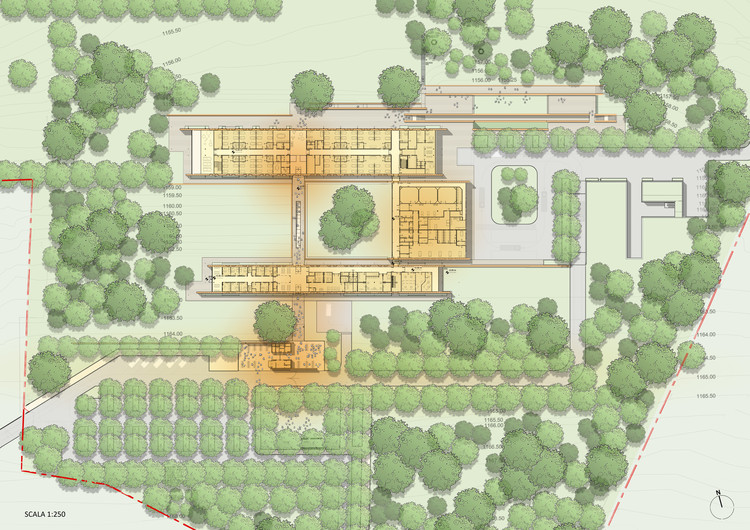
While the facility currently hosts 72 beds, a diagnostic centre, a laboratory for analysis, a blood bank, a pharmacy, as well auxiliary services such as a canteen and a laundry, it also hosts a healing and playful environment (2). In this center, play becomes part of a healing process as colorful walls populate the facility illuminated with the center’s large windows offering a view of either the heart of the complex: a large garden, or the site, which in total contain 350 trees planted (5).  

Image courtesy of Renzo Piano Building Workshop & Studio TAMassociati, Milan Ingegneria
The Center’s Courtyard. Image courtesy of Renzo Piano Building Workshop & Studio TAMassociati, Milan Ingegneria


Center’s Floorplan. Courtesy of ArchDaily.


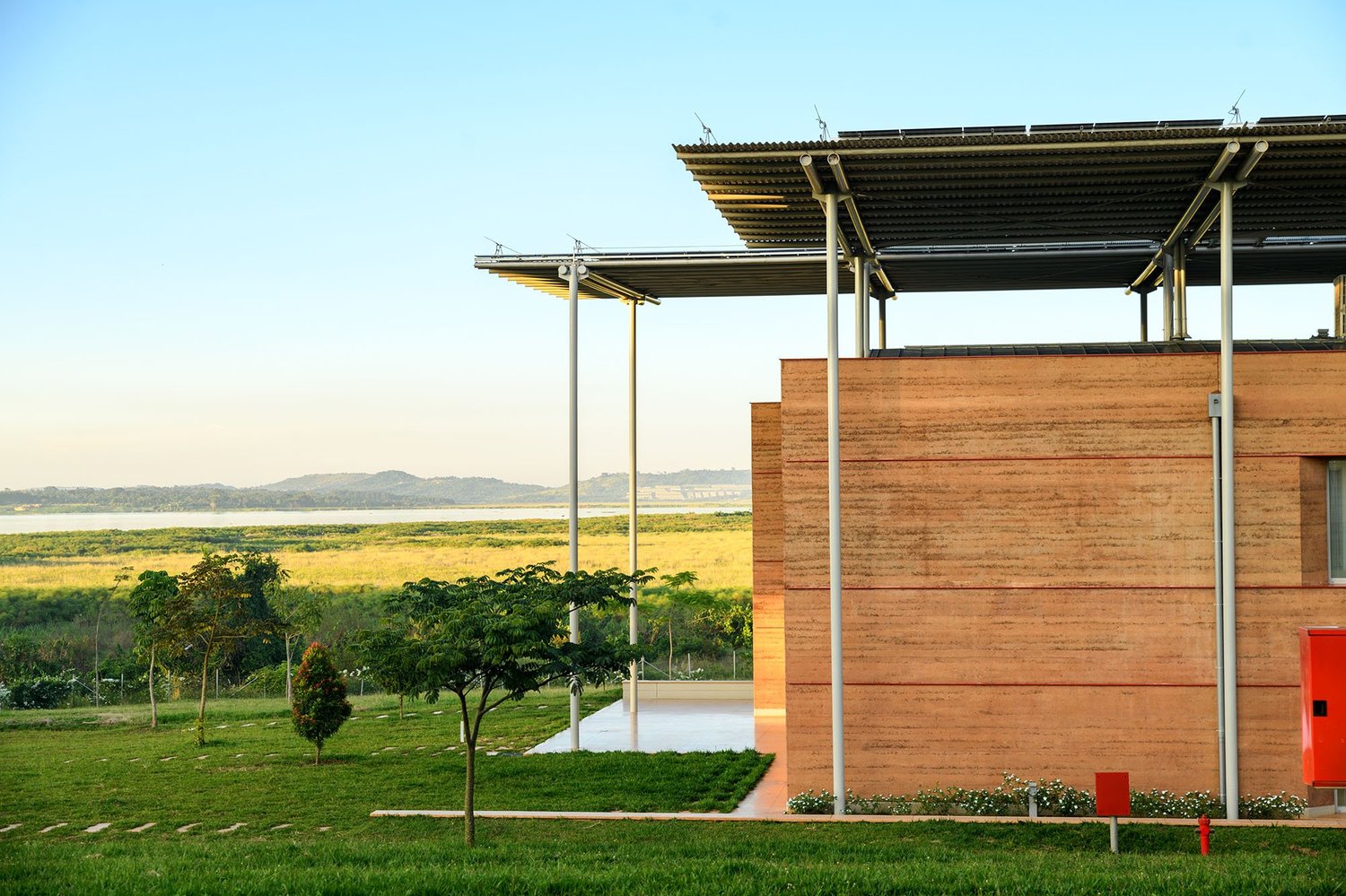
In this project, Piano and his team championed local tradition of building with earthen materials while also fusing it with his characteristic modern architecture seeking to build sustainably and efficiently.

Image courtesy of Renzo Piano Building Workshop & Studio TAMassociati, Milan Ingegneria


In a complex process of trial and error, architects and engineers of the Milan Ingegneria team researched theories and traditions in the region of earthen architecture, testing out experiments in the laboratory and on the construction site, to eventually come across the most performing mix for the project. The final mix was composed of: silty clay from the site, dried and cleaned in order to remove organic materials; aggregate to give the material compressive strength; Mapesoil, an establishing agent used to solidify the soil; a small amount of cement to stimulate the hardening process; inch-long (2.4 cm) polypropylene fibers to prevent tiny cracks from forming as the material shrinks; a fluidizing agent which made the mix easier to work with; and finally, a clear xylan-based coating applied to the outer surface of the wall to create a water-resistant layer stopping moisture from being absorbed or retained.(6)


A whole process of trial and error                                                                                                           Images courtesy of Renzo Piano Building Workshop & Studio TAMassociati, Milan Ingegneri


This rammed earth technique ensures proper humidity and temperature control(4), inducing thermal inertia. 

Image courtesy of Renzo Piano Building Workshop & Studio TAMassociati, Milan Ingegneria

This project by Renzo Piano is part of a broader movement that reimagines earthen architecture as a viable and valuable component of our modern world. It challenges the notion that traditional materials belong only to the past, showing how earth-based construction can play a key role in creating a more sustainable future. By integrating innovative techniques with time-honored methods, this approach not only honors architectural heritage but also addresses the urgent environmental needs of today, offering a path forward in the global shift towards more eco-conscious building practices.

Location: Entebbe, Uganda

Completion Date: 2021 

Project Owner: EMERGENCY NGO Onlus

Architects: Renzo Piano Building Workshop & Studio TAMassociati

Design team: RPBW – G.Grandi (partner in charge), P.Carrera, A.Peschiera, D.Piano, Z.Sawaya and D. Ardant; F.Cappellini, I.Corsaro, D.Lange, F.Terranova (models) – TAMassociati – R.Pantaleo, M.Lepore, S.Sfriso, V.Milan, L.Candelpergher, E. Vianello, M.Gerardi – EMERGENCY Field Operations Department, Building Division – Roberto Crestan, Carlo Maisano.

Consultants: Milan Ingegneria (structure); Prisma Engineering (MEP); Franco and Simona Giorgetta (landscape); GAE Engineering (fire consultant); J&A Consultants

References:

(1)”The Centre Georges Pompidou by Richard Rogers & Renzo Piano.” ArchEyes, www.archeyes.com/the-centre-georges-pompidou-by-richard-rogers-renzo-piano/.

(2)”Emergency USA – A Surgical Center in Uganda.” Emergency USA, www.emergencyusa.org/?doing_wp_cron=1727479427.1156270503997802734375.

(3)”Emergency Children’s Surgery Center.” Renzo Piano Building Workshop, www.rpbw.com/project/emergency-childrens-surgery-center.

(4)”Hospital Quirúrgico Infantil, Entebbe.” Arquitectura Viva, www.arquitecturaviva.com/works/hospital-quirurgico-infantil-entebbe.

(5)”Centre of Excellence in Paediatric Surgery.” Emergency USA, www.emergencyusa.org/prj/uganda/centre-of-excellence-in-paediatric-surgery/.

(6)”Children’s Surgical Hospital: A Scandalously Beautiful Dream.” The Plan, www.theplan.it/eng/whats_on/children-s-surgical-hospital-a-scandalously-beautiful-dream.
Matthews Residence: Exploring Modern Adobe Architecture in the Desert

Will Bruder is an American architect known for his innovative use of materials and site-specific designs. Born in Milwaukee, Wisconsin, in 1946, Bruder’s background spans art, sculpture, and architecture. He studied at the University of Wisconsin-Milwaukee, earning a degree in Fine Arts, and later apprenticed under visionary architect Paolo Soleri, which significantly influenced his work in the desert Southwest.

Bruder’s work focuses on creating architecture that integrates with the natural environment, using innovative material choices and architectural forms. His approach prioritizes materials that connect the building to its surroundings, as seen in his use of adobe for the Matthews Residence.

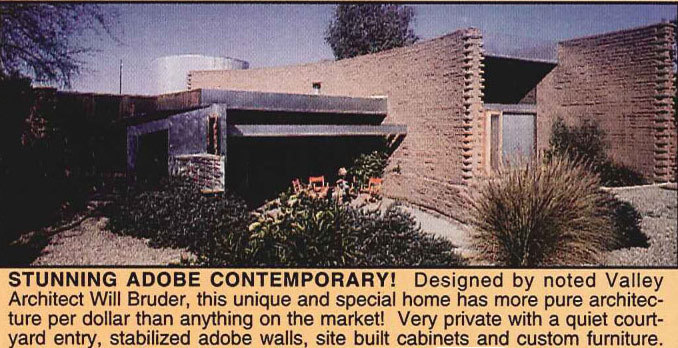
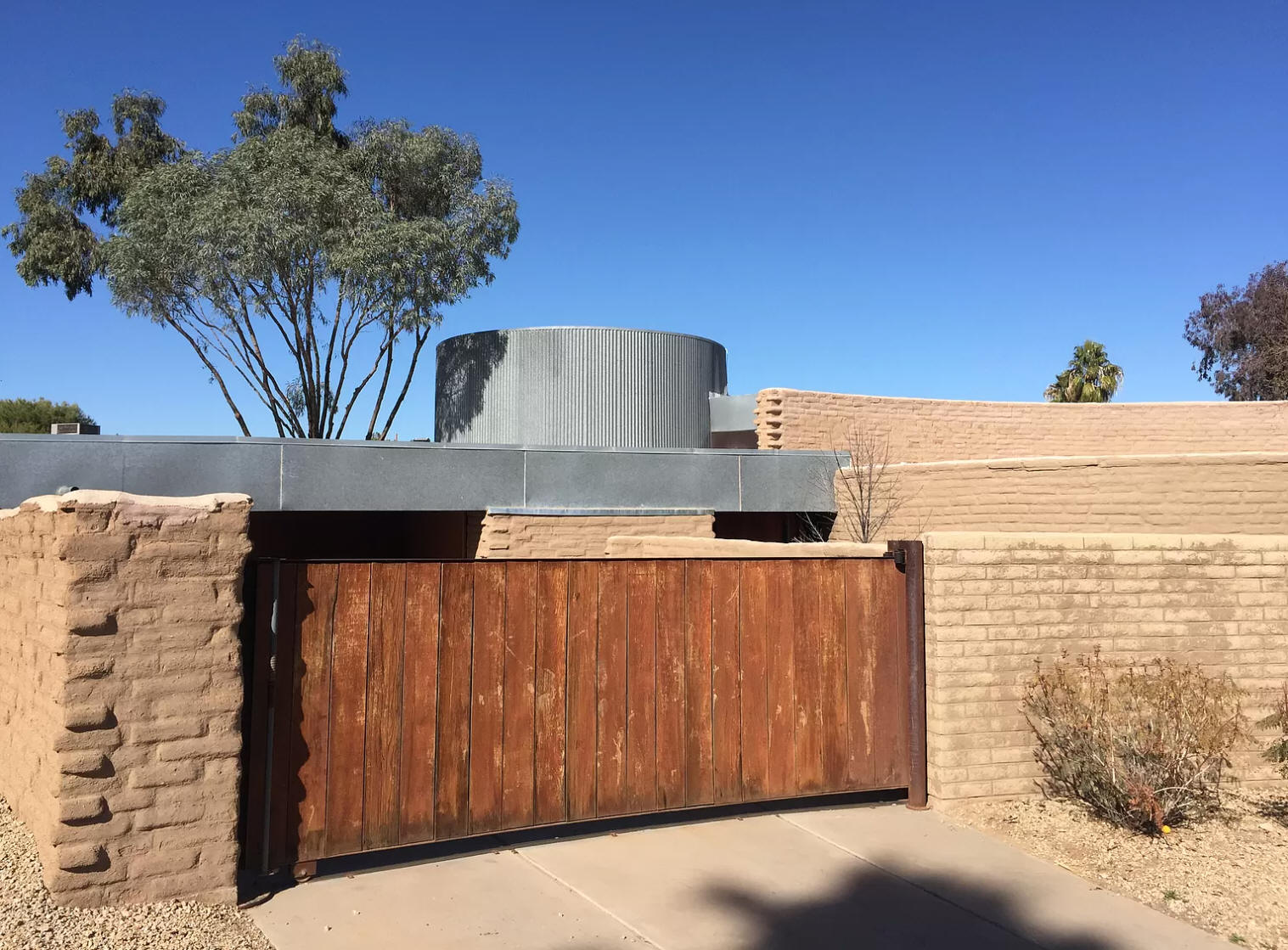
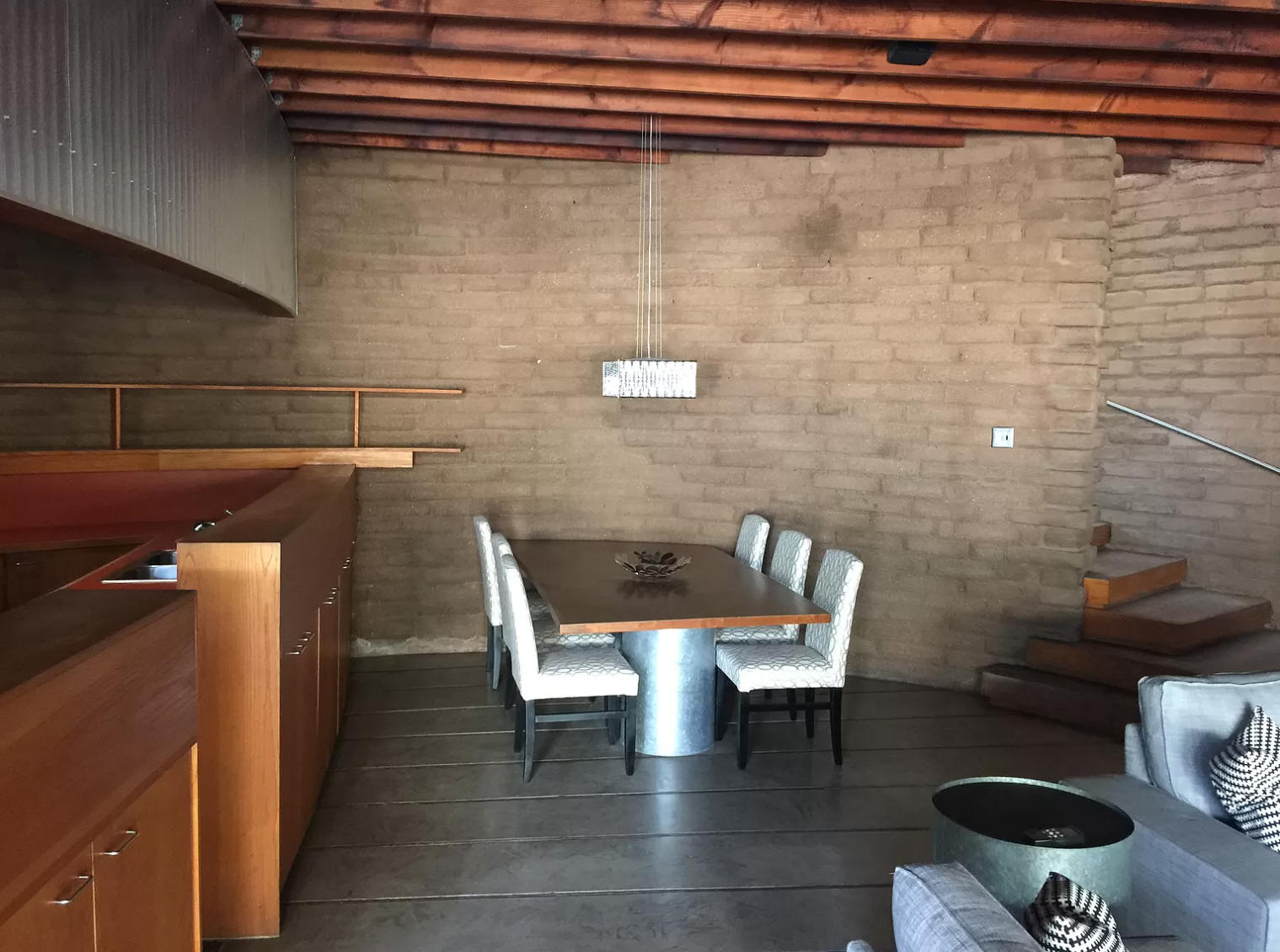
The Matthews Residence, designed by Will Bruder, was built between 1979 and 1980 and received the 1983 Environmental Excellence Award for its innovative design. The residence is a 2,800-square-foot adobe home. The primary material of this residence is adobe brick, a traditional earth material made from sun-dried bricks, which is able to blend into the natural landscape. Adobe also offers excellent thermal properties, helping regulate temperature in the desert climate.

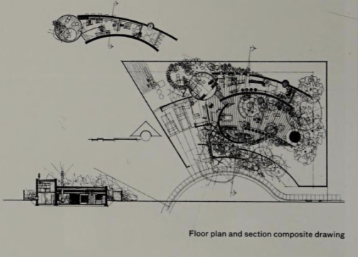
Inspired by the traditional Southwestern courtyard house, the design features curving adobe walls, strategically shaped to reduce exposure to the intense Arizona sun. The house spans a large double cul-de-sac lot in a suburban area of west Phoenix.

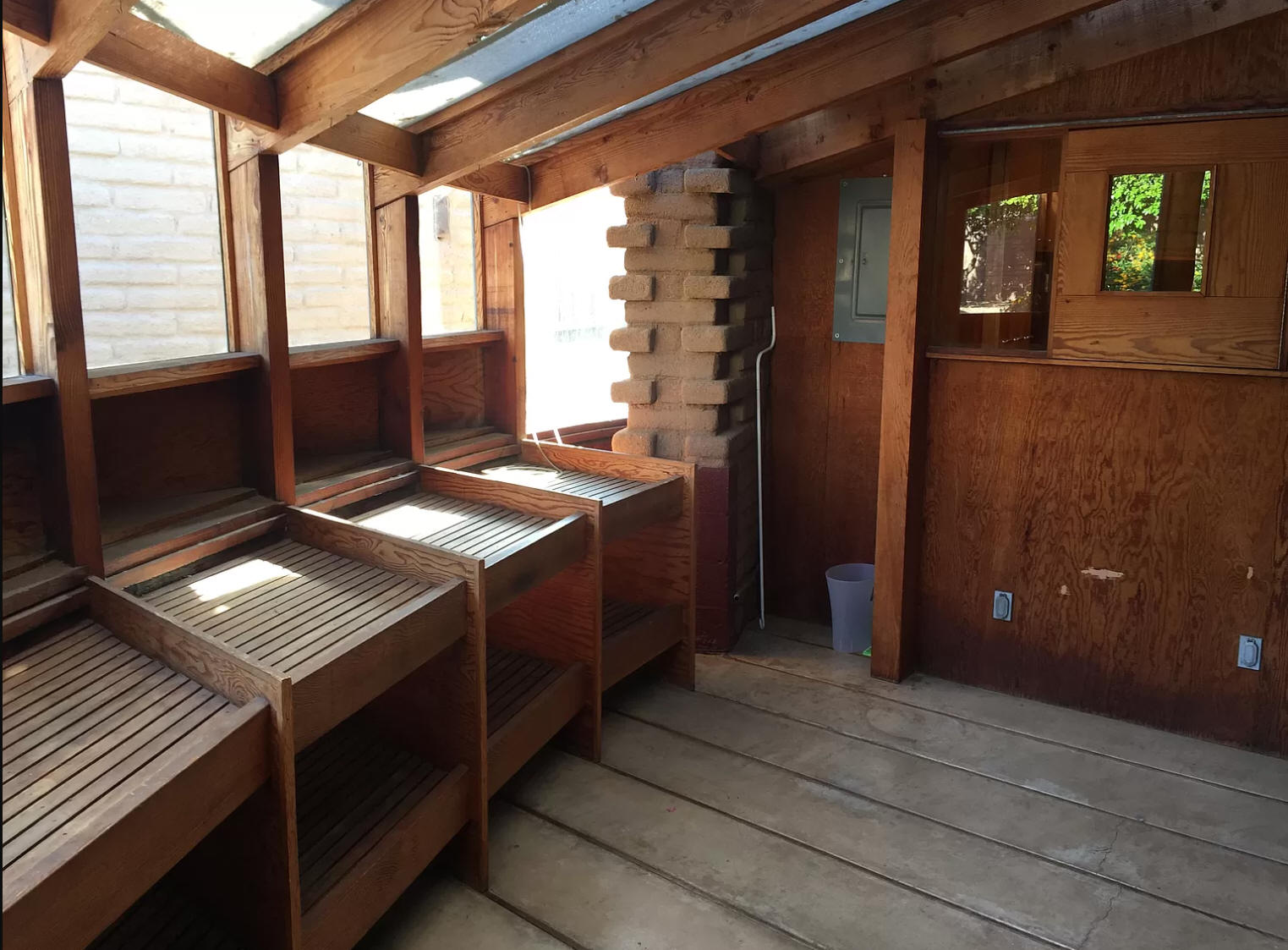
The layout creates a dynamic interplay between expansive and more intimate spaces, enhanced by the flowing geometry of its curves. The design’s sense of light, compression, and openness is carefully crafted, with a long skylight running from the entrance, introducing a play of light that highlights the contrast between rougher materials like adobe and concrete floors and the more refined details of oak and galvanized steel.

A key inspiring aspect is how Bruder masterfully combines adobe with modern materials like steel and wood, which creates a dynamic contrast between natural, traditional, and modern industrial materials. This combination enriches the architectural narrative by blending the old with the new. The combination of modern architectural design with natural, sustainable materials makes the Matthews Residence a source of inspiration for architects interested in sustainability and regionalism.

Interestingly, this is the only known Bruder house constructed from adobe, making it a rare and distinctive project. The way adobe is used in this design adds to its uniqueness, and it remains one of the most intriguing examples of Bruder’s residential work.

Matthews ResidenceCitations:

AZ Architecture. “Matthews Residence – Will Bruder Architect – Adobe.” AZ Architecture, https://azarchitecture.com/architecture-guide/matthews-residence-will-bruder-architect-adobe/. Accessed 23 September 2024.
USModernist. “Will Bruder.” USModernist, https://usmodernist.org/bruder.htm. Accessed 23 September 2024.
Rael, Ronald. Earth Architecture. Princeton Architectural Press, 2009, pp. 120-121.


Taos Pueblo


Pueblo de Taos
© Edmondo Gnerre
https://whc.unesco.org/en/list/492/gallery/

Taos Pueblo is an ancient, occupied multi-generational community in Northern New Mexico. “Pueblo” refers to both the physical buildings and community (stylized “pueblo”) and the native people of those communities (stylized “Pueblo”). The people are also known as Puebloans, or Pueblo peoples, and are native to the Southwestern United States (New Mexico, Arizona, Texas). They share a common culture, including food and agriculture, history, traditions, and religious practices. Aside from Taos, inhabited pueblos include San Ildefonso, Acoma, Zuni, and Hopi.

Taos Pueblo
© OUR PLACE The World Heritage Collection
Author: David Muench
https://whc.unesco.org/en/list/492/gallery/

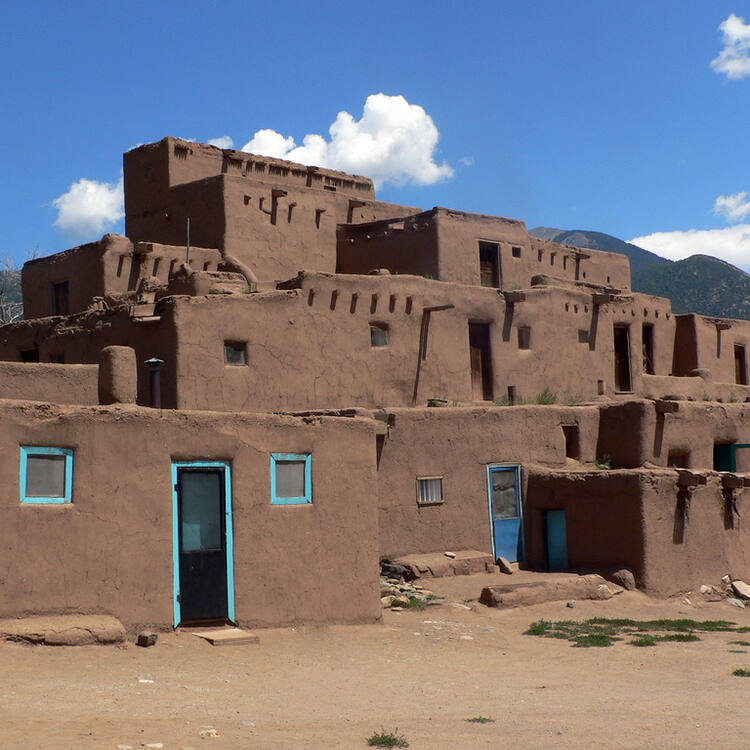
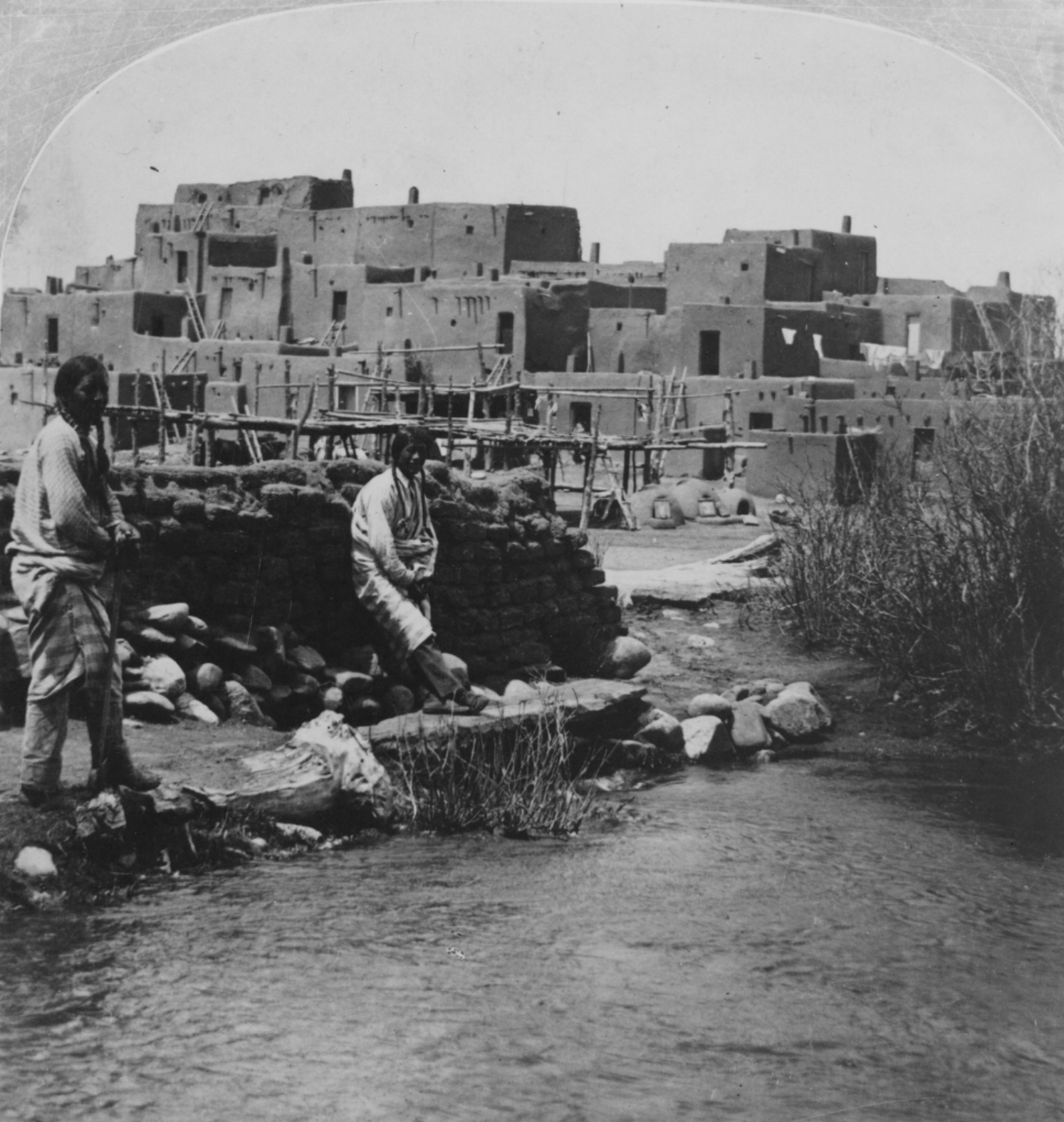
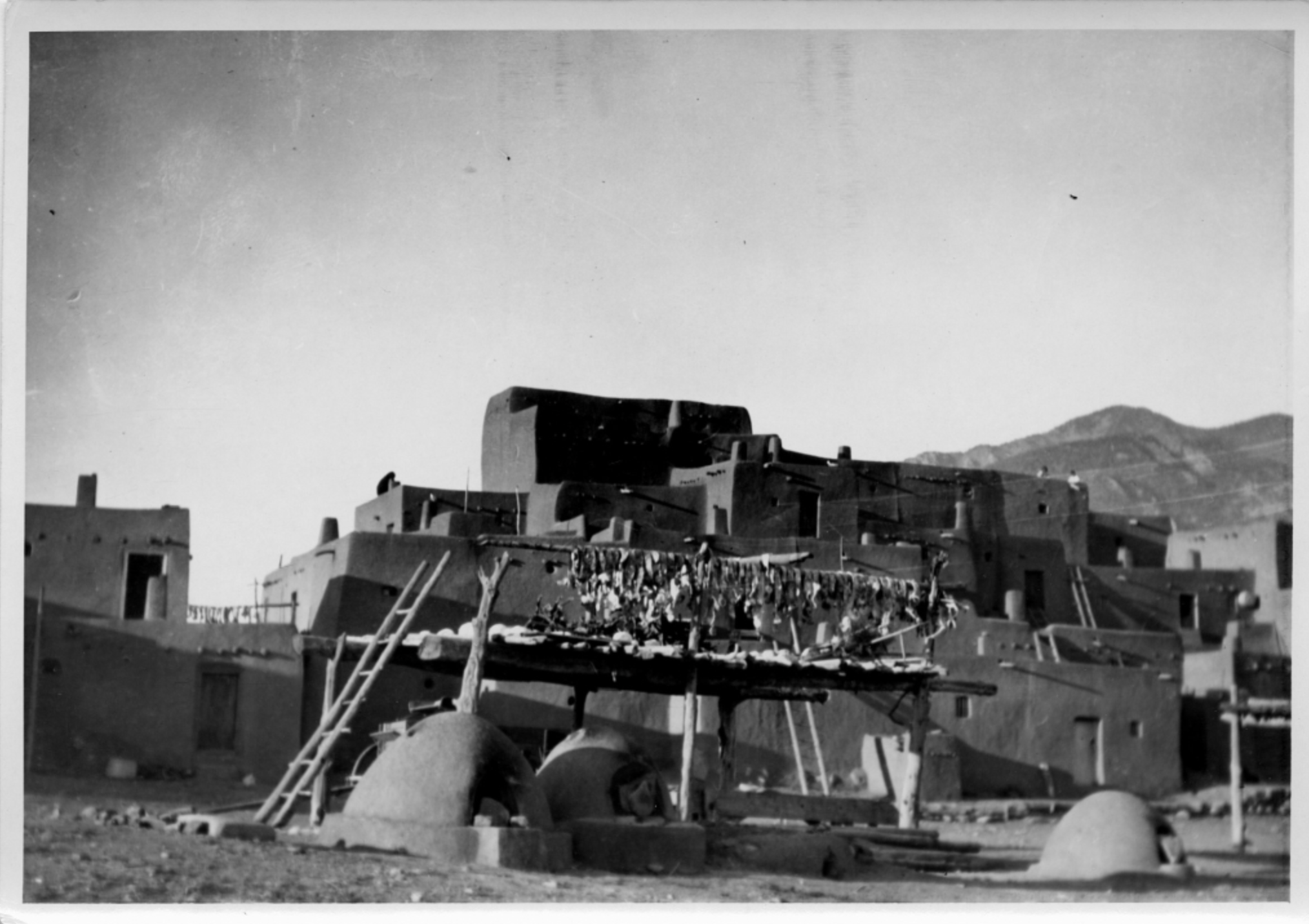
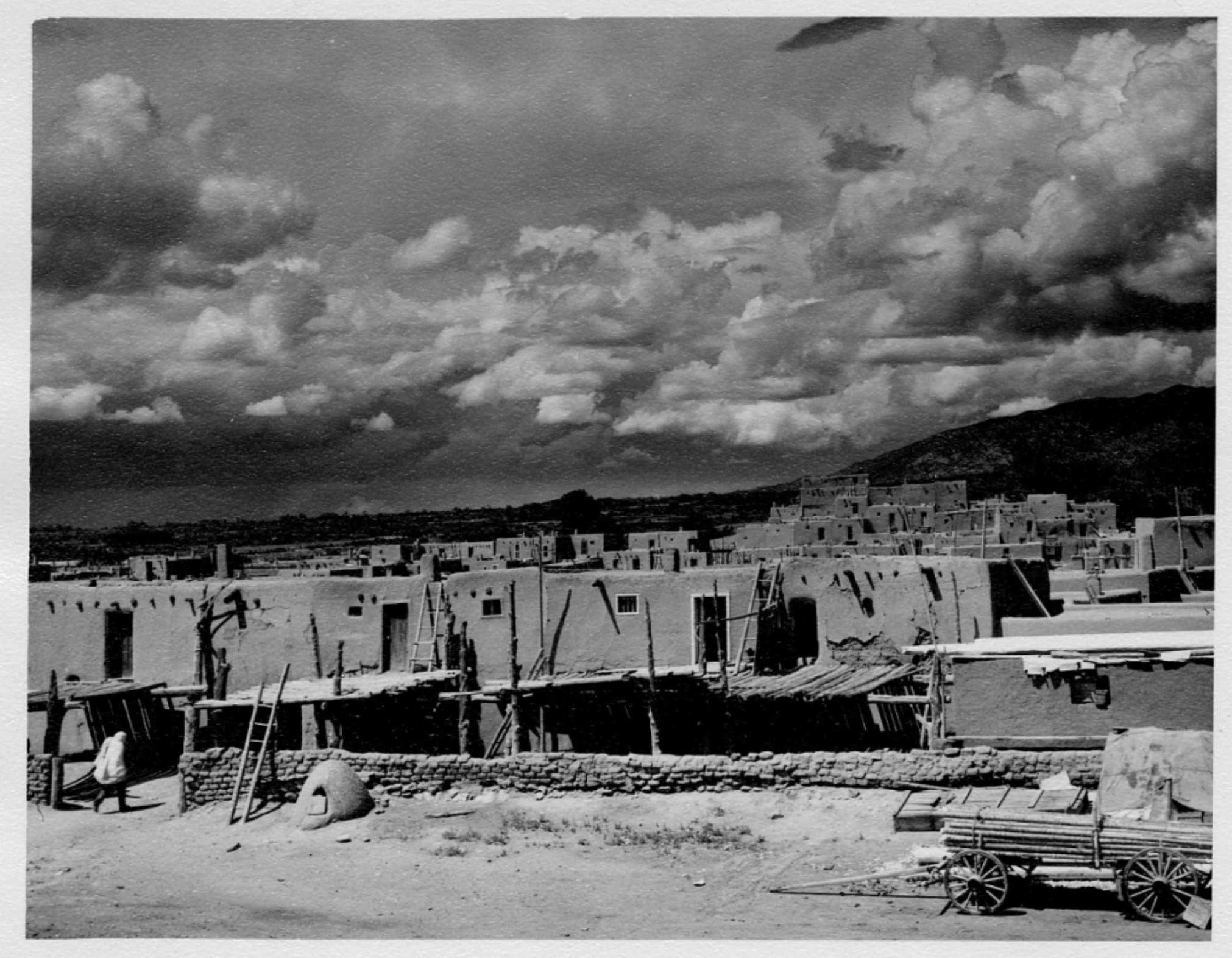
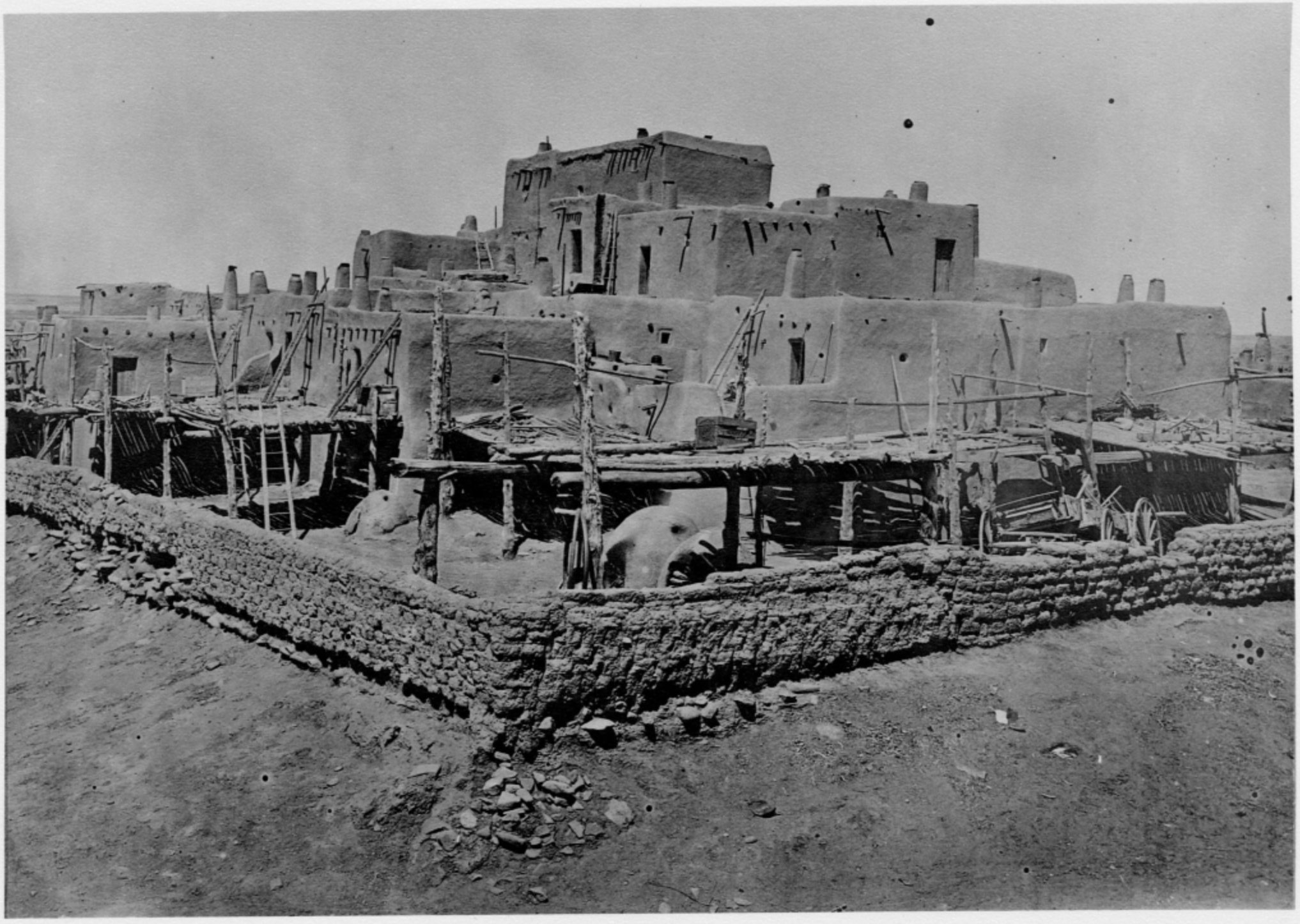
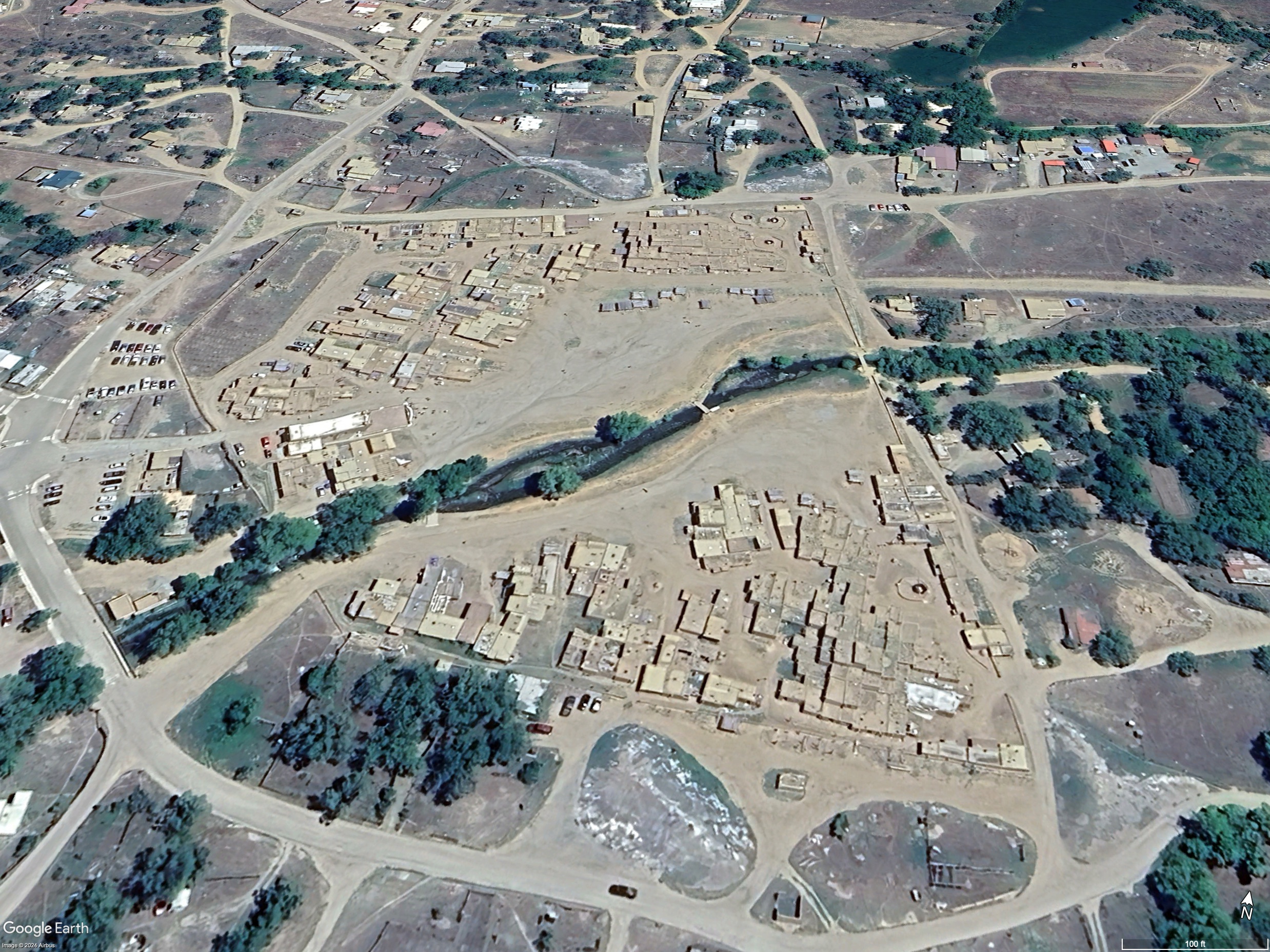
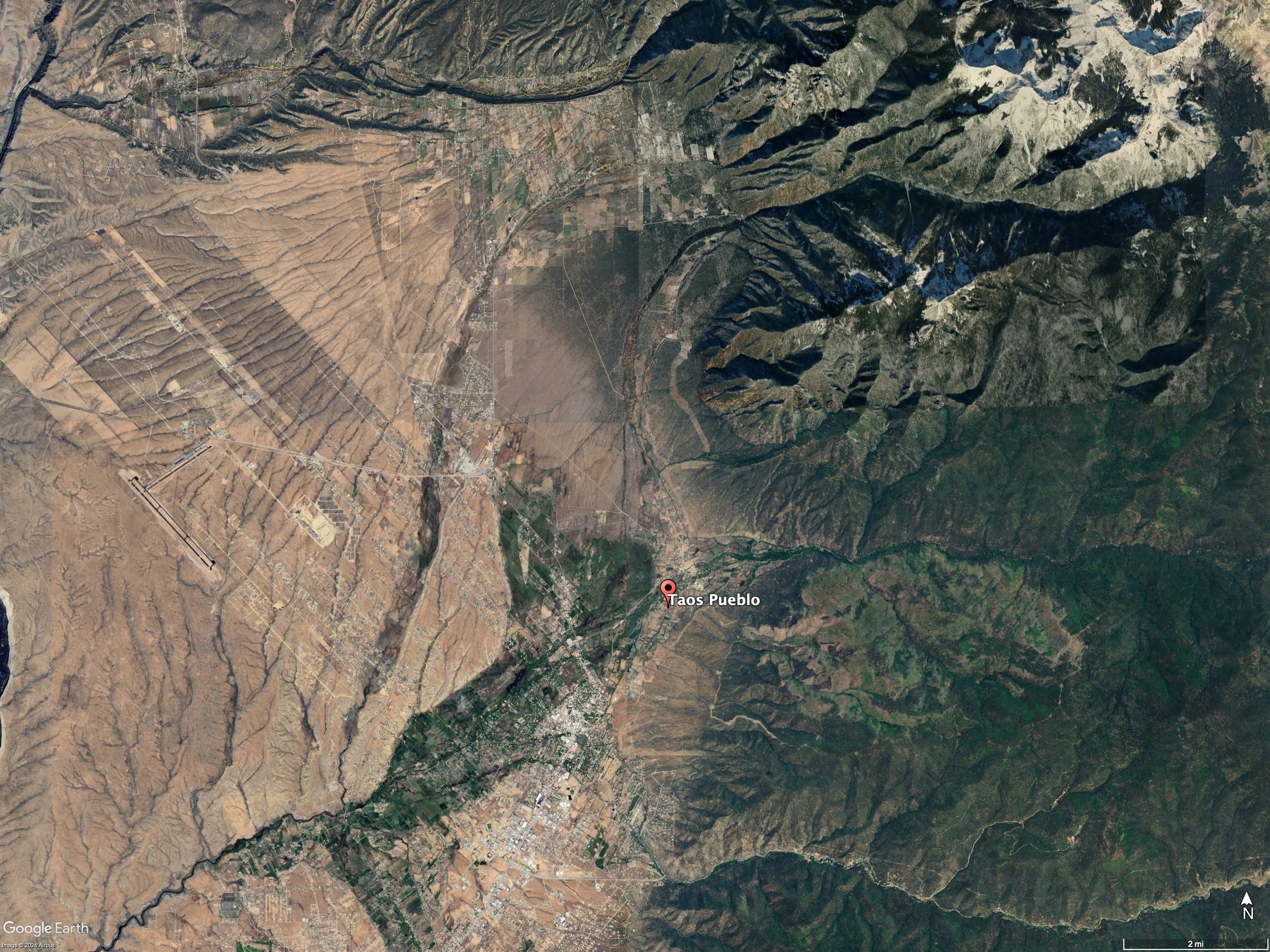
The most recognizable feature of the Taos Pueblo community are the multi-story, red clay and adobe homes and community buildings. They span both sides of the Sacred Blue Lake/Rio Pueblo de Taos (a tributary of the Rio Grande) which is also the population’s only source of water. The community has been continuously occupied for over 1000 years, likely originally built between 1000 and 1450 C.E. It is both the longest continuously inhabited community in the United States, and the largest of the pueblos.

Taos Pueblo
© OUR PLACE The World Heritage Collection
Author: David Muench
https://whc.unesco.org/en/list/492/gallery/

The structures are built in terraced tiers, extending out as they descend toward the ground, and a height of five stories at maximum. “The property includes the walled village with two multi-storey adobe structures, seven kivas (underground ceremonial chambers), the ruins of a previous pueblo, four middens, a track for traditional foot-races, the ruins of the first church built in the 1600s and the present-day San Geronimo Catholic Church” UNESCO. The community sits at the base of the Taos mountains, the Sangre de Cristo range of the Rocky Mountains

old-taos-images-historic-museum-of-taos-015
https://taospueblo.com/history/

Spanish explorers arrived in 1540 C.E. and originally believed the community to be one of the Seven Golden Cities of Cibola, a legend of Aztec mythology pursued by Coronado, among others. The miccaceous mineral (micca) found in the clay that is used to re-mud the homes every year shimmers in the light, seemingly like gold.

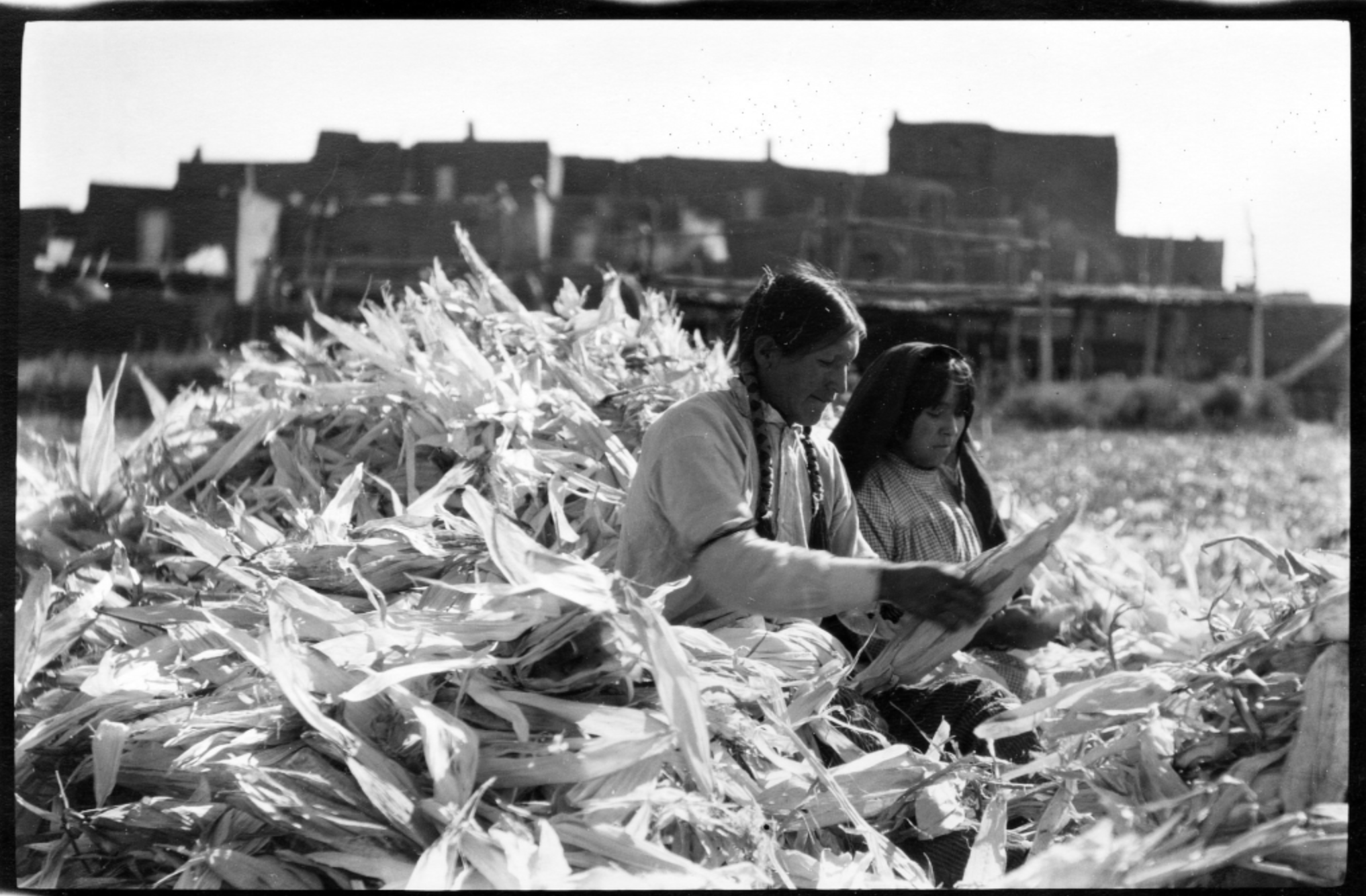
It is an occupied, inhabited, living community, with dwellings passed on within the family from eldest son to eldest son throughout generations. Taos Pueblo is recognized as both a U.S. National Historic Landmark and a UNESCO World Heritage Site. Visitors are welcome, but as an occupied space, access is limited to businesses and tourist centers, and photography of certain parts of the physical community and people is limited. The tribal land encompasses 95,000 acres with about 4,500 inhabitants. Approximately 150 people lived in the historic pueblo adobe dwellings as of 2010.

old-taos-images-historic-museum-of-taos-008
https://taospueblo.com/history/
old-taos-images-historic-museum-of-taos-003
https://taospueblo.com/history/
old-taos-images-historic-museum-of-taos-002
https://taospueblo.com/history/
Google Earth 3D aerial of Taos Pueblo buildings
Google Earth aerial of Taos Pueblo land

REFERENCES